


More news on this day
Rail passengers in western Germany were forced to evacuate a regional train on foot after a trackside fire brought services to an abrupt halt and blocked a key railway line, according to published coverage from local and national outlets.
Get the latest news straight to your inbox!
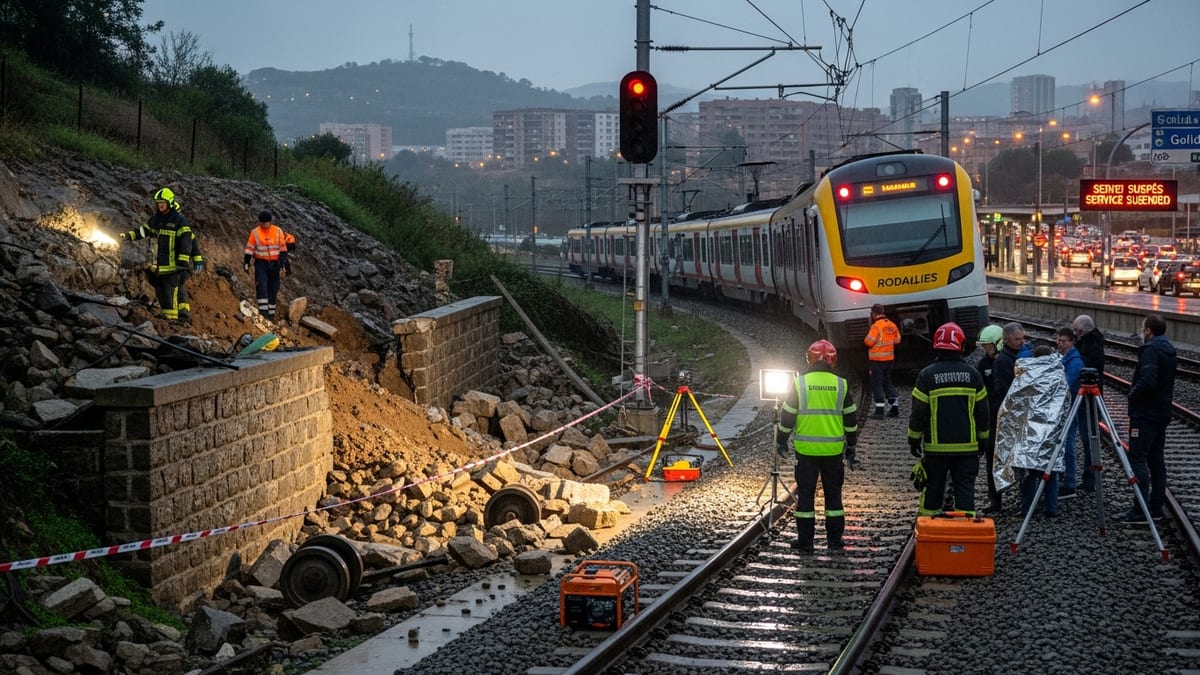
Trackside blaze stops regional service near Bruchmühlbach-Miesau
Reports from regional media in Rhineland-Palatinate indicate that the incident occurred on Monday, 6 July 2026, near Bruchmühlbach-Miesau on a busy route between Kaiserslautern and Saarbrücken. A fire broke out in vegetation close to the tracks, prompting rail staff to bring a regional service to a standstill as smoke and flames encroached on the line.
Initial assessments described the blaze as a trackside or embankment fire affecting the immediate railway environment rather than the train itself. Nevertheless, operations on the affected section were suspended while emergency services tackled the flames and infrastructure managers inspected cables, track components and signalling equipment for potential damage.
The incident unfolded at a time of heightened concern over heat and drought conditions in parts of Germany, where dry vegetation has contributed to a series of small but disruptive rail-adjacent fires. Rail infrastructure managers in several federal states have been monitoring the risk closely, issuing repeated reminders about safe behaviour near tracks and the dangers of discarded cigarettes or sparks from equipment.
While the fire near Bruchmühlbach-Miesau was contained within the surrounding embankment and trackside area, its proximity to moving trains meant that evacuation procedures were activated and rail traffic in the area was significantly disrupted for several hours.
Passengers guided along the track to waiting buses
Publicly available information from German broadcast outlets describes how passengers on the affected regional train were asked to leave the carriages and walk along the track to reach a safe location away from the immediate vicinity of the fire. Rail staff and emergency teams supervised the process, guiding people in small groups along the ballast and sleepers toward an access point where buses could reach them.
Images circulated by local media showed lines of passengers, some carrying luggage and pushchairs, making their way on foot beside the halted train. The distance covered on foot was reported as relatively short, but the unfamiliar and uneven terrain of a railway right of way meant that the evacuation proceeded cautiously, with particular attention to older passengers and families with children.
Once clear of the danger area, travellers were transferred to replacement buses and alternative train services. Timetables on the line between Kaiserslautern and Saarbrücken remained disrupted into the evening, with some regional services cancelled or turned back short of their usual destinations while the affected stretch of track was inspected.
No serious injuries were reported in connection with the evacuation. Some passengers described delays and discomfort, but accounts collected by news outlets indicated that the process was relatively orderly, reflecting established emergency protocols for evacuating trains that cannot reach a station.
Fire risk and fragile rail infrastructure under summer strain
The Bruchmühlbach-Miesau incident is the latest in a string of railway disruptions in Europe linked to trackside fires and infrastructure damage during an unusually challenging summer for operators. In the Netherlands, rail services south of Rotterdam have been heavily curtailed after a cable-duct fire near Rotterdam Stadion destroyed large numbers of signalling and power cables, forcing the prolonged closure of a key corridor and affecting international traffic.
Further west, French media have reported vegetation and equipment fires along high-speed lines, including recent incidents on the LGV Atlantique that caused delays of up to nearly two hours for TGV services between Paris and the southwest. These events highlight the vulnerability of modern signalling and power systems to heat, sparks and smoke in confined cable routes and along busy rights of way.
Rail infrastructure managers across the continent regularly warn that prolonged dry spells raise the likelihood of embankment and ballast fires, whether triggered by human activity or technical faults. Even relatively small fires can have outsized impacts when they occur in areas dense with signalling cables, traction power equipment or telecommunications ducts, as operators must keep trains away until technicians can verify that safety-critical systems have not been compromised.
The accumulation of incidents has renewed discussion among transport analysts about whether existing inspection regimes, vegetation management practices and emergency access points along heavily used routes are sufficient for a changing climate in which heatwaves and localised fires are expected to become more frequent.
Emergency evacuation procedures tested on open line
Rail safety guidelines in Europe typically emphasise that, where possible, trains should continue to the next station before evacuating passengers, rather than stopping in open country or on viaducts and in tunnels. However, guidance documents also recognise that fires, smoke, signal failures or obstructions can make this impossible, requiring an on-track evacuation similar to the one carried out near Bruchmühlbach-Miesau.
In such circumstances, railway operators follow structured procedures that involve cutting traction power where relevant, securing adjacent tracks, coordinating with infrastructure controllers and emergency services, and then guiding passengers along pre-identified walking routes. The aim is to minimise exposure to hazards such as moving trains on neighbouring lines, uneven surfaces, overhead line equipment or steep embankments.
Reports from the Rhineland-Palatinate incident suggest that these procedures were broadly followed, with traffic on the affected line halted and evacuation carried out under supervision. Nonetheless, the situation has prompted questions among passenger advocates about the clarity of onboard announcements, the level of preparedness for those with reduced mobility and the adequacy of shade, water and shelter for travellers waiting trackside or at temporary assembly points.
Transport commentators note that while full-scale evacuations on open track remain relatively rare compared with station-based incidents, they are becoming more visible to the public through images and video shared from mobile phones, reinforcing calls for clear, easily understandable information and regular staff training.
Broader implications for resilience and passenger confidence
Although the Bruchmühlbach-Miesau fire caused no reported injuries, the sight of passengers walking along railway tracks has once again drawn attention to the resilience of European rail networks as climate pressures mount. Recurrent service suspensions, emergency evacuations and long-lasting infrastructure repairs risk eroding public confidence in rail as a reliable alternative to road and air travel.
Railway operators and infrastructure managers have been investing in more robust signalling systems, improved cable routing and better vegetation management, but the pace of incidents suggests that vulnerabilities remain. Analysts point to the need for targeted upgrades on sections with older equipment, high traffic density or limited alternative routes, where a single fire or technical fault can disrupt large portions of the network.
For passengers, the experience near Bruchmühlbach-Miesau serves as a reminder of the importance of following crew instructions, wearing suitable footwear when travelling and allowing extra time during periods of extreme weather when disruption risk is elevated. For the rail sector, it underlines how quickly an apparently routine trackside blaze can escalate into a complex operational challenge requiring the safe movement of hundreds of people on foot.
As investigations into the precise cause and spread of the fire continue, the incident is likely to feed into broader discussions in Germany and across Europe about how best to harden rail infrastructure against heat, drought and other stressors, while maintaining the comfort and confidence of the passengers who depend on it.