


More news on this day
Nearly forty years after a towering plume of phosphorus smoke forced tens of thousands from their homes in Miamisburg, Ohio, retired police and fire personnel are revisiting the 1986 freight train derailment that transformed their small river town and helped redefine how the United States prepares for rail disasters involving hazardous materials.
Get the latest news straight to your inbox!
Memories from the front lines of a toxic emergency
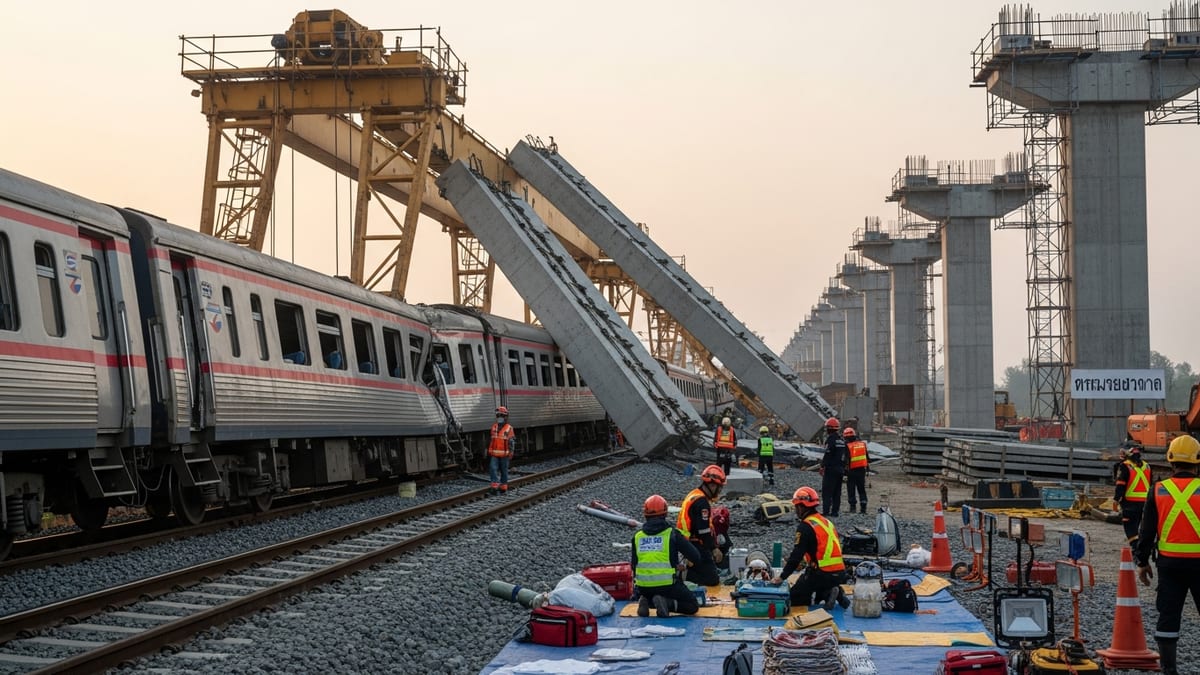
Recent regional coverage has highlighted new video interviews with retired Miamisburg responders who were on duty on July 8, 1986, when a Baltimore and Ohio freight train derailed on a bridge over Bear Creek. Their recollections describe a late afternoon turned abruptly surreal as flames rose from a ruptured tank car and a dense cloud of phosphorus smoke began to drift over neighborhoods and industrial sites.
Publicly available accounts indicate that about 15 cars of the 44 car train left the tracks, including tankers carrying yellow phosphorus, molten sulfur and other industrial products. One tank car ignited, sending a column of smoke reportedly hundreds of feet into the air and prompting immediate concern about eye, skin and respiratory injuries among people living nearby.
Retired officers and firefighters describe a race to move people out of harm’s way with limited information about how the chemicals might behave. Contemporary reports show that crews drove through streets with loudspeakers and knocked on doors, while dispatchers fielded calls from confused residents trying to understand whether to shelter indoors or leave the area entirely.
For many of those now retired, the derailment has become a defining memory of their careers. Their reflections, shared in anniversary segments and local museum programs, underline both the improvisation required that week and the emotional impact of watching an ordinary workday turn into a prolonged environmental emergency.
Largest train related evacuation of its time
Historical summaries from state and federal agencies state that the Miamisburg derailment triggered what was then the largest evacuation in U.S. history linked to a train accident involving hazardous materials. Initial estimates put the number of evacuees at more than 17,000 on the first night, expanding to as many as 30,000 or more as a second rupture and renewed chemical release forced an even wider zone to clear out.
Retired responders recalling the event emphasize the logistical strain of moving an entire small city and portions of neighboring communities with little advance warning. Schools, civic centers and arenas were pressed into service as temporary shelters. Some residents left with only minutes to gather medication, documents and basic supplies before traffic bottlenecks formed on local roads.
Public records show that the fire at the site burned for days, with rotating teams working around the clock to cool tank cars and prevent additional failures. While most reported injuries were minor, consisting mainly of irritation to the eyes, lungs and skin, officials at the time expressed concern about the potential for contamination of Bear Creek and the nearby Great Miami River, an important drinking water source.
The scale of the evacuation and the extended firefighting operation drew national media attention. Retired Miamisburg firefighters featured in recent retrospectives note that television coverage carried images of the blaze across the country, briefly turning a quiet Montgomery County community into a symbol of the risks associated with hazardous freight on aging rail infrastructure.
How the 1986 disaster reshaped training and planning
Emergency management case studies and training documents widely cite Miamisburg as a turning point for hazardous materials response. After action reports prompted closer coordination between rail carriers, local governments and state agencies, as well as clearer protocols for evacuations and public communication when chemical cargo is involved.
Retired firefighters and police personnel appearing in recent video segments describe how the derailment pushed their departments to pursue additional hazardous materials training, protective equipment and mutual aid agreements. Many recall that, in 1986, specialized hazmat teams and chemical data resources were far more limited than they are today, leaving first responders to make decisions with incomplete technical support.
Subsequent federal reviews examined how information about the train’s cargo was shared, how quickly plume modeling could be developed and how best to divide affected areas into zones based on potential exposure. These assessments contributed to evolving standards for incident command systems, emergency alerting and shelter operations across the United States.
In Ohio, state level disaster planning documents continue to reference the Miamisburg derailment as a benchmark event, situating it alongside floods, tornadoes and other large scale emergencies that have shaped how local agencies design drills and invest in equipment more capable of withstanding chemical, biological and radiological hazards.
A local story with renewed national relevance
The renewed attention to Miamisburg’s 1986 derailment comes at a time of heightened public interest in rail safety. In recent years, incidents in East Palestine and other communities have revived debate over track maintenance, train length, crew staffing and the classification of hazardous cargos moving through residential areas.
For travel focused audiences, the story speaks to an aspect of journeying that often remains out of sight. Many of the rail corridors that carry tourists, commuters and long distance passengers also serve as arteries for industrial chemicals moving between refineries, manufacturing plants and ports. Towns like Miamisburg, which sit along these lines, have had to adapt their planning and public messaging to acknowledge both economic benefits and safety challenges.
Published coverage of the new interviews suggests that retired responders view their experiences as a cautionary tale for communities nationwide. They highlight the value of clear evacuation routes, redundant communication systems and regular drills that include scenarios involving railcars of hazardous materials, even in places that may seem distant from major industrial hubs.
The archival footage and contemporary reflections invite travelers passing through southwestern Ohio to see beyond the scenic river valley and historic downtown. The tracks that parallel the Great Miami River carry a layered history, in which an evening in July 1986 remains a defining chapter.
Commemorations, education and evolving resilience
Local museums, historical societies and civic groups in the Miamisburg area have, in recent years, incorporated the derailment into exhibits and educational programs. Publicly accessible materials detail how residents coped with displacement, how businesses responded to disruptions and how long it took for confidence in the safety of air and water to return.
Retired firefighters and police officers taking part in these events often frame their stories as lessons in community resilience. They recount how neighbors hosted evacuees, how volunteers staffed shelters and how information spread through word of mouth before modern social media and smartphone alerts existed. Their perspective emphasizes that, alongside the technical aspects of hazmat response, social cohesion played a critical role in limiting harm.
As other regions contend with their own rail incidents, emergency planners continue to study the Miamisburg experience for guidance on mass evacuation logistics, long term health monitoring and mental health support for both residents and responders. The 1986 event serves as a reminder that rail based chemical emergencies can leave psychological as well as environmental traces that last decades.
The latest video reflections by retired Miamisburg officers and firefighters add new personal detail to a well documented industrial accident. For travelers and locals alike, they underscore how one derailment reshaped a community’s identity and helped inform the evolving playbook for rail safety and emergency preparedness across the United States.