

More news on this day
Rapidly escalating tensions in the Middle East have triggered sweeping flight suspensions between the Philippines and key Gulf hubs, disrupting travel for thousands of overseas Filipino workers, tourists and business travelers while rattling Manila’s hotel and wider hospitality industry.
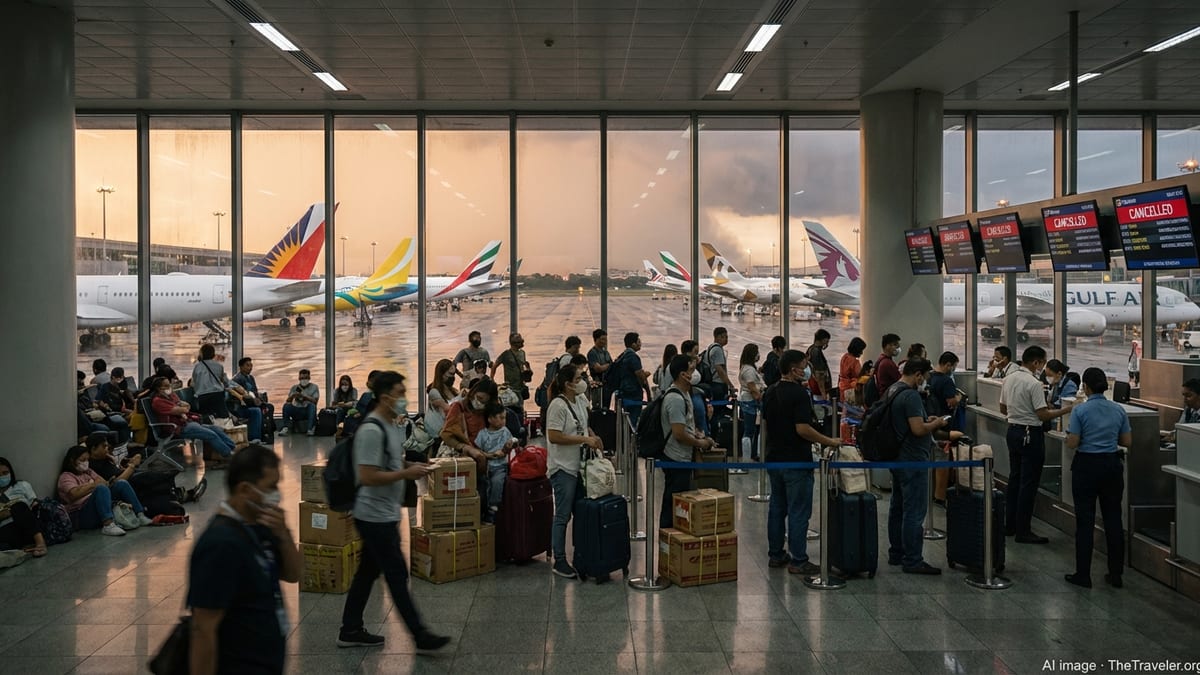
Middle East Crisis Shuts Down Key Philippines–Gulf Corridors
In the wake of airspace closures across much of the Middle East following strikes involving Iran, the United States and Israel, Philippine and Gulf carriers have moved swiftly to curtail or suspend services linking Manila with the United Arab Emirates, Qatar and Saudi Arabia. Authorities in several Gulf states, including the UAE and Qatar, have temporarily closed their skies to commercial traffic, forcing airlines to cancel flights or undertake lengthy diversions around the region.
Philippine Airlines has confirmed a string of cancellations and diversions affecting its Manila links to Dubai, Doha and Riyadh, including turning back Manila bound services already en route once operational restrictions were imposed. The flag carrier has framed its moves as a direct response to safety advisories and local airport constraints in Gulf gateways, stressing that resuming regular schedules will depend on evolving security assessments.
Low cost operator Cebu Pacific has taken similar action on its Middle East network, halting selected Dubai flights after a Manila to Dubai service was ordered to return to the Philippine capital over the weekend. The carrier has since cancelled additional rotations on the Manila Dubai route and warned customers that further adjustments are likely as the situation remains fluid.
On the Gulf side, Emirates, Etihad Airways, Qatar Airways and Gulf Air have all announced temporary suspensions or heavy curbs on services as regional airspace closures ripple through their networks. Emirates, which had only recently unveiled plans to add more weekly frequencies on the Manila route from April, has paused operations to and from Dubai while it reassesses safety and routing options. Etihad, Qatar Airways and Gulf Air have similarly scrubbed a number of Manila flights, contributing to a sharp drop in capacity between the Philippines and some of its most important long haul transit points.
Thousands of Passengers Stranded as Schedules Unravel
The result for travelers has been immediate and dramatic. The Civil Aviation Authority of the Philippines reported over twenty international services cancelled in a single day at the end of February, including multiple flights operated by Philippine Airlines, Cebu Pacific, Emirates, Etihad Airways, Qatar Airways and Gulf Air. With regional hubs such as Dubai, Abu Dhabi and Doha effectively offline or operating at sharply reduced capacity, passengers who rely on these gateways to reach Europe, North America and Africa are facing extended delays and uncertain rerouting.
Overseas Filipino workers heading to or returning from Gulf states are among the hardest hit. Many rely on tightly timed itineraries tied to employer schedules and visa windows, leaving little room for disruption. Labor deployment agencies in Manila say clients have been contacting them around the clock to rebook flights, seek guidance on contract start dates or request temporary accommodation while they wait for new travel options.
Airlines have rolled out flexible policies in an effort to manage the fallout. Cebu Pacific is offering free rebooking within a defined window, conversion of tickets into travel credits and refund options for affected Middle East routes. Philippine Airlines has opened similar channels for diversions and cancellations on its Doha, Dubai and Riyadh services, while Gulf carriers are allowing changes or refunds for passengers booked to travel during the suspension period. Nonetheless, limited alternative capacity and the uncertain timeline for full airspace reopening mean some travelers are being advised to postpone non essential trips altogether.
For those already in transit, the breakdown of connections at Gulf hubs has created a patchwork of last minute hotel stays, improvised itineraries via secondary airports such as Muscat or European gateways, and long hours waiting for updates. Travel advisers recommend that passengers avoid heading to airports without confirmed rebookings and instead stay in close contact with airlines or travel agents through digital channels where possible.
Manila Hotels Feel the Shock as Arrivals Plunge
In Manila, the sudden loss of Gulf connectivity is reverberating through a hospitality sector that had been counting on sustained demand from returning overseas Filipinos, Middle Eastern tourists and long haul transit passengers. Major hotels near Ninoy Aquino International Airport, which offer day rooms and short stay packages tailored to Gulf arrival waves, report an abrupt spike in cancellations and no shows over the weekend and into the first days of March.
General managers at several business hotels in Makati and Pasay say group bookings tied to Middle East based corporate clients and government delegations have been postponed or tentatively pushed later into the year. Meeting and incentive travel from Gulf based firms, which often routes through Manila before continuing to Philippine beach destinations, has also paused as organizers wait for clarity on flight schedules and security assessments.
Industry analysts note that the disruption is particularly ill timed, coinciding with the buildup to the summer peak for overseas Filipino worker homecomings and regional tourism. Hotels that had ramped up staffing and inventory in anticipation of higher occupancy now face sudden gaps in bookings, especially in higher room categories favored by Gulf visitors and premium connecting passengers flying on Emirates or Qatar Airways codeshares.
Smaller guesthouses and serviced apartments that cater to families of overseas Filipinos are also feeling the pinch. With many workers unable to secure flights home or bring relatives out for visits, stays are being shortened or cancelled outright. Local tourism boards are urging properties to pivot quickly toward domestic travelers and nearby Asian markets less affected by the Middle East airspace closures, at least until long haul capacity begins to normalize.
What Travelers Should Do Now
For travelers currently booked on flights between Manila and Gulf destinations, the priority is to verify the real time status of reservations before taking any action. Airlines are updating schedules frequently as they secure overflight permissions or identify safe alternate routings around closed airspace, meaning a flight cancelled one day could be reinstated or rerouted the next, and vice versa.
Passengers holding tickets on Philippine Airlines or Cebu Pacific to Dubai, Doha or Riyadh are being urged to use official booking management tools or customer service hotlines to request rebooking, travel credits or refunds. Those on Emirates, Etihad Airways, Qatar Airways or Gulf Air should likewise consult official advisories and avoid relying solely on informal social media reports, which may be incomplete or out of date.
Travel experts advise that anyone with non essential trips to or through the Gulf in the coming days consider deferring their plans, especially if their itineraries involve tight connections onward to Europe or North America. Where travel is unavoidable, building in additional buffer time, avoiding last minute separate tickets on different carriers and securing comprehensive travel insurance that covers war related disruptions and extended delays can help mitigate risk.
For stranded passengers in Manila whose flights have been cancelled, local hotels near the airport and central districts are offering distressed traveler rates and flexible check in and check out policies. However, with demand from delayed transit passengers picking up, room availability can shift quickly. Coordinating with airlines on accommodation entitlements and securing written confirmation of any hotel or meal vouchers before leaving the airport remains essential.
Medium Term Outlook for the Philippines–Gulf Air Corridor
While airlines and regulators stress that current suspensions are temporary and driven by safety considerations, the medium term future of key Philippines Gulf routes will depend heavily on how long regional airspace remains constrained and whether further military escalation occurs. Even once skies reopen, carriers may initially run reduced schedules, prioritize certain hubs over others or impose new routing patterns that lengthen flight times and increase operating costs.
Philippine Airlines and Cebu Pacific have both highlighted the strategic importance of their Middle East networks, which serve dense Filipino expatriate communities in the UAE, Qatar and Saudi Arabia. Cebu Pacific had been preparing to launch new services to Riyadh at the start of March, underscoring the growth potential the airline sees in Saudi Arabia as it opens further to international tourism and foreign workers. Those expansion plans could now be delayed or adjusted depending on how quickly stability returns.
For Gulf superconnectors such as Emirates, Etihad Airways and Qatar Airways, restoring full Manila schedules will be a priority once their primary hubs are fully operational again. The Philippines supplies a steady stream of migrant workers and leisure travelers who fill seats not only on point to point routes but also on onward connections across Europe, the Americas and Africa. However, if fuel burn and crew duty times climb because of longer routings around sensitive airspace, carriers may be forced to reprice tickets or shift capacity to more profitable corridors in the short term.
In Manila’s hospitality sector, executives are bracing for several weeks of uncertainty but remain cautiously optimistic that demand will rebound as soon as reliable air links are reestablished. In the meantime, the current crisis is serving as a stark reminder of how tightly the Philippine travel and hotel ecosystem is bound to geopolitical currents far beyond its borders, and how quickly those currents can reshape the country’s connection to the wider world.