


More news on this day
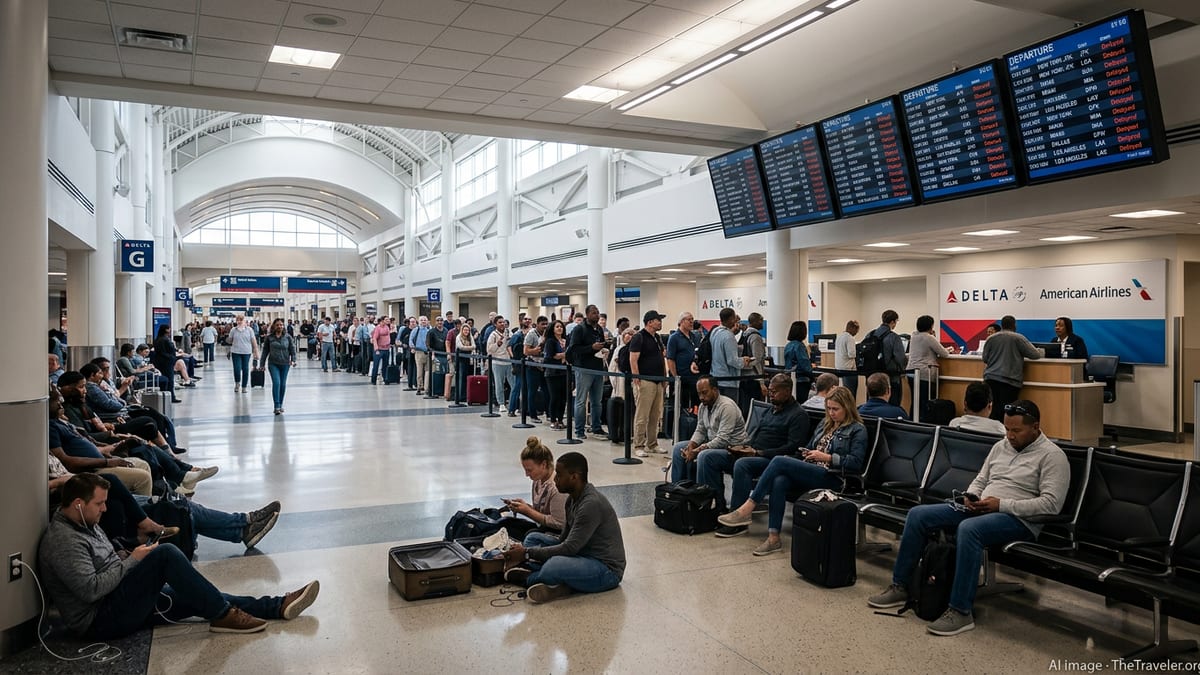
Travelers connecting through Phoenix Sky Harbor International Airport faced pockets of disruption today, as publicly available flight data showed five cancellations and 93 delays impacting routes to Los Angeles, Chicago, Denver and other major US cities.
Get the latest news straight to your inbox!
Major Carriers See Service Disruptions at Phoenix Hub
Data compiled from airport and flight-tracking dashboards indicate that operations at Phoenix Sky Harbor remained largely functional, yet several of the airport’s busiest domestic corridors experienced notable interruptions. Flights operated by Southwest, American and United were among those affected, with a small number of outright cancellations and a broader wave of delayed departures and arrivals.
The disruptions involved services linking Phoenix with major hubs including Los Angeles, Chicago and Denver, all of which serve as important connection points for travelers heading across the United States. While only five flights were listed as canceled, the 93 delayed services created knock-on effects for passengers with onward connections, amplifying the overall impact.
Reports from airline performance trackers show that recent months have brought fluctuating punctuality at Phoenix, with some individual routes recording both high on-time rates and periodic pockets of disruption. The latest figures fit into that pattern, with the majority of flights operating but a sizable share encountering schedule slippage.
Available operational summaries for Phoenix show that on a typical day more than eight out of ten flights run on time, but even a modest shift in that balance can lead to crowded gates, tighter connections and increased pressure on airline rebooking systems when tens of thousands of travelers are moving through the facility.
Key Routes to Los Angeles, Chicago and Denver Affected
Among the services disrupted were flights between Phoenix and Los Angeles, one of the busiest short-haul corridors in the region. These routes are heavily used by both business and leisure travelers, making delays especially visible as aircraft queues built up on departure boards.
Connections to Chicago O’Hare and Denver International Airport were also affected, which is significant because both airports act as onward gateways to the Midwest, East Coast and Mountain West. Delays on these lines can ripple across airline networks, shifting aircraft and crew availability and tightening schedules later in the day on secondary routes.
Publicly available performance snapshots for certain United and American services touching Phoenix in recent weeks have highlighted occasional cancellations amid mostly on-time operations. This latest cluster of five cancellations out of the day’s schedule reflects a relatively small fraction of overall traffic, yet may still have forced some passengers to rebook onto later flights or reroute through different hubs.
For travelers using Southwest’s extensive Phoenix network, any delay on a trunk route to Los Angeles, Chicago or Denver can quickly affect itineraries involving one or two connections. Reports from frequent flyers in recent weeks have described longer-than-normal waits on some Phoenix departures, especially during peak travel windows.
Timing and Weather Among Factors Behind Delays
While a full causal breakdown for each affected flight was not immediately available, operational trends at Phoenix Sky Harbor point to a mix of contributing factors. Industry guidance and historical data suggest that time of day, upstream weather and national air traffic control programs frequently play a role in delay clusters at busy hub airports.
Airport delay analytics show that Phoenix typically performs best in the early morning, with on-time rates often approaching or exceeding the high eighties percentile before midday. Performance tends to soften in the afternoon when congestion builds along high-density corridors and storms or heat-related constraints elsewhere in the network can trigger ground delay programs.
National aviation updates monitored by travelers regularly point to thunderstorms over the central United States and coastal systems near California as triggers for traffic management initiatives that slow down arrivals and departures. When such measures are applied, even airports experiencing clear local weather, such as Phoenix, can see inbound flights held at origin, compressing schedules and leading to late departures for connecting legs.
Mechanical checks, aircraft swaps and crew duty-time limits also remain recurring factors in day-of-travel changes. Recent traveler accounts referencing Phoenix operations have described situations where aircraft substitutions and late inbound planes extended waits at the gate by several hours.
Impact on Passengers and What Travelers Can Expect
For passengers caught up in today’s disruptions, the practical impact ranged from minor inconvenience to significant itinerary changes. Those on delayed flights often faced extended time in the terminal, while travelers booked on the small number of canceled services were required to seek alternative routings or departure times.
Travel forums and airline-focused communities following Phoenix operations in recent weeks have noted that rebooking options can vary widely depending on carrier, route and time of day. On popular connections such as Phoenix to Los Angeles, Chicago or Denver, available later departures may fill quickly, limiting same-day alternatives during peak periods.
Air travel guidance from consumer groups and aviation trackers typically recommends that passengers build extra buffer time into itineraries that require tight same-day connections, especially when flying through large hubs. For Phoenix, the data suggests that early morning departures remain the most resilient window, while afternoon and evening flights may be more vulnerable to upstream and weather-related knock-ons.
Travelers scheduled to pass through Phoenix Sky Harbor later in the day are advised by publicly available resources to monitor their flight status frequently through airline channels and airport information boards, as additional adjustments are still possible whenever a network is working to absorb earlier delays.
Broader Context for Phoenix as a National Transit Node
Today’s pattern of five cancellations and dozens of delays underscores the role Phoenix Sky Harbor plays as a major national transit node. Passenger statistics released by the city’s aviation department in recent months show the airport handling millions of travelers each month, with Southwest, American and United among the leading carriers by volume.
Analysts tracking on-time performance trends note that Phoenix often compares favorably with other large US hubs, but that its position within several airlines’ point-to-point and connection networks leaves it exposed whenever weather or congestion disrupts flows in other regions. In such instances, even a comparatively well-performing airport can see episodic spikes in delays.
Recent commentary from aviation observers has highlighted that airlines serving Phoenix have been working to balance aircraft utilization and schedule density with growing demand across the Southwest and Mountain West. That balancing act can make the system more efficient on ordinary days, but leaves less slack when multiple routes experience stress at once.
The latest disruptions affecting flights to and from Los Angeles, Chicago, Denver and other key US cities will likely feed into ongoing analysis by airlines, airport planners and industry trackers as they assess the resilience of schedules through Phoenix at the height of the summer travel season.