


More news on this day
Travelers on a Piedmont Airlines American Eagle service from Charlotte to Tallahassee faced an unexpected detour on June 23, 2026, when Flight PDT5879, operated by an Embraer ERJ145 registered as N918AE, diverted to Montgomery Regional Airport and reached Tallahassee more than two hours behind schedule, contributing to a broader evening of disruptions across the Southeast United States air network.
Get the latest news straight to your inbox!
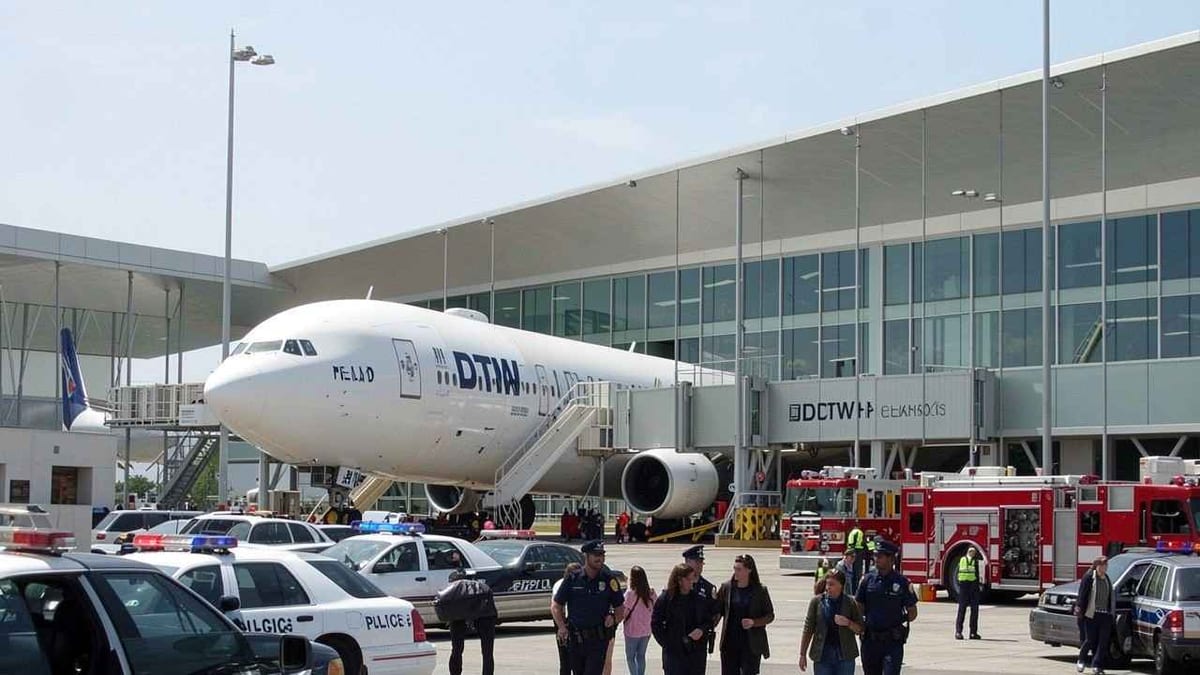
Unexpected Diversion On A Routine Regional Hop
The Charlotte Douglas to Tallahassee route is a short connector frequently used by business travelers, students and government workers moving around the Southeast. On June 23, 2026, Piedmont Airlines Flight PDT5879 departed Charlotte under American Eagle branding expecting a routine run to Tallahassee International Airport.
Publicly available flight-tracking information indicates that the Embraer 145 twinjet, tail number N918AE, departed Charlotte Douglas International Airport in the evening with Tallahassee listed as its scheduled destination. Instead of a direct arrival into Florida’s capital city, the aircraft altered course and landed at Montgomery Regional Airport in Alabama, turning what is normally about a one-hour sector into a multi-hour journey.
Data from online status boards and tracker services shows the aircraft remained in Montgomery before continuing on toward Tallahassee, ultimately arriving more than two hours later than originally expected. The detour placed additional strain on passengers with connections and on downstream operations for Piedmont and its parent brand, American Eagle.
No immediate safety issues were publicly reported in connection with the diversion, and the Embraer regional jet later continued in service, according to tracking histories for the airframe and flight number.
Weather, Congestion And Operational Constraints In The Southeast
On the evening of June 23, conditions across parts of the Southeast showed pockets of convective weather and flow constraints, according to real-time traffic and delay dashboards based on Federal Aviation Administration data. These summaries pointed to intermittent ground delay programs and airborne holding for several major hubs, including Charlotte, a key connecting point for American Eagle services.
In such environments, regional flights like PDT5879 often bear the brunt of schedule adjustments. Operational practices within U.S. airline networks typically prioritize long-haul and hub-to-hub services, while shorter regional segments may be rerouted, delayed or cancelled to preserve overall network performance. Diversions to nearby fields, such as Montgomery in this case, are one of several tools available to manage fuel, weather and airspace constraints while keeping aircraft and crews positioned for later legs.
Industry observers note that diversions can be triggered by a combination of factors rather than a single cause. These may include rapidly changing thunderstorm cells over the destination, temporary runway or taxiway limitations, air traffic flow restrictions into a specific airport, or onboard considerations such as fuel reserves after extended holding. Public sources did not immediately specify which of these elements most affected PDT5879, but the pattern matched a broader evening of irregular operations in the region.
Montgomery Regional Airport, located roughly midway between Charlotte and Tallahassee on many routings, frequently appears as an alternate field for carriers operating smaller regional jets across the Deep South. The facility offers the necessary runway length, ground handling capabilities and airspace access to receive diverted traffic from larger hubs.
Impact On Passengers And Downline Connections
For travelers on PDT5879, the diversion meant an arrival in Tallahassee more than two hours beyond the scheduled time, extending what is ordinarily a brief interstate hop into a protracted evening journey. Passengers connecting in Tallahassee to ground transportation or regional events likely had to adjust plans, with some facing missed late-night commitments or rebooked hotel arrangements.
Regional airline passengers generally rely on tight evening pulses that are designed to feed early-morning departures the next day. A delay of more than two hours on a late-day flight can easily cascade into missed connections or shortened rest times for travelers moving onward by road across northern Florida, southern Georgia and neighboring parts of Alabama.
The disruption also reverberated through airline operations. Aircraft such as N918AE typically operate multiple short segments each day, and a lengthy diversion can push crews toward duty-time limits or require adjustments to subsequent rotations. Schedules published for Tallahassee and Montgomery show that both airports function as important spokes within broader Southeast networks, meaning that a single delayed arrival can affect early-morning departures or aircraft availability for other routes.
While major carriers frequently provide automated rebooking and notification tools during irregular operations, public reports did not immediately detail what specific options travelers on PDT5879 received in Montgomery or Tallahassee. Many regional passengers, especially on shorter sectors, still rely on in-person communication at the gate when plans change rapidly.
Another Regional Disruption In A Busy Summer Travel Season
The diversion of PDT5879 fits into a broader pattern of regional flight disruptions that has emerged early in the 2026 summer travel season. Tracking data and independent aviation coverage highlight several recent diversions involving American Eagle branded services, including other Piedmont-operated Embraer 145 flights turning back to Charlotte or diverting to alternate fields after departure.
These events come at a time when U.S. airlines are contending with near-peak passenger volumes, constrained regional fleets and heightened sensitivity to weather across key hubs. Industry analyses point out that regional operations, especially those relying on 50-seat and 70-seat aircraft, remain vulnerable to even modest schedule shocks. Any combination of storms, crew availability issues or airspace flow constraints can quickly ripple outward into multiple delays and reroutes.
The Embraer 145 platform, including aircraft such as N918AE, continues to serve many smaller communities that lack sufficient demand for larger mainline jets. As carriers gradually phase out some older regional types in favor of larger aircraft, remaining fleets are tasked with covering dense schedules across sprawling networks. Diversions such as the Charlotte to Tallahassee flight’s unscheduled stop in Montgomery highlight how tight those schedules can be when conditions deteriorate.
For Tallahassee and surrounding markets that depend heavily on regional links to hubs like Charlotte, Atlanta and Dallas, even a single diverted evening arrival can be a visible reminder of the fragility of air service in smaller cities. Travelers across the Southeast are entering the busiest weeks of the warm-weather season with an awareness that weather and congestion can still upend even familiar short-haul routes.
What Travelers Can Take Away From The PDT5879 Diversion
Although each diversion is unique, passenger advocates and frequent flyers often recommend several practical steps when booking regional connections such as Charlotte to Tallahassee. Building in longer connection times, particularly during late-afternoon and evening hours, can reduce the risk of misconnecting when weather or air traffic delays force an unscheduled stop at an alternate airport.
Monitoring flight status tools and airport delay dashboards on the day of travel can also help travelers anticipate potential problems. When hubs across the Southeast display rising delay indicators, short regional legs like the one flown by PDT5879 are more likely to see schedule changes, even if the weather at origin and destination appears stable at the moment of boarding.
For those whose plans are flexible, selecting earlier departures in the day provides a larger recovery window should a diversion or extended hold occur. If a flight like PDT5879 encounters an unplanned landing at an airport such as Montgomery, morning and midday departures give both passengers and airlines more time to arrange alternative routings before the end of the operating day.
The experience of Piedmont Airlines Flight PDT5879 on June 23 illustrates how rapidly a routine regional hop can change course in a busy summer sky. While safety protocols and operational decision-making remain the priority, the resulting delays continue to shape how travelers, airlines and airports navigate an increasingly crowded Southeast corridor.