


More news on this day
Across Europe, night trains are shifting from nostalgic curiosity to strategic climate tool, as Austria and a growing cast of rail operators invest heavily in overnight services designed to lure travelers out of short-haul flights.
Get the latest news straight to your inbox!
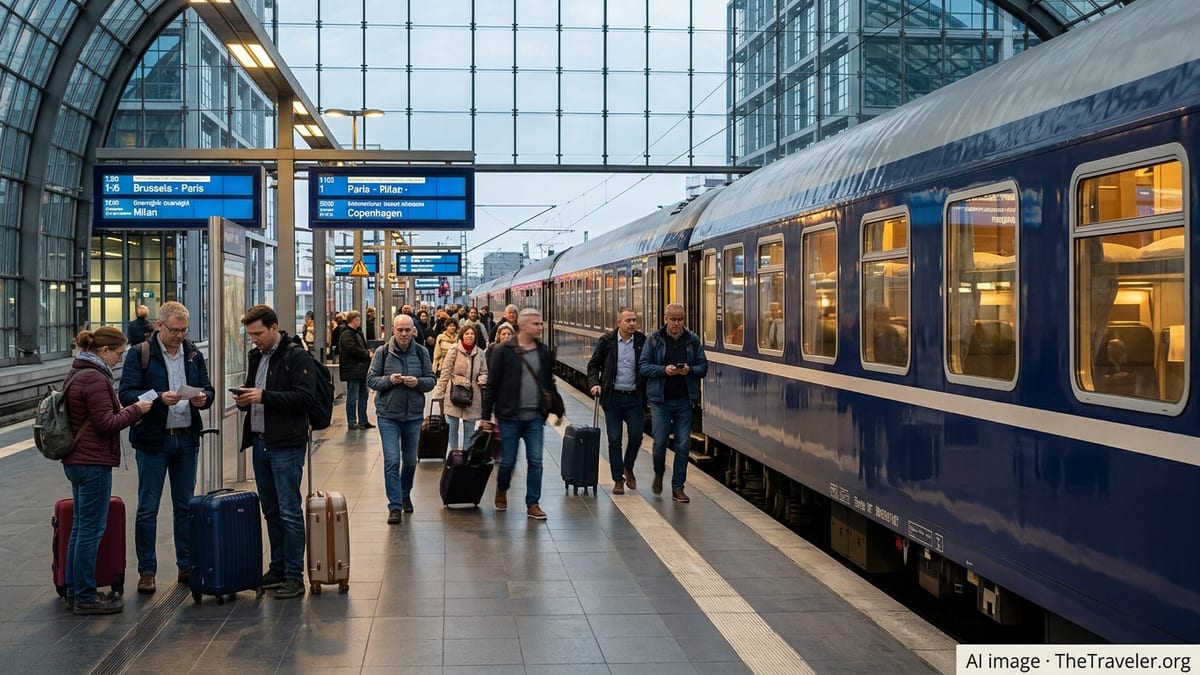
Austria’s ÖBB Puts Night Trains at the Center of Rail Strategy
Austria’s national railway, ÖBB, has positioned itself as the continent’s leading night train operator, backing that ambition with one of Europe’s most significant rolling stock renewal programs. Public information from the company indicates that billions of euros are being directed into new trains across its network, with a substantial share earmarked for expanding and modernizing Nightjet sleeper services.
A new generation of Nightjet trains built by Siemens is gradually entering service, featuring compact “mini cabins,” upgraded sleeper and couchette cars, and improved accessibility. Industry briefings describe the design as a step-change from the aging sleeper fleets that long defined overnight rail in Europe, with an emphasis on privacy, digital connectivity and energy efficiency. The European Union Agency for Railways has highlighted the authorisation of these trains as a milestone in reviving night services after years of stagnation.
ÖBB’s 2024 and 2025 timetables show the operator using these trains to deepen its international reach. Services branded as Nightjet now connect key hubs including Vienna, Berlin, Zurich, Hamburg, Rome and coastal destinations in Italy and Croatia, reinforcing Austria’s role as a crossroads in Europe’s rail map. Seasonal additions and upgraded routes through the Alps are being promoted as alternatives to congested airports for both business and leisure travelers.
The carrier’s strategy aligns with a broader domestic push to shift mobility from road and air to electric rail. Company presentations emphasize that new overnight services are meant not only to capture tourism flows but also to support Austria’s climate targets by cutting emissions on medium-distance travel corridors.
New Routes and New Players Expand the Overnight Network
Austria is no longer alone in betting on the night train. Recent timetables and industry coverage show a growing patchwork of operators extending or relaunching overnight routes that disappeared during the 2000s and early 2010s. While some legacy lines remain concentrated in central and eastern Europe, new services are increasingly linking western capitals and major tourist destinations.
Belgium-based European Sleeper has emerged as one of the most closely watched new entrants. Launched with a Brussels–Berlin service via Amsterdam, the company has since expanded towards Prague and announced further plans for routes connecting capitals and major cities that previously relied heavily on low-cost airlines. Public communications from the operator outline an ambition to rebuild a coherent night-train network stretching from the North Sea to central Europe.
National railways in France, Germany, Italy and the Nordic countries are also recalibrating their overnight offerings. EuroNight services continue to join cities such as Stockholm and Berlin, Warsaw and Vienna, and cross-border links through the Alps and the Balkans are gradually being reinforced. Some experiments have faltered, with premium start-ups struggling to secure long-term funding, but the overall trend in published timetables is of more night routes and rising frequencies on corridors where demand has proved resilient.
Despite this momentum, industry surveys note that competition from low-cost carriers and long-distance buses remains intense, and overnight trains still serve only a fraction of potential city pairs. For now, expansion is highly targeted, focusing on routes long enough to allow a full night’s sleep and with sufficient passenger volume to support modern sleeper rolling stock.
Climate Goals and EU Policy Put Night Rail in the Spotlight
The revival of night trains is closely linked to Europe’s climate agenda. Analysis by the European Environment Agency indicates that rail produces significantly lower greenhouse gas emissions per passenger-kilometre than aviation, particularly on electrified lines powered by increasingly decarbonised grids. Policymakers view shifting medium-distance journeys from planes to trains as essential to meeting transport decarbonisation targets under the European Green Deal.
European Union institutions have repeatedly identified cross-border night trains as a tool to help achieve climate-neutral mobility by 2050. Earlier studies from the Publications Office of the EU documented the sharp decline of sleeper services after 2010 and called for measures to reverse that trend. More recent strategy papers and parliamentary reports frame night trains as assets for sustainable tourism, enabling visitors to reach peripheral regions and smaller cities without relying on short-haul flights.
In 2024 and 2025, the European Commission and the European Union Agency for Railways highlighted pilot cross-border services and simplified regulatory procedures as tangible steps in this direction. New authorisations for modern sleeper trains, including ÖBB’s Nightjet fleet, have been presented as proof that long-distance night rail can be commercially viable under Europe’s liberalised rail market, provided access charges, timetabling and station capacity are coordinated across borders.
A recent initiative from the European Commission to introduce rules supporting “one journey, one ticket” for multimodal trips is expected to make international rail, including night services, easier to book. The proposal aims to integrate different operators’ schedules and strengthen passenger rights, with the goal of removing friction that currently nudges travelers back toward air travel when planning complex cross-border routes.
Tourism, Comfort and the New Appeal of Slow Overnight Travel
Beyond climate metrics and infrastructure policy, night trains are benefiting from a shift in how Europeans and international visitors think about travel itself. Tourism bodies and rail promotion campaigns increasingly present overnight rail as part of a broader “slow travel” movement, where the journey becomes a central part of the holiday experience rather than a mere transfer between destinations.
New sleeper designs from ÖBB, Nordic operators and others foreground privacy, onboard comfort and simple digital booking tools. Mini cabins, modern lighting, improved sound insulation and accessible facilities respond to past criticism that night trains were cramped and noisy. Publicly available reviews frequently point to the ability to board in a city centre after work, sleep through the night and arrive downtown in the morning as a key advantage over air travel, which often requires suburban airports and early check-ins.
Regional tourism strategies referenced in European Parliament reports treat night trains as a way to disperse visitors beyond a handful of overcrowded hotspots. Overnight links to second-tier cities, mountain resorts and coastal towns are seen as a means to extend stays, smooth seasonal peaks and encourage more environmentally conscious itineraries. Some destinations are coordinating marketing with rail operators to highlight package offers that combine night trains with local public transport or cycling infrastructure.
Industry observers caution, however, that the renewed appeal of night trains will depend on reliability and price. Significant delays on long cross-border routes, complex reservation systems and fares that undercut budget airlines only on some dates can undermine the sector’s sustainability narrative. Ensuring that the upgraded rolling stock and revamped services deliver consistent quality is likely to be as important as emissions savings in sustaining the current surge of interest.
Infrastructure and Investment Challenges Shape the Next Phase
Despite the upbeat headlines, Europe’s night train revival remains constrained by infrastructure and coordination challenges. Rail think-tank studies underline that national networks were not always built with harmonised signaling systems, track standards or station layouts, complicating the operation of modern sleeper trains across multiple countries in a single journey.
Ongoing investment programs are beginning to address some of these bottlenecks. Framework contracts between ÖBB and major manufacturers such as Siemens for hundreds of new electric multiple units and long-distance trainsets are intended to modernize fleets, reduce energy use and increase capacity for both day and night services. Similar procurement efforts in other member states focus on trains capable of operating under different national power systems and safety rules, a prerequisite for seamless overnight corridors.
EU-level policy papers on the future of sustainable railway transport stress that infrastructure upgrades must go hand in hand with improved timetabling and station management. Night trains compete for limited track slots with freight and high-speed day services, especially on busy international axes. Aligning priorities among infrastructure managers, state-owned incumbents and new private operators remains a delicate task.
For now, the momentum is moving in favour of more overnight rail, not less. If Austria and its neighbours can translate rolling stock orders, regulatory reforms and climate ambitions into a reliably pleasant experience for passengers, Europe’s night trains look set to play a far greater role in the continent’s sustainable travel future than they did just a decade ago.