


More news on this day
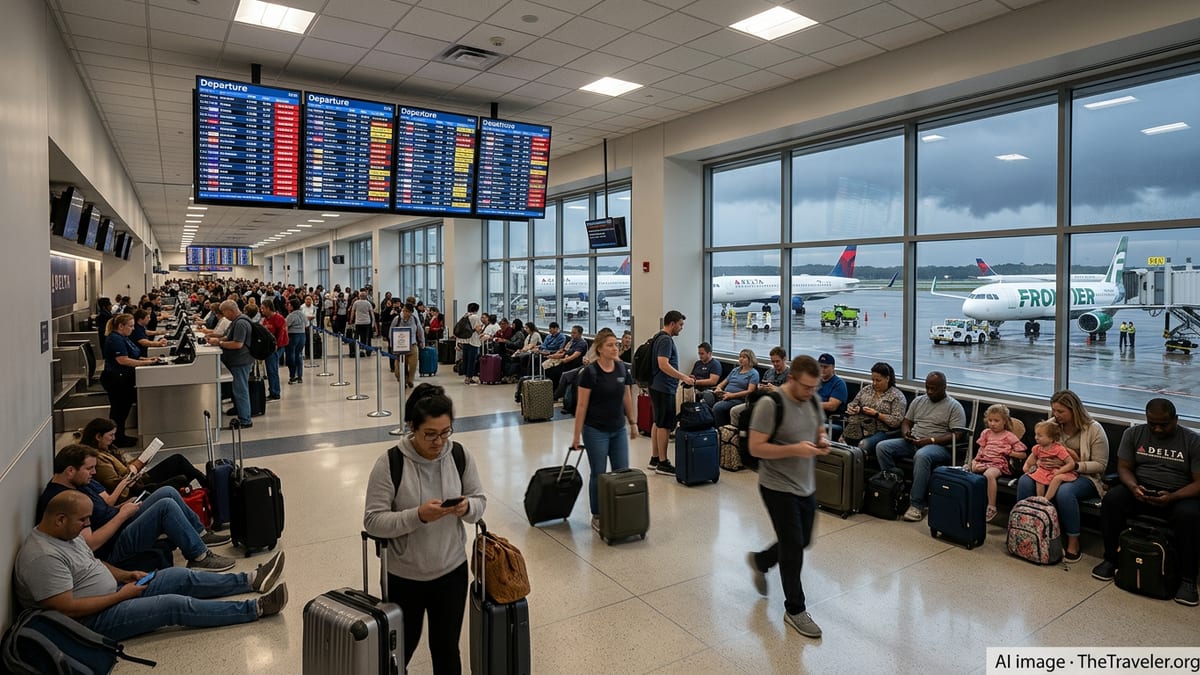
Severe thunderstorms and flash flood threats across western Pennsylvania and a swath of the eastern United States are disrupting flights, placing Pittsburgh among several cities bracing for another turbulent stretch of summer air travel.
Get the latest news straight to your inbox!
Storm Systems Put Pittsburgh in the Crosshairs
Recent outlooks from federal forecasters show a corridor of strong to severe thunderstorms building over the Ohio Valley and Appalachians, with heavy rain potential centered on western Pennsylvania and areas south of Pittsburgh. A series of slow-moving storm clusters is expected to repeatedly track over similar locations, raising concern over rapid runoff, swollen creeks, and short-fuse flash flooding in urban corridors.
Weather briefings focused on the Pittsburgh region highlight the risk that repeated downpours could overwhelm drainage in low-lying communities and along key highway approaches to Pittsburgh International Airport. Although the city is far from coastal storm tracks, its three-river geography and dense transportation network have historically made it vulnerable when high-intensity rain coincides with peak travel periods.
The same atmospheric pattern that is targeting the Pittsburgh area is also fueling strong storms from the Mid-Atlantic into parts of the Midwest, creating a broad zone where lightning, hail, and damaging wind gusts may affect aviation operations. Publicly available guidance suggests that even airports not directly under the heaviest rain bands could see ripple effects as airlines reroute aircraft and crews to avoid the most active cells.
While the current setup is not comparable to historic river floods that have inundated downtown Pittsburgh in past decades, short-lived but intense cloudbursts are increasingly a central concern for planners. Localized flash flooding and water covering roadways near the airport can be enough to slow passenger access, lengthen security lines, and push back departure times during already busy summer days.
Ground Delays and Cancellations Spread Across the Network
Flight-tracking data and public dashboards from aviation authorities indicate that weather-driven constraints remain a leading cause of delays across the United States, particularly at large hubs that funnel traffic through storm-prone regions. When severe thunderstorms build over key corridors, the National Airspace System often responds with ground stops or ground delay programs that hold flights at their origin until conditions improve downline.
Guidance material from the Federal Aviation Administration explains that ground stops are typically used when thunderstorms, low visibility, or other hazards temporarily reduce how many aircraft an airport can safely handle. When that occurs at a major hub, departures bound for that airport may be paused for set periods, causing rolling delays as schedules bunch up and gate space tightens.
As storms bearing heavy rain and frequent lightning threaten the Pittsburgh region and other eastern cities, airlines have begun preemptively trimming schedules in some markets, according to publicly available flight status boards. Short-haul routes to and from affected cities are usually the first to see tactical cancellations, since cutting a few frequencies can create buffer room for the remainder of the schedule.
These operational moves are designed to prevent more chaotic disruptions later in the day, but they can still leave travelers with unplanned overnight stays or missed connections. With limited spare aircraft and constrained staffing, any series of storm-related pauses can quickly cascade, particularly when multiple airports in the same region are hit by severe weather within hours of one another.
Travel Waivers and Passenger Options Multiply
In recent weeks, several major carriers have repeatedly issued weather-related travel waivers for thunderstorms affecting the East Coast and key metropolitan areas, according to airline advisories and widely shared customer notices. These waivers typically allow passengers booked to, from, or through named airports to change travel dates without paying standard change fees, provided the rebooked trip remains within a defined window.
Automated trackers of airline policies show that waivers have become more common during summer convective seasons, reflecting a strategy of encouraging voluntary rebooking before severe storms peak. By spreading demand across several days, airlines aim to reduce the number of travelers stranded at airports when a line of storms forces prolonged ground holds or ramp closures.
As forecasters flag renewed severe weather risks around Pittsburgh and neighboring states, similar waivers are likely to appear for key markets in the Mid-Atlantic and Northeast. Passengers connecting through these hubs, even if they are not staying in storm-affected cities, can benefit from checking their carrier’s alerts and adjusting itineraries ahead of time.
Industry analysis of past extreme-weather disruptions suggests that travelers who act early, when options are widest, fare better than those waiting until cancellations begin to pile up. Seats on alternative flights, especially nonstop routes and morning departures that are less exposed to afternoon storm cycles, can sell out rapidly once widespread delays become apparent.
Why Summer Storms Hit Aviation So Hard
Researchers studying the intersection of severe weather and air transportation note that convective storms are uniquely disruptive, even compared with winter blizzards or tropical systems. While snow and ice events can trigger large-scale shutdowns, they often evolve more slowly, giving airlines and airports time to prepare. Thunderstorms, by contrast, can develop rapidly and shift course within minutes, repeatedly forcing controllers to adjust arrival paths and departure flows.
Academic work examining past extreme-weather events has documented how localized hazards like lightning near the airfield or microbursts along the final approach can lead to sharp reductions in airport capacity. Even when a storm is relatively brief, the backlog created during a one- or two-hour slowdown can spill well into the evening, particularly at hubs that already operate near their maximum throughput on busy days.
Summer storms also coincide with peak leisure travel, meaning planes are fuller and fewer empty seats are available to absorb displaced passengers. When flash flooding affects ground transportation around airports, the problem compounds, as late-arriving travelers miss check-in cutoffs and must be rebooked alongside those whose flights are canceled outright.
In cities like Pittsburgh, where aviation infrastructure has grown to support both domestic and international links, even a short-lived period of intense weather can complicate connections across the broader network. Crews may time out after extended holding or diversion, aircraft may need inspections after severe turbulence or hail encounters, and maintenance schedules can be thrown off by unexpected overnight relocations.
What Travelers Through Pittsburgh and Beyond Can Expect
With severe thunderstorms poised to affect Pittsburgh and other U.S. cities, passengers are being urged by airlines and consumer advocates to build more flexibility into itineraries. Public guidance widely shared by carriers recommends allowing extra time to reach airports when heavy rain is in the forecast, signing up for real-time flight alerts, and traveling with essential items in carry-on luggage in case checked bags are delayed en route.
Travel analysts observing this summer’s pattern of repeat thunderstorm disruptions point out that afternoon and evening flights are generally more vulnerable to cascading delays once storms erupt along key routes. Where possible, some advise targeting earlier departures from Pittsburgh and other storm-exposed hubs, or choosing longer connection windows that can absorb moderate schedule shifts.
For those already en route when storms flare, airport displays and mobile apps remain the primary tools for tracking changing gate assignments and revised departure times. If connections are tight, speaking with airline agents via in-app chat or customer service lines as soon as an initial flight shows signs of delay can improve the odds of securing alternative options before they disappear.
As the broader climate pattern delivers more episodes of high-intensity rainfall and severe thunderstorms during the warm months, Pittsburgh and many other U.S. cities are likely to see travel disruptions become a recurring feature of the summer calendar. For now, with a fresh round of storms and flash flood risks looming, travelers passing through affected hubs face another test of the air system’s resilience and their own flexibility.