

More news on this day
With Asia’s cruise sector recording strong passenger growth and new ships homeporting in Singapore and across the region, travelers are increasingly combining Malaysia, Thailand, Vietnam, Hong Kong, and Japan into multi-country cruise itineraries that demand more advance planning than a traditional fly-and-flop holiday.
Get the latest news straight to your inbox!
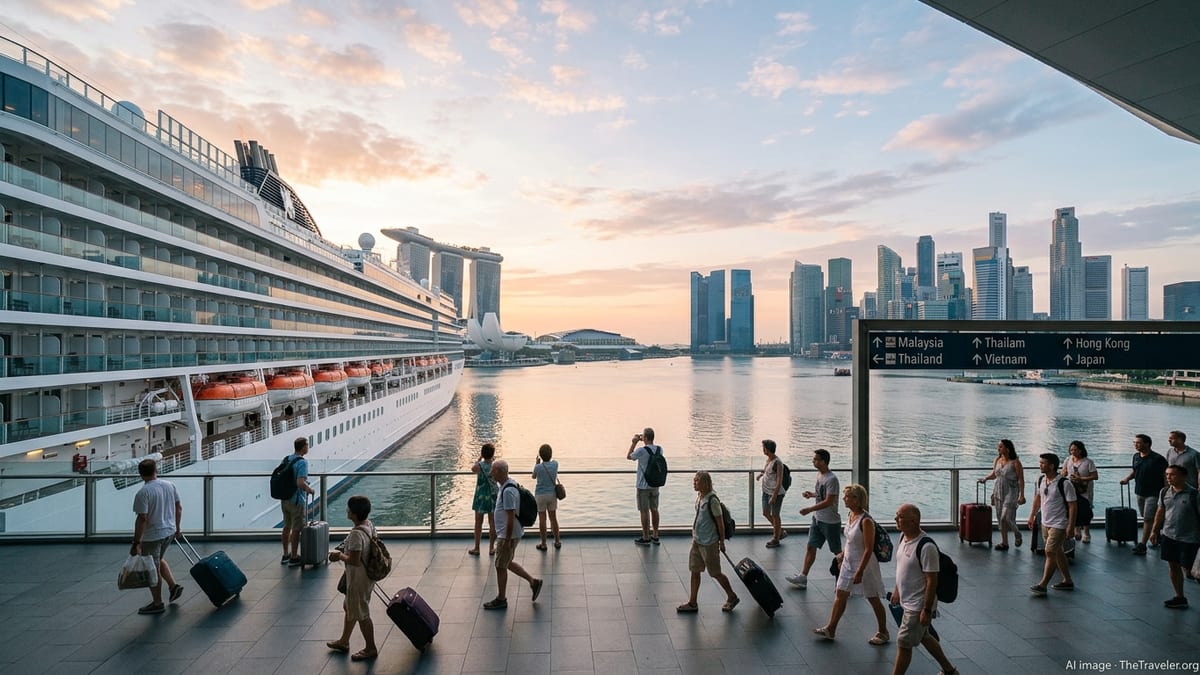
Singapore’s Expanding Role as Asia’s Cruise Hub
Recent industry coverage indicates that Singapore has cemented its position as a leading cruise gateway in Asia, with upgraded infrastructure and a growing roster of ships homeporting there for regional and longer-haul sailings to North Asia. Reports highlight a S$40 million facelift at Marina Bay Cruise Centre, expanding passenger capacity and redesigning landside areas to cope with record throughput and the arrival of larger vessels, including Disney Cruise Line’s first Asia-based ship, Disney Adventure, now operating year-round from the city-state.
Travel trade publications describe how this expansion comes amid broader growth in Asia’s cruise market, with ports across Malaysia, Vietnam, Hong Kong, and Japan reporting strong ship calls and passenger numbers through 2025. Operators have scheduled more varied itineraries from Singapore, ranging from short two to five night cruises around the Malay Peninsula to longer seasonal repositioning voyages up to Japan that call at Thailand and Vietnam along the way. For travelers, this means more choice of routes, price points, and departure dates, but also more complexity in understanding entry rules for multiple countries in a single trip.
From a practical standpoint, sailing from Singapore usually means embarking at Marina Bay Cruise Centre, rather than older terminals geared more to regional ferries. Publicly available information and traveler reports point to improved check-in areas, clearer traffic flows for taxis and ride-hailing services, and better connectivity to the city’s downtown hotel districts, which can be useful for travelers planning pre- and post-cruise stays.
Visas, Entry Rules, and Passport Validity Across Multiple Ports
When a single voyage touches Malaysia, Thailand, Vietnam, Hong Kong, and Japan, entry rules can differ significantly by nationality and port, and recent documentation from cruise lines shows a continued emphasis on passport validity and visa checks at embarkation. Many travelers from visa-exempt countries, including the United States and much of Europe, can visit Singapore, Malaysia, and Thailand for short leisure stays without arranging a visa in advance, provided they respect maximum stay limits that are typically 30 to 90 days. However, cruise lines still advise checking official government portals before departure, as visa-free schemes can differ for overland stays versus cruise calls.
For Vietnam, publicly available guidance shows that visa rules remain more complex for cruise passengers than for air arrivals. Some ports, such as Phu My for Ho Chi Minh City, have not always been included in older lists of approved e-visa entry points, leading some lines to coordinate ship-arranged group visas or process visas at the pier as part of shore excursions. Travelers are advised to review the specific terms published by their cruise operator, which often outline whether an individual e-visa, ship-sponsored visa, or no visa at all is required based on the itinerary and passport held.
Japan, a popular end point or mid-cruise highlight on sailings from Singapore, has gradually restored visa exemptions for many markets, although official lists and conditions specify that travelers from non-exempt countries must secure a visa in advance. Recent cruise documentation circulated for Asia itineraries stresses that passports should have at least three to six months’ remaining validity beyond the final travel date, even where national immigration rules are less strict, because cruise lines may enforce their own higher thresholds to avoid disruption at intermediate ports.
In Hong Kong, most short-stay visitors from major outbound markets continue to enjoy visa-free entry for tourism, but carriers still recommend checking the latest notices given the territory’s role as a major regional hub and the potential for changes related to public health or security developments. Travelers planning to do independent touring at each destination should also confirm whether exit and re-entry rules apply if they are combining pre- or post-cruise land travel with multiple cruise segments.
Seasonality, Itinerary Design, and Regional Weather Patterns
Asia’s cruise calendar from Singapore to North Asia is shaped as much by monsoon patterns and typhoon season as by school holidays and peak travel periods. Industry schedules for 2025 and 2026 show ships based in Singapore focusing on Southeast Asia itineraries that loop through Malaysia and Thailand during the Northern Hemisphere winter, then repositioning to Japan for spring and summer seasons built around cherry blossom and festival periods. This rotation means that travelers seeking a single voyage that links Singapore with Japan may find more options in the shoulder periods around March, April, and October.
Weather risk is another factor. The Southwest Monsoon typically influences conditions around the Malay Peninsula and Gulf of Thailand from mid-year, while the Western North Pacific typhoon season affects sailings in the South China Sea and around Hong Kong and Japan, often peaking from August to October. Cruise lines may adjust routes, shorten port calls, or switch ports altogether if forecasts indicate rough seas or port closures, which travelers should factor into expectations and travel insurance plans.
Reports from regional tourism and travel analytics firms also highlight continued strength in Asia-Pacific tourism, with cities such as Singapore, Bangkok, Ho Chi Minh City, Hong Kong, and Tokyo ranking among top trending destinations. A weaker yen over recent years has added to Japan’s appeal for inbound travelers looking for value, which in turn has reinforced demand for cruise itineraries that combine Southeast Asian warmth with cooler Japanese seasons in a single trip. For many passengers, this creates opportunities to book back-to-back segments, using Singapore or Hong Kong as a turnaround point.
Given these dynamics, travelers are encouraged to examine not just departure dates but also the sequence of ports and sea days when comparing itineraries. Shorter regional cruises from Singapore into Malaysia and Thailand may be more sheltered and less affected by typhoon risk than longer voyages that venture north toward Hong Kong and Japan during late summer, while spring sailings can offer more stable conditions and comfortable temperatures at both ends of the route.
On-the-Ground Tips in Key Ports of Call
Practical experience from recent seasons shows that starting a cruise in Singapore offers some of the region’s most efficient pre-cruise logistics. The city’s rail system connects Changi Airport with central hotel districts, and ride-hailing services commonly used in Southeast Asia operate widely in the downtown and port areas. Travelers often choose to stay near Marina Bay or the central business district to minimize transfer times to Marina Bay Cruise Centre while still being close to major attractions and dining areas.
In Malaysia, frequent ports of call such as Port Klang for Kuala Lumpur and Penang provide a contrast between large urban centers and heritage districts. Publicly available destination briefings suggest that port distances to city centers can be significant, with organized shore excursions or pre-booked transfers often saving time in traffic. Street food and local markets remain core draws, but health advisories regularly recommend standard precautions such as choosing busy vendors, consuming food cooked to order, and using bottled or filtered water where tap water quality is uncertain.
Thailand and Vietnam continue to emphasize cultural and culinary tourism in their cruise marketing, with itineraries from Singapore regularly calling at ports that serve Bangkok, Phuket, Ho Chi Minh City, Da Nang, and Halong Bay. Reports from tourism boards and travel media flag renewed investment in waterfront infrastructure and excursion offerings, from temple visits and cooking classes to cycling tours and wellness experiences. Travelers with limited time in port often benefit from prioritizing one or two key experiences, as traffic congestion and long transfer times can reduce flexibility for independent exploration.
Further north, Hong Kong and major Japanese ports such as Yokohama and Osaka offer dense transit networks and a wide range of self-guided sightseeing options. Public information indicates that contactless payment and transit cards are widely accepted in both destinations, which can simplify moving between cruise terminals, city centers, and attractions. However, cruise passengers may encounter crowding at popular landmarks during weekends and national holidays, particularly during festivals and school breaks, so it can be useful to pre-book timed-entry attractions or explore less central neighborhoods for a more relaxed experience.
Health, Safety, and Responsible Tourism Considerations
As Asia-Pacific travel volumes recover and in some markets surpass pre-pandemic levels, health and safety guidance for cruise passengers has evolved. Cruise lines sailing from Singapore and around the region continue to publish updated health protocols, which can include vaccination recommendations, pre-boarding health questionnaires, and onboard medical support details. While many countries have relaxed earlier emergency measures, public information still stresses the importance of travel insurance that explicitly covers cruise travel, medical care abroad, and potential itinerary disruption.
Environmental and community impact are also gaining prominence in regional tourism strategies. Reports from tourism organizations and industry associations highlight efforts to manage visitor flows in sensitive destinations such as historic city centers, coral reefs, and UNESCO-listed sites commonly visited on shore excursions. Travelers are encouraged to follow local guidelines on waste disposal, reef-safe sunscreen where applicable, and respectful behavior in religious or culturally significant sites, including dress codes and photography rules.
For many ports, the rapid return of cruise traffic has renewed discussion about balancing economic benefits with quality of life for residents. Publicly available commentary points to measures such as spreading arrivals across multiple days, staggering tour departure times, and promoting lesser-known neighborhoods or secondary attractions to reduce congestion at headline sights. Passengers can support these efforts by considering small-group or locally run tours, avoiding crowding at peak hours where possible, and spending in local businesses beyond large shopping complexes.
Overall, planning a cruise from Singapore through Malaysia, Thailand, Vietnam, Hong Kong, and Japan in today’s environment involves more than simply selecting a ship and cabin type. Travelers who take time to understand evolving entry rules, seasonal weather patterns, port logistics, and responsible tourism practices are better positioned to enjoy a smoother journey across some of Asia’s busiest and most diverse maritime routes.