


More news on this day
Prime Minister Narendra Modi delayed his departure from Delhi Airport on Sunday afternoon to avoid triggering heavy security traffic at the same time millions of students were traveling to centers for the NEET UG 2026 re-examination, according to multiple media reports from New Delhi.
Get the latest news straight to your inbox!
Convoy Held Back As Exam Window Opened
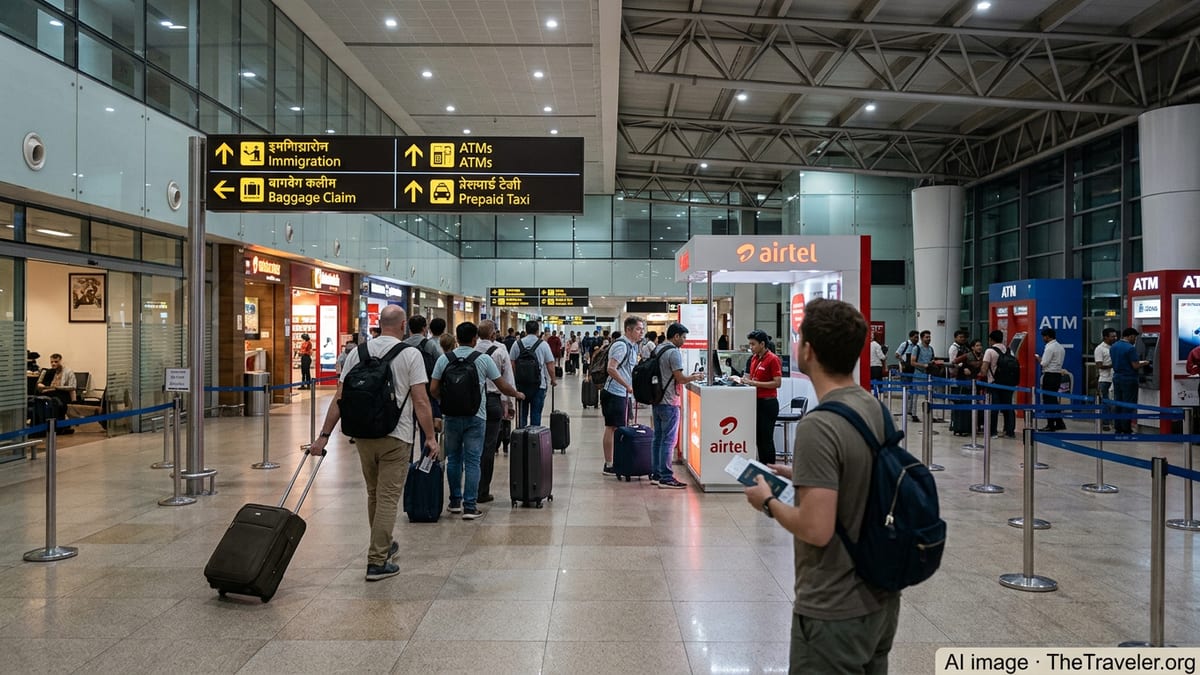
Published coverage indicates that Modi’s aircraft landed in the Indian capital around 1:15 pm local time, shortly before the start of the high-stakes National Eligibility cum Entrance Test Undergraduate, or NEET UG, re-exam scheduled from 2:00 pm to 5:15 pm. Instead of immediately departing for his official residence, reports say the prime minister remained at the airport for roughly 45 minutes while the examination window opened.
By holding the departure of the prime ministerial convoy, which typically involves extensive security arrangements and rolling traffic restrictions, authorities aimed to prevent additional disruption on key approach roads. The decision came on a day when large numbers of candidates and their families were already on the move toward schools and colleges designated as test venues.
Domestic television and digital news outlets described the move from Delhi Airport as a targeted attempt to limit the impact of so-called VVIP movement on what was already expected to be one of the busiest exam days of the year in Indian cities. Motorcades for top officials often result in temporary closures or diversions along major arterial routes.
The reported pause in convoy movement contrasted with other traffic pressures seen in some parts of the country, where separate political events and routine congestion were blamed for delays that left a number of candidates struggling to reach their centers on time.
High-Stakes Re-Examination After Paper Leak Row
The day’s logistical choices unfolded against the sensitive backdrop of a national re-test. NEET UG 2026, the entrance exam that determines admission to undergraduate medical, dental and allied health courses across India, was cancelled last month after allegations that the original paper held on 3 May had been compromised.
Subsequent announcements from the National Testing Agency, the body responsible for the exam, set 21 June as the new date for the nationwide retest. Publicly available information shows that more than 22 lakh candidates were registered to sit the re-exam across hundreds of cities in India and a network of international centers.
The cancellation and rescheduling triggered weeks of anxiety for students and parents, along with political criticism and legal challenges. Student groups, opposition parties and professional associations called for stronger safeguards and greater transparency around the conduct of high-volume national entrance tests.
In this context, any additional disruption on exam day, particularly in urban centers like Delhi, Mumbai, Bengaluru or Nagpur, risked compounding frustration among candidates already coping with travel time, security checks and strict reporting windows at their assigned halls.
Massive Exam-Day Operations Across India and Abroad
According to exam-related briefings and media coverage ahead of the test, the NEET UG 2026 re-examination was organized on an unprecedented scale. The National Testing Agency outlined plans to conduct the pen-and-paper test across more than 5,400 centers in 551 cities in India, with additional locations in 14 foreign cities to accommodate overseas candidates.
Reports indicate that the agency deployed extensive CCTV networks and other surveillance measures to monitor more than 90,000 individual rooms, alongside jammers and reinforced protocols for the storage and transportation of question papers. Officials emphasized that the focus was on restoring confidence in the integrity of the exam following the earlier controversy.
States and local administrations were also drawn into the operation. Coverage from various regions highlighted arrangements such as increased public transport frequency, exam-day advisories on traffic, and in some cases free or discounted bus services for candidates. In large metros, district-level coordinators were tasked with keeping roads as clear as possible near examination hubs during the afternoon window.
The need to balance security, fairness and accessibility meant that any added burden on critical arteries, including from security convoys, had the potential to ripple quickly through already crowded urban networks. This helps explain why the timing of vehicle movements around Delhi Airport drew particular attention on social media and in news reports.
Traffic Concerns Highlight Pressure On Urban Mobility
The spotlight on Modi’s delayed airport departure came as images and videos circulated online of students in several cities hurrying through congested streets toward their centers. In some locations, accounts shared by local media and social platforms described bottlenecks near large testing clusters, where multiple schools within a small radius were used as examination venues.
In Delhi and the National Capital Region, exam centers are frequently located along key radial corridors and ring roads, where traffic volumes are already substantial on weekends. Even short, unplanned stoppages or temporary diversions can slow vehicle movement, affecting not only exam candidates but also emergency services and public transport timetables.
The reported decision to keep the prime minister’s convoy within airport premises during the crucial pre-exam period was therefore interpreted by many observers as a symbolic acknowledgment of these pressures. It also fed into a wider public discussion on how high-security movements intersect with the everyday mobility needs of citizens, particularly during national-level events such as competitive exams or festivals.
Elsewhere in the country, separate political rallies and routine congestion were cited by local coverage as contributing factors when some candidates arrived after gate closure times. These incidents renewed calls from education commentators and urban planners for more coordinated traffic management plans aligned with major examination schedules.
Student Experience Remains Under Scrutiny
While the reported airport delay was presented by several outlets as a student-friendly gesture, debate continues over broader systemic questions raised by the NEET UG 2026 cycle. The cancellation, rescheduling, intense security measures and tight timelines have underscored how dependent millions of young people are on complex national testing machinery functioning smoothly.
Parent groups and education analysts have stressed that beyond high-level decisions, the on-the-ground experience of candidates is shaped by local logistics, including late-night travel, access to reliable public transport and clear communication from exam organizers. Instances of confusion over center locations or admit card details in isolated cases have added to the sense of uncertainty.
For many families, exam day itself involves long journeys across city boundaries, early departures to hedge against traffic delays, and waiting outside centers until papers conclude in the evening. When combined with the emotional weight of a high-stakes test that can define academic and professional futures, even seemingly small disruptions can feel magnified.
As India continues to rely on large-scale, single-day entrance examinations for access to coveted seats in medicine and other fields, the events surrounding the NEET UG 2026 re-exam are likely to inform future conversations about exam design, digital alternatives and urban mobility planning. The decision to delay a prime ministerial convoy at Delhi Airport on re-exam day has become one of several high-profile illustrations of how deeply these tests intersect with the broader functioning of the country’s cities.