


More news on this day
A record-breaking heatwave across Europe is forcing Italy, Hungary and several neighboring countries to coordinate more closely on energy security, river transport and travel disruption, as temperatures climb, rivers retreat and critical infrastructure comes under strain.
Get the latest news straight to your inbox!
Extreme Temperatures Put Southern and Central Europe Under Pressure
The 2026 European summer has entered a new phase of heat, with meteorological services reporting temperatures widely surpassing seasonal norms from the Mediterranean to Central Europe. June has already been assessed as one of the hottest on record for western Europe, with a strong signal that August will remain warmer than average, particularly across Italy, the Balkans and parts of Central Europe.
Italy has been among the hardest hit. Public health bulletins in late June and July placed many of the country’s major cities, including Rome, Florence and Bologna, under the highest heat alert level, reflecting consecutive days of extreme temperatures and stifling nights that offer little relief. Local media coverage describes increased hospital admissions for heat-related illness and renewed debate over how well Italian cities are adapted to recurrent heatwaves.
Further north and east, Hungary and its neighbors are contending with a combination of searing temperatures and prolonged lack of rainfall. Publicly available hydrological data indicate that both the Danube and several of its tributaries have dropped toward or below key low-water thresholds at multiple measuring points, amplifying concern about cooling water supplies for power stations and navigability for commercial shipping.
Regional climate assessments link the intensity and early timing of this year’s heatwave to long-term warming trends and elevated sea surface temperatures. Scientific analyses released in recent weeks suggest that similar heat events are now significantly more likely in the current climate than they were several decades ago, framing the present disruption as part of a broader structural shift rather than an isolated anomaly.
Italy and Hungary Coordinate on Energy Security and River Management
The combination of soaring electricity demand and stressed river systems has pushed energy security to the forefront of policy discussions in both Italy and Hungary. According to published coverage, governments across the region have been reviewing contingency plans for peak power demand, emphasizing cross-border electricity flows and the reliability of thermal and nuclear plants that rely on river water for cooling.
In Hungary, reports describe persistent low water levels on the Danube affecting the operation of major energy assets. Similar challenges have emerged along the river in neighboring states, where hydropower reservoirs and nuclear facilities are monitoring inlet temperatures and volumes. Public information from grid operators indicates that system managers are preparing for further demand spikes during August while trying to preserve reserve capacity in case additional units are forced offline.
Italy’s collaboration with Hungary and other European partners is centered on sharing hydrological forecasts, coordinating regional power exchanges and discussing standards for plant output reductions during extreme heat. European-level energy bodies have highlighted the role of interconnected grids in smoothing shocks across borders, allowing countries with temporary surpluses to support neighbors facing acute constraints.
At the same time, water management agencies along the Danube and Po basins are stepping up coordination on flow allocations for navigation, cooling and agriculture. Analysts note that this requires difficult trade-offs between protecting energy infrastructure, safeguarding crop irrigation and maintaining minimum depths on key shipping channels used for fuel, grain and industrial goods.
Rivers at Historic Lows Disrupt Danube and Rhine Transport
The heatwave’s impact on river transport has become increasingly visible in recent weeks, with industry notices and logistics bulletins documenting restrictions on both the Danube and the Rhine. Barge operators on the Rhine have announced low-water surcharges, warning that exceptionally shallow conditions at traditional chokepoints are limiting vessel drafts and sharply reducing cargo loads per trip.
Along the Danube, which connects Germany, Austria, Slovakia, Hungary, Croatia, Serbia, Romania and Bulgaria, water levels have fallen to the point that some stretches are only marginally navigable for heavily laden barges. Shipping observers report that certain segments near traditional bottlenecks are forcing operators either to sail with reduced loads or to suspend services altogether until levels improve.
The consequences extend beyond freight cost increases. Countries along the middle and lower Danube rely on barge traffic for coal, fuel oil, grain and industrial inputs. When river conditions deteriorate, these flows must shift to rail and road, networks that are already strained by high summer demand and heat-related speed restrictions. Logistics analysts warn that the combination of reduced river capacity and congested overland routes is likely to push up transport costs for months.
Tourism is also feeling the effects. River cruise companies have begun adjusting itineraries, with some announced plans to bus passengers around sections of the Danube and Rhine where water levels are too low for safe passage. Travel forums and operator advisories describe last-minute route changes, ship swaps and shortened cruising segments, underscoring the vulnerability of river-based tourism to climate-driven extremes.
Travel Across Europe Faces Heat-Related Delays and Rerouting
For air and rail passengers, the immediate effects of the heatwave are uneven but noticeable. Travel-focused outlets report that Europe’s main airports have so far maintained most operations, though some hubs have experienced delays linked to heat-related ground handling constraints and occasional weather-related air traffic control restrictions. High temperatures can lengthen aircraft takeoff distances and add stress to runways and support equipment, leading to tighter safety margins and slower turnaround times.
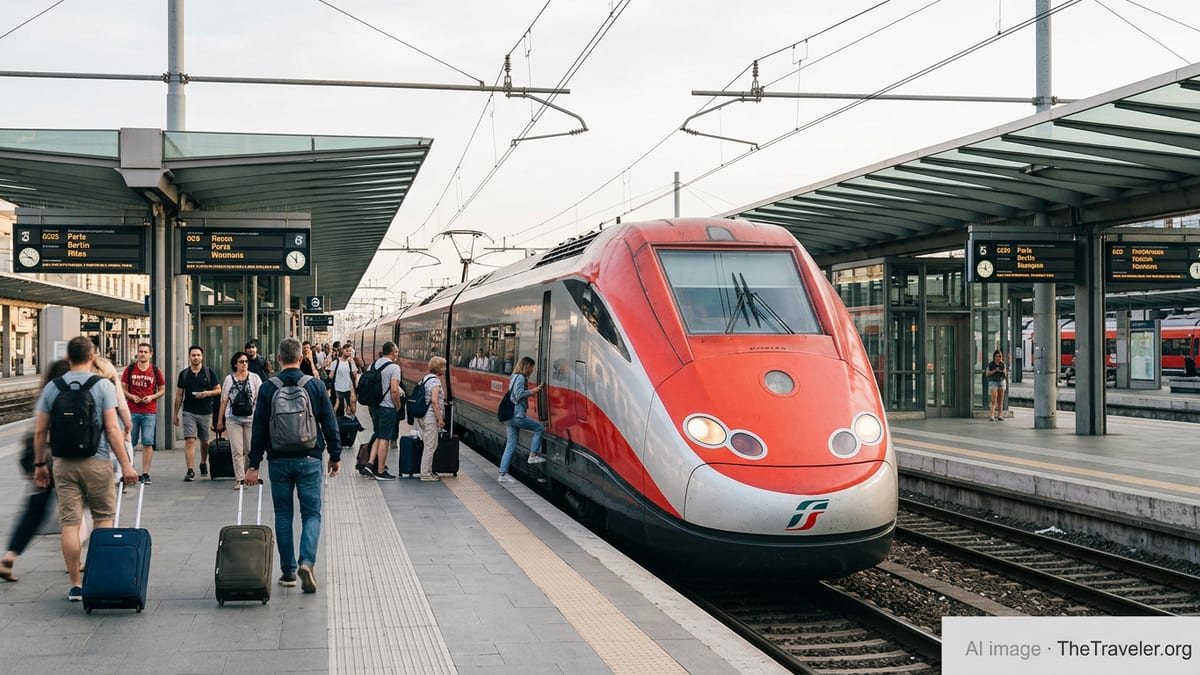
On the rail network, the combination of extreme heat and wildfire risk has led to slower speeds and schedule changes on certain lines, particularly in southern France, parts of Spain and sections of northern Italy. Heat can deform rails and overhead lines, and infrastructure managers have issued notices of temporary speed restrictions during the hottest hours to reduce the risk of damage or derailment.
Urban transport systems are also under strain. In large Italian cities, local authorities have expanded access to air-conditioned public spaces, while some municipalities across southern and central Europe are adjusting working hours and public event schedules to avoid the peak afternoon heat. These measures, while primarily aimed at public health, also affect how visitors move through cities, with more activity shifted to early morning and late evening.
Travel advisories from tourism and consumer organizations emphasize flexibility, recommending that visitors build extra time into itineraries, monitor carrier updates closely and consider alternative routes when planning cross-border journeys by rail or river. For those heading to river-cruise destinations or heat-prone inland cities, the guidance increasingly stresses the need to prepare for itinerary changes even after departure.
Longer-Term Questions for Climate Adaptation and Summer Tourism
The 2026 heatwave is intensifying an ongoing conversation across Europe about how to adapt infrastructure and tourism models to a warmer climate. Reports from regional climate and transport think tanks argue that navigation channels, power plants and urban transport systems were largely designed for 20th-century conditions that no longer apply. The repeated appearance of low-water crises on major rivers is cited as evidence that planning assumptions must be updated.
Energy specialists point to the dual dependence on rivers for both shipping and cooling as a particular vulnerability for countries such as Italy and Hungary. When water levels drop and temperatures rise, the capacity of rivers to fulfill both roles simultaneously diminishes. Suggestions in recent policy discussions include diversifying cooling technologies, investing in additional storage and reinforcing cross-border interconnections so that individual plants or basins are less critical to overall supply.
For the travel sector, this summer is reinforcing a trend that has been developing over the last decade: a gradual shift in demand away from the hottest weeks of July and August and toward the shoulder seasons of late spring and early autumn. Tour operators are reporting more interest in higher-latitude destinations and cooler mountain regions, while city-break providers are promoting off-season visits to popular Mediterranean cities.
Industry analysts note that Italy’s and Hungary’s response to this year’s heatwave, and their cooperation with neighboring states, will likely serve as a case study for how Europe manages intertwined risks to energy, transport and tourism under accelerating climate change. The outcome could shape investment priorities in river infrastructure, grid resilience and visitor management across the continent for years to come.