


More news on this day
Rail travel north of London faced major disruption on Friday evening after reports of a collision between two trains in the Bedford area, prompting a significant emergency response and halting services on a key route linking the capital with central and northern England.
Get the latest news straight to your inbox!
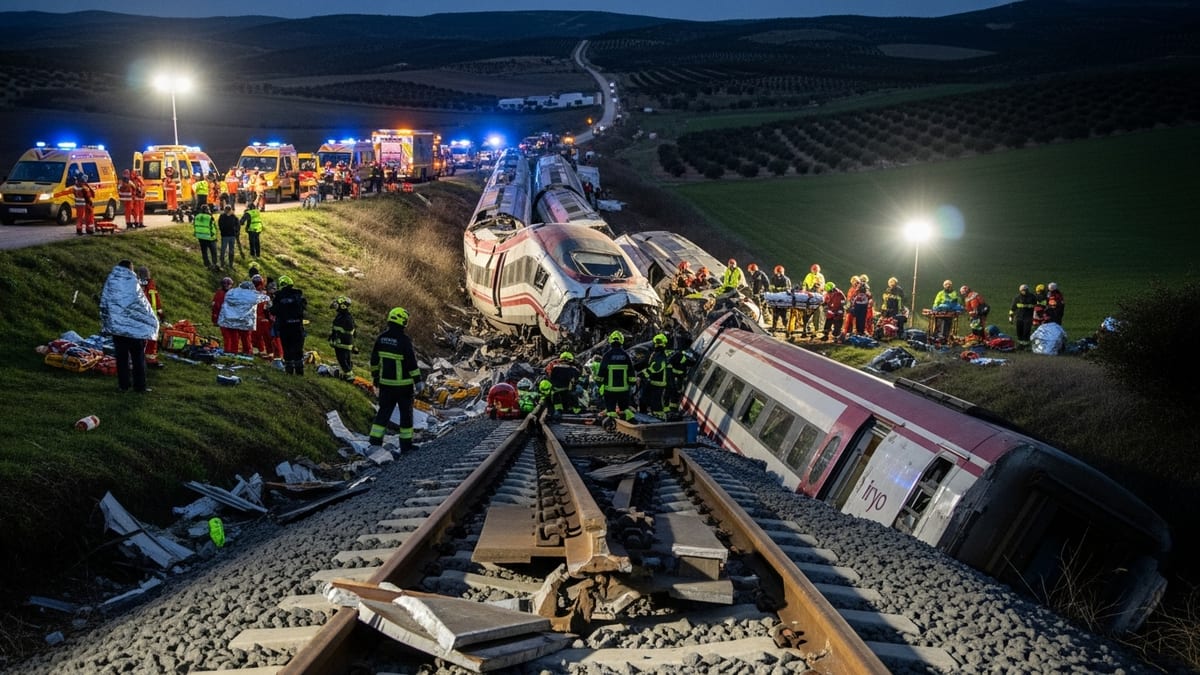
Reports of collision on key London to Leicester route
Initial information emerging on Friday indicated that the incident involved two trains on the busy main line that connects London St Pancras with Leicester and other destinations in the East Midlands. The collision was reported in the early evening near Bedford, a major junction on the corridor used by airport and long distance services.
Publicly available information from regional rail operators indicates that services were suspended or severely curtailed between London and Leicester following the incident. Rail companies advised passengers to delay travel or seek alternative routes, citing the involvement of emergency services on the line and ongoing safety checks.
Images and video shared on social media appeared to show a Luton Airport Express train stopped on the tracks with visible damage, while passengers could be seen gathered on adjacent land being guided away from the line. Other footage circulating online showed helicopters overhead and multiple emergency vehicles positioned near the railway.
Early reports suggested that the collision did not result in an immediate large scale derailment of carriages, but investigators are expected to assess the full extent of damage to the trains, track and associated infrastructure as more detailed information becomes available.
Passengers evacuated and services halted
Passengers on affected trains reported being asked to leave carriages and walk along the track to reach safe assembly points, a standard procedure in major rail incidents when overhead power is switched off and lines are closed. Some travellers described waiting in fields near the line while staff conducted headcounts and coordinated onward transport.
According to rail operator updates, services between London St Pancras and stations to the north were halted for an extended period while the incident was being managed. Trains already on the route were held at stations away from the affected section, leading to knock on delays across the wider East Midlands and Thameslink networks.
Information posted by rail companies advised that disruption could continue into the night, with limited replacement road transport available due to the scale of the closure and the location of the incident. Travellers heading for evening flights via Luton Airport Express services were among those urged to check their plans and allow substantial extra time.
Online journey planners were updated through the evening to reflect cancelled departures and revised timetables. Some passengers reported being re-routed via alternative rail corridors, while others faced extended waits at stations in London and towns across the Midlands.
Large emergency response and developing casualty picture
Publicly available updates from regional emergency services confirmed that multiple agencies were dispatched to the scene, including fire, ambulance and specialist rescue teams. Rail incidents of this type typically require coordination between local responders, the rail infrastructure manager and national rail safety bodies.
Early coverage in British media focused on the scale of the response and the potential for injuries, although detailed casualty figures were not immediately clear. Broadcasters and online outlets reported that some people were being assessed for possible injuries at the scene, while others were transported away from the area for precautionary checks.
Medical teams at the site appeared to establish triage and treatment areas close to the line, based on footage shared publicly. Such arrangements are standard in major transport incidents to ensure that any seriously injured passengers receive rapid care while those with minor injuries or no apparent harm can be processed and supported.
As with previous rail collisions in the United Kingdom and elsewhere, a clearer understanding of the human impact is expected to emerge over time as hospitals, emergency services and rail operators provide further confirmed information.
Investigation likely to focus on signalling and train movements
Incidents involving more than one train on a main line typically trigger a detailed investigation into signalling systems, communication between control centres and train crews, and the precise sequence of movements leading up to the collision. Rail safety specialists in the United Kingdom routinely examine data from on board recorders, trackside equipment and control logs in such cases.
Commentary from railway analysts appearing in early media coverage highlighted the high level of safety oversight on Britain’s rail network, where multiple layers of protections are designed to prevent trains from occupying the same section of track. Where collisions occur, attention often turns to whether there were technical failures, human error, or a combination of both.
The investigation is also likely to examine the configuration of the trains involved, their braking performance, and any signalling or protection systems specific to the Luton Airport Express and regional East Midlands services. Weather conditions, visibility and any prior reports of technical issues on the route may also form part of the inquiry.
Once initial site work is complete, investigators usually release an early factual statement before publishing a fuller report that may include recommendations intended to reduce the risk of similar events on the network in future.
Travel disruption and wider rail network impact
The incident near Bedford is expected to have a marked impact on passengers using one of the primary rail arteries north of London, particularly on a Friday evening when commuter and leisure travel is typically heavy. The main line serves business travellers, local commuters and holidaymakers heading towards the Midlands and beyond.
Rail users connecting to or from international flights at Luton Airport are among those most directly affected, given the apparent involvement of a dedicated airport service. Publicly available journey advice from operators suggests that some passengers may need to consider road based options or rebook travel for later dates if disruption continues.
Past rail incidents on key routes have shown that knock on effects can persist even after the line reopens, as rolling stock and crew are displaced from normal positions and timetables require temporary reconfiguration. Industry observers noted that operators may need several days to fully restore normal patterns of service depending on damage to infrastructure and the outcome of safety inspections.
For travellers planning journeys between London, Bedford and destinations further north, the situation remains fluid. Those intending to travel are being encouraged through public channels to monitor live service information and adjust plans accordingly as more details of the collision and the recovery operation emerge.