


More news on this day
A Holland America Line cruise to Alaska aboard the MS Zaandam has been forced to significantly alter its itinerary after a propulsion problem limited the ship’s speed, leading to the loss of multiple scheduled port calls during the height of the summer season.
Get the latest news straight to your inbox!
Mechanical Trouble Disrupts Alaska Itinerary
Reports from passengers and cruise-tracking data indicate that the mechanical issue emerged during an early June sailing of the Zaandam, a mid-sized Holland America ship that typically operates weeklong voyages between Vancouver and ports in Southeast Alaska. The ship has remained operational but is understood to be running on reduced propulsion, restricting the distances it can cover within the original schedule.
According to publicly available commentary from travelers on recent sailings, the affected voyage reached Juneau but subsequently dropped several planned ports and glacier-scenic cruising in order to return slowly to its turnaround port. The modified route has effectively transformed what was marketed as a multi-port Alaska exploration into a heavily curtailed itinerary focused on fewer stops and more sea time.
Tracking information for Zaandam shows slower-than-normal transit speeds in recent days, consistent with accounts that the vessel is operating with part of its propulsion system offline. The ship’s core hotel and onboard services are reported to be functioning as normal, with the disruption centered on how far and how fast it can safely travel.
Zaandam, launched in 2000, uses a diesel-electric propulsion system, a configuration common across the Holland America fleet. When such systems experience problems, operators often keep the vessel in service at reduced speed while arranging repairs, provided safety standards can be maintained.
Ports Dropped and Glacier Viewing Lost
The propulsion restriction has had its greatest impact on the call schedule. Public posts from passengers booked on the disrupted sailings describe the loss of several key Alaska ports that typically feature on Zaandam’s route, including popular stops used as gateways for whale-watching, fishing excursions and historic gold-rush towns.
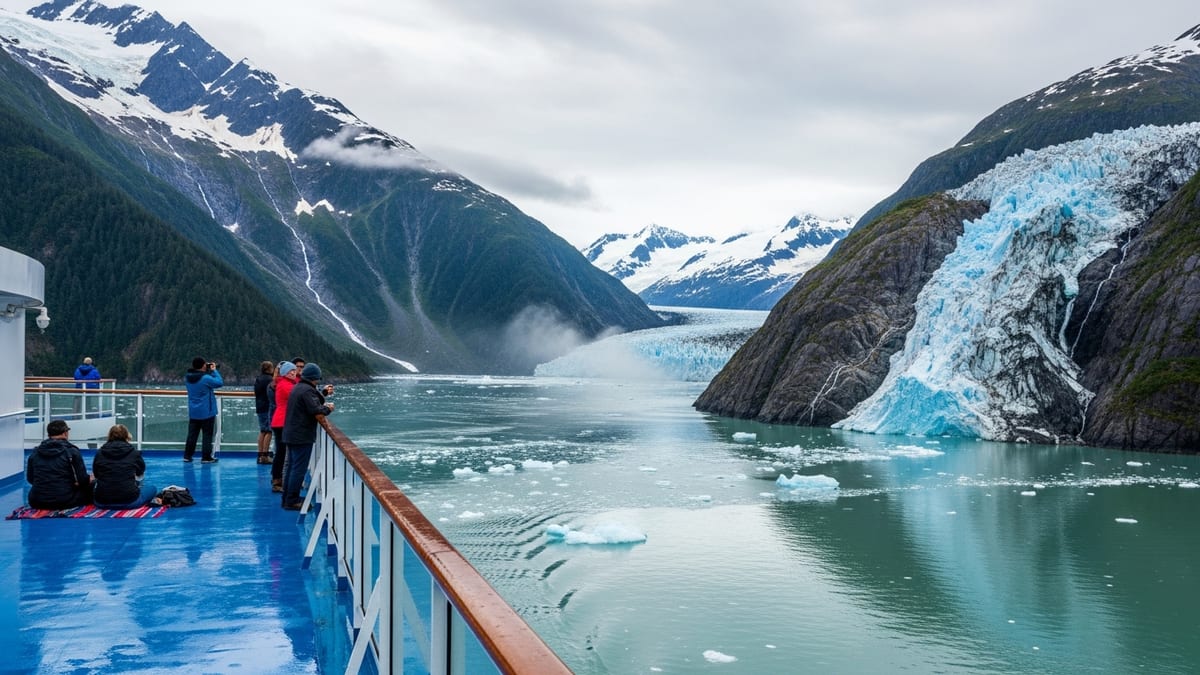
In at least one instance, reports indicate that the ship visited only Juneau before beginning a slow return journey south, bypassing additional southeast Alaska destinations that many travelers consider highlights of the trip. Glacier viewing, a central selling point for Inside Passage cruises, has also been affected where the ship can no longer reliably meet transit windows and environmental caps for entries into sensitive areas such as national park waters.
Because Alaska itineraries are tightly choreographed around narrow channels, tidal schedules and limited daily berths, even modest speed reductions can make it impossible to honor published arrival and departure times. Schedules for ports like Ketchikan, Sitka and Skagway are arranged months in advance, leaving little flexibility to shift time slots at short notice when a vessel slows.
For guests, the changes mean fewer opportunities to go ashore for the excursions that often define an Alaska voyage, from glacier hikes to flightseeing and cultural tours. Travelers posting online have expressed disappointment that what they expected to be a comprehensive Alaska experience has, at least in the short term, become a significantly trimmed itinerary.
What Travelers Are Reporting On Board
Accounts shared publicly by guests currently sailing on or recently disembarked from Zaandam describe a ship that appears stable but noticeably slower, with one side of the propulsion wash visibly stronger than the other. These observations align with suggestions that only part of the vessel’s propulsion capacity is in service.
Some passengers report being informed that the issue is not believed to compromise core safety but does constrain the speed necessary to complete the scheduled route. As a result, Holland America has reportedly pivoted to itineraries that focus on the closest reachable ports and extended sea days rather than attempting to maintain the full list of calls.
Travelers have also discussed their expectations regarding compensation for the lost ports and glacier viewing. Holland America promotes Alaska heavily on the promise of wildlife encounters and glacier scenery, and in some marketing materials outlines a Glacier Guarantee in the event certain scenic elements are missed under specific conditions. Guests are awaiting clarity on how such policies apply when a mechanical issue rather than weather or routing restrictions limits access.
Reaction among passengers has ranged from understanding of the technical complexity of propulsion systems to frustration over the timing of repairs and the level of advance notice about the ship’s condition before boarding. Some prospective guests booked on upcoming Zaandam sailings have publicly questioned whether to proceed with their plans while the situation continues to evolve.
Broader Impact on Holland America’s Alaska Season
The propulsion problem comes during a critical period for Holland America, which positions itself as a specialist in Alaska cruising with a large seasonal deployment in the region. Zaandam is one of several ships the company operates in Alaska, but each vessel plays a role in a tightly sequenced summer program of turnarounds, port calls and cruise tours that link ship itineraries with inland rail and lodge stays.
Disruptions on a single ship can have knock-on effects for logistics, including pier assignments, shore excursion partners and guest movements to and from connected land programs. Adjustments to Zaandam’s schedule may require Holland America to juggle berthing patterns and operational plans while still accommodating thousands of passengers booked across the season.
Publicly available company documents for Alaska voyages emphasize that itineraries are not guaranteed and may change due to a range of factors, including mechanical concerns. However, the prominence of Alaska in Holland America’s brand and the high cost of these vacations mean that any extended period of reduced service or repeated itinerary changes is likely to draw close attention from travelers and the wider cruise market.
Industry observers note that cruise lines facing propulsion issues typically seek to complete repairs during scheduled maintenance windows or short-notice dry dockings, but demand in peak Alaska months and the complexity of securing yard space can constrain how quickly permanent fixes are implemented.
What Booked Guests Should Watch For Next
For travelers already on board Zaandam or scheduled to sail in the coming weeks, published coverage and passenger accounts suggest it will be important to monitor official itinerary updates and any revised port lists closely. Cruise lines commonly issue updated schedules and boarding information through reservation portals and direct communications when mechanical issues affect routing.
Travel experts typically advise guests on affected sailings to keep records of any changes to ports and timings, as these can be relevant when discussing remedies such as fare adjustments, onboard credit or future cruise credits. Policies vary by departure and by the specific terms attached to a booking, particularly for promotional fares and packages.
Those still considering an Alaska cruise with Holland America this season may wish to compare ships and routes, paying attention to recent operational history and guest feedback for each vessel. With multiple Holland America ships sailing to Alaska, options may exist to switch to a different departure or ship if space and fare rules allow.
As peak Alaska season continues, the Zaandam situation highlights how dependent these itineraries are on complex propulsion technology operating flawlessly in a region known for long distances between ports, narrow navigational windows and tightly controlled access to some of North America’s most fragile coastal environments.