

For visitors and new residents, the Dutch public transport system can look impressively seamless yet slightly confusing when it comes to paying the fare. For years, the OV-chipkaart has been the standard way to tap in and out of trains, trams, buses, and metros. Now, a new contactless system called OVpay lets you travel using your regular bank card or phone, and a next-generation travel card called the OV-pas is beginning to appear. Understanding how these options compare, where each one shines, and how fares are calculated will help you travel across the Netherlands with confidence and without overpaying.
How Dutch Public Transport Works Today
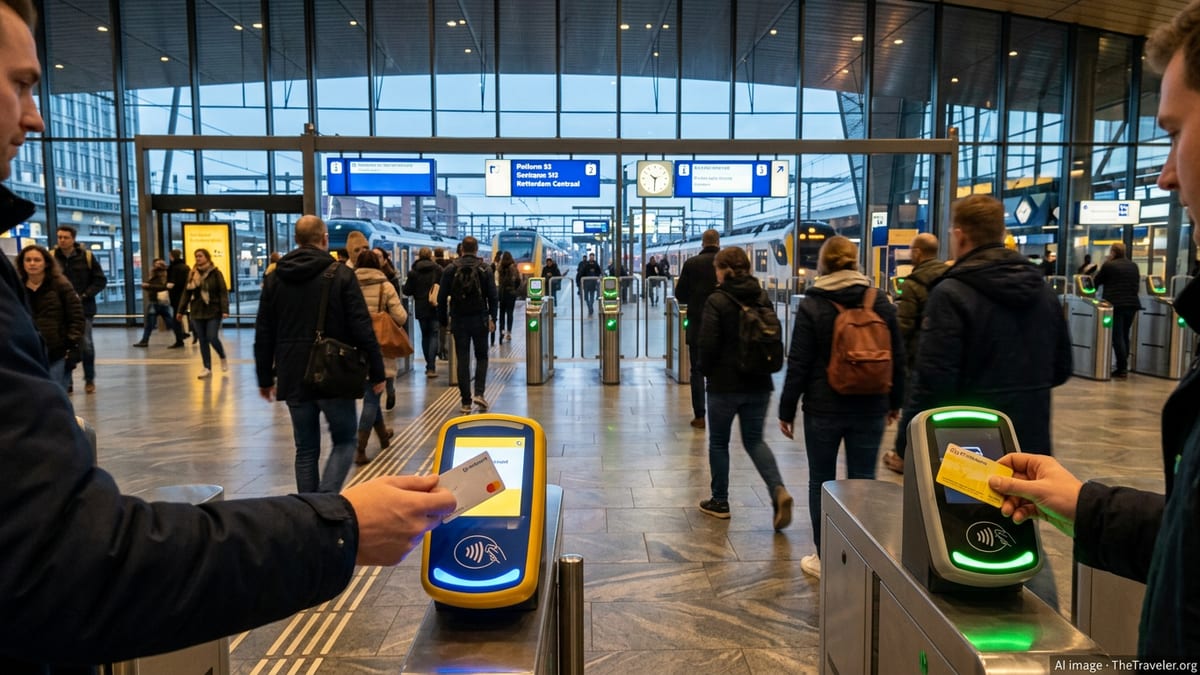
The Netherlands has one of Europe’s most integrated public transport networks. Trains, trams, metros, and buses in almost every region share a common back-end system for recording journeys and calculating fares. On most trips you tap a card or device at a reader when you start your journey and tap again when you finish, so the system can charge the distance you travelled. This principle is the same whether you use an OV-chipkaart, OVpay with a bank card, or newer products like the OV-pas.
Most visitors experience this network first on intercity trains operated by Nederlandse Spoorwegen, the national rail company, and on city systems such as the GVB in Amsterdam, RET in Rotterdam, and HTM in The Hague. All of these operators now accept contactless check in and out with OVpay on top of the familiar OV-chipkaart. That means you can technically choose between several payment methods for a single journey, each with slightly different pros, cons, and fare rules.
Behind the scenes, public transport is coordinated so that the basic structure of fares remains similar nationwide. You pay a fixed boarding fee plus a distance-based amount, and there are various passes and discounts that modify this, particularly for frequent travellers. What has changed in recent years is how you identify yourself to the system. Where once you needed a dedicated transport card, now your bank card or mobile wallet can serve the same role for pay-as-you-go travel at the normal full fare.
For travellers, the key questions are practical ones. Which option is easier to obtain before or during a trip. Which offers access to discounts or special products, and which creates the least friction at gates and on board. The answer is rarely one-size-fits-all and depends on how long you stay, how often you ride, and whether you care about real-time journey records, automatic discounts, or privacy.
OV-chipkaart: The Classic Dutch Travel Card
The OV-chipkaart is the familiar yellow or blue smartcard that has been central to Dutch public transport since the 2010s. It is a plastic card with a chip inside that stores travel credit and in some cases personalised products like season tickets or student travel passes. On every trip you hold it to a card reader to check in and check out, and the system deducts your fare from the card balance. Anonymous cards can be bought at ticket machines and some shops, while personal cards are ordered online and include your name and photo.
For years, the OV-chipkaart has been popular with both residents and long-stay visitors because it simplifies transfers between different operators and modes. You can take a train, then a tram, then a bus, and pay for all three legs from the same stored balance. Personal cards have been particularly useful for commuters because they can hold discount subscriptions, off-peak formulas, or regional passes that automatically reduce your fare when you tap in. They also work with related services such as the OV-fiets public bike rental system at stations.
However, the card has some drawbacks for short-term or occasional users. You must pay an initial purchase fee for the card itself, then top up with credit. Machines usually require a bank card, and some foreign cards may not be accepted, especially those without a PIN. For tourists staying a few days, the cost and effort of obtaining and loading a card can feel disproportionate when contactless OVpay offers a simpler tap-and-go alternative. The system is also gradually aging, and transport authorities have decided to replace it with more flexible technology.
Although there were early ambitions to retire the OV-chipkaart sooner, the phase-out has been pushed back. Authorities now plan to keep it running until at least the end of 2027 so travellers have years to adjust. During this transition, it continues to function normally and remains essential for certain products such as some rail subscriptions and bike rentals, which are not yet fully available via OVpay or the new OV-pas. For many commuters, that alone is a strong reason to keep using the card for a while.
OVpay and OV-pas: The New Era of Contactless Travel
OVpay is the nationwide system that lets you check in and out using a contactless debit card, credit card, smartphone, or smartwatch. Instead of buying a separate transport card, you simply use the bank card you already carry. How it works is straightforward: tap at the gate or reader when you start, tap again when you finish, and later that day or the next, the total fare is charged directly to your bank or credit card. All major Dutch public transport operators now support this system for domestic journeys at the full base fare.
For visitors, OVpay removes several friction points. There is no card purchase fee, no need to preload travel credit, and no risk of leaving money stranded on a card when you depart. As soon as you arrive, you can step onto a train or tram and tap with your own card or digital wallet. For locals, it can be equally attractive if they travel only occasionally or prefer not to manage a separate transport card. Because OVpay is integrated across the country, the same card works in Amsterdam, Rotterdam, Utrecht, and on most regional buses and trains.
Alongside OVpay, a new physical and digital card called the OV-pas is being rolled out as the successor to the OV-chipkaart. It uses more modern technology and is designed to work smoothly with subscriptions and discount products while being compatible with future upgrades. The intention is that by the time the OV-chipkaart is phased out, the OV-pas plus open-loop OVpay with bank cards will fully cover all typical travel scenarios. For now, though, the OV-pas is in gradual rollout, and many people continue to use the older card for existing subscriptions.
It is important to understand that OVpay and the OV-pas are related but not identical concepts. OVpay refers to the overall infrastructure that enables contactless payments in public transport, including tapping with regular bank cards. The OV-pas is a specific card product that uses this infrastructure and is likely to become the main dedicated travel card in the future. As of early 2026, OVpay is already available nationwide for full-fare pay-as-you-go travel, while time-based passes and complex subscriptions are still in various stages of being migrated to the new system.
Comparing OV-chipkaart and OVpay for Different Travellers
Choosing between OV-chipkaart and OVpay starts with understanding your travel pattern. If you are visiting for a few days and plan to make a handful of journeys, OVpay is usually the simplest option. You tap in and out with the bank card or phone you already use, you do not pay for a special card, and you avoid having leftover credit. The fares charged per kilometre are generally similar to the standard full-fare rate charged on an anonymous OV-chipkaart.
If you are staying longer or commuting regularly, the picture becomes more nuanced. Traditional discount passes and subscriptions tend to be linked to a personal OV-chipkaart and in future to the OV-pas. These products can offer significant savings in specific situations, such as off-peak rail discounts or regional bus and tram passes. In those cases, the ability to apply a subscription directly to a transport card still outweighs the convenience of simply using a bank card, at least until equivalent options are fully integrated into OVpay or the OV-pas ecosystem.
Another factor is how you like to track your journeys. With a personal OV-chipkaart, you usually have access to a clear travel history and itemized charges through a dedicated portal or app, all linked to your card number. OVpay also offers ways to view transactions, but it may require extra steps to identify which contactless card or device was used, and there can be a short delay before journeys appear in your payment overview. Some travellers appreciate the transparency of a dedicated transport account, while others are happy with a simple line item on their bank statement.
Privacy preferences matter too. An anonymous OV-chipkaart or future anonymous OV-pas lets you travel without linking your movements directly to your personal bank account, although the system will still record taps for fare calculation and potential inspection. OVpay with a bank card inevitably ties public transport usage to your financial history. Most visitors will not find this problematic, but long-term residents who care about data separation may prefer a stand-alone card. As the system evolves, authorities are trying to maintain options for both convenience and privacy.
How Fares, Discounts, and Subscriptions Work
Understanding Dutch fares requires a basic grasp of three elements: a boarding fee, distance-based pricing, and optional discounts or caps. When you check in, the system temporarily reserves a boarding amount from your card balance or bank account. When you check out, the actual price is calculated based on how far you travelled and which operator carried you, then the difference is settled. If you forget to check out, that initial amount can be charged as a missed check-out, which is one of the most common and frustrating ways to lose money.
Base fares on local buses, trams, and metros are set by regional authorities and typically increase modestly from year to year. Trains have their own structure, with separate prices for first and second class and different supplements on certain high-speed services. OVpay and the OV-chipkaart follow these same tariff tables; the payment method does not give you a lower or higher standard fare. Where differences appear is in the availability of discounts, which often depend on holding a personal card with a linked product rather than paying with a bank card at the gate.
Subscriptions include national rail discount cards, regional off-peak passes, and age-based reductions such as youth or senior products. Many of these require you to register personal details and pair the product with an individual OV-chipkaart. They can offer substantial savings if you travel regularly on the same routes or in the same region, particularly outside rush hours. Some experimental or new-style products are starting to be associated with the emerging OV-pas, which promises to allow multiple subscriptions on a single card and automatically apply the most advantageous one when you check in.
Unlimited day tickets and tourist-focused passes sit alongside these systems. Products like city day passes or nationwide tickets for a single day of unlimited travel do not depend heavily on whether you use OVpay or an OV-chipkaart, because they are often sold as disposable paper or barcode tickets with their own rules. However, because each operator and region can issue its own passes, it is easy for visitors to feel overwhelmed by choice. A sensible approach is to estimate your likely number of rides and distances and then compare this with the cost of a simple pay-as-you-go strategy; for many short visits, contactless OVpay combined with one or two targeted day tickets will be good value.
Practical Fare Tips to Save Money and Avoid Fines
Regardless of which payment method you choose, a few habits will help you avoid surprises. The most important is to always check in and check out correctly. On trains, that usually means tapping at a gate or standalone post on the platform. On trams and buses, you tap at a reader near the doors when boarding and again when alighting. If you change between operators, you must check out from one and then check in with the next, even if you stay within the same station, because each company calculates its own part of the fare.
If you use OVpay with your phone or smartwatch, be mindful of exactly which card is active in your digital wallet. Many travellers accidentally present the wrong virtual card or have more than one contactless card in the same wallet or purse, leading to incomplete journeys or multiple check-ins. A safe habit is to designate one card only for public transport and keep it separate so you always know which one you are tapping. For phones, set a preferred transit card in your wallet app if available, and use the same device consistently rather than alternating between devices.
To reduce costs, consider when and where you travel. Some rail discount products focus on off-peak hours and weekends, when trains are quieter and operators are keen to encourage ridership. If your schedule is flexible and you make regular medium or long-distance trips, even a modest percentage discount can add up over a month. In big cities, walking or cycling short distances between stops can reduce the number of short, relatively expensive single rides, particularly if you tend to board for just one or two stops. For occasional visitors, however, the convenience of hopping on a tram for a short ride often outweighs small fare differences.
Fines in Dutch public transport can be significant if inspectors find you travelling without a valid check-in or ticket. Even honest mistakes such as forgetting to tap, using the wrong card, or thinking a paper ticket covers a connecting leg may be treated strictly. Keeping proof of payment, such as a bank statement entry or app screenshot, can help if you need to dispute a charge or missed check-out later, but the safest strategy is to develop a routine: tap in, verify the green light and beep, and tap out at the end. With OVpay, remember that the actual deduction may appear later on your bank account, so do not be alarmed if you do not see it instantly.
Using OVpay and OV-chipkaart in Real Travel Scenarios
Consider a typical visitor itinerary: arriving at Schiphol Airport, taking a train to Amsterdam, riding a tram to a hotel, and later using the metro and buses to explore. With OVpay, you can tap in at the airport station with your own card, tap out in the city, and then use the same card on all local transport. You pay standard public transport fares for each leg without buying special tickets. For a short stay with moderate travel, this is simple and cost-effective, especially if you are comfortable tracking your expenses via your bank or credit card statements.
Now imagine a student living in Utrecht who commutes by train to another city several times a week and uses buses at each end. For this traveller, a personal OV-chipkaart or, in time, an OV-pas with a suitable discount subscription can deliver significant savings compared with paying full fare every time using OVpay. The student may also use the same card to rent OV-fiets bikes at stations, something which still relies heavily on the classic transport card infrastructure. In this case, the administrative overhead of managing a dedicated card pays off quickly in lower monthly travel costs.
Another common scenario involves families and small groups. Each person needs their own method of checking in and out, whether that is their own OV-chipkaart or their own contactless bank card. Sharing a single card or phone to tap multiple passengers is usually not allowed unless you are using certain group tickets that explicitly permit it. For visiting families, this can be a reason to obtain a set of anonymous OV-chipkaarten if not everyone has a compatible contactless card. Alternatively, older children with their own bank cards may find OVpay the most straightforward solution, provided they understand the need to tap correctly.
Finally, consider travellers making occasional long-distance or international trips. Domestic legs of these journeys will generally accept both OVpay and the OV-chipkaart, but international tickets issued by foreign railways or cross-border operators often use barcode or QR-code scanning at gates. In stations where both barcode readers and contactless OVpay readers exist side by side, it is vital to pay attention to the instructions. Accidentally presenting a digital wallet where you meant to show a barcode can lead to unexpected OVpay charges layered on top of an international ticket, an unpleasant surprise that is easily avoided with a little care at the gate.
The Takeaway
The Netherlands is in the midst of a significant but carefully managed shift in how people pay for public transport. The OV-chipkaart, long the symbol of Dutch tap-in travel, is being joined and gradually supplanted by OVpay, which lets you use your existing bank cards and devices, and by the new OV-pas, which will eventually take over the role of a dedicated transport card. For travellers today, this means more choice rather than abrupt change, but it also makes it important to understand how the systems overlap.
For most short-term visitors, OVpay is now the easiest way to move around. It eliminates the need to buy a separate card, works nationwide on trains, trams, metros, and buses, and charges standard full fares directly to your account. For frequent travellers, students, and commuters, a personal OV-chipkaart or OV-pas with a suitable subscription remains the best way to unlock discounts and special products. In all cases, careful tap-in and tap-out habits, awareness of which card or device you are using, and a basic understanding of how fares are calculated will help you save money and avoid fines.
As Dutch authorities modernise the system, expect incremental improvements rather than overnight transformations. New digital features, more versatile subscriptions, and a gradual migration to the OV-pas are likely over the next few years. In the meantime, the coexistence of OV-chipkaart and OVpay means travellers can choose the balance of convenience, cost control, and privacy that suits them best, while continuing to enjoy one of Europe’s most extensive and reliable public transport networks.
FAQ
Q1. Do I still need an OV-chipkaart if I can use OVpay with my bank card
You do not strictly need an OV-chipkaart for basic pay-as-you-go travel, because OVpay works nationwide with most contactless bank cards and phones. However, you may still want a personal transport card if you plan to use subscriptions, rail discount products, or services like OV-fiets bike rental that are not yet fully integrated with OVpay.
Q2. Is it cheaper to use OVpay than an OV-chipkaart
For standard journeys without discounts, fares are usually similar whether you pay with OVpay or an anonymous OV-chipkaart. The main savings come not from the payment method itself but from having a suitable subscription or discount product, which at present is more commonly linked to a personal OV-chipkaart or OV-pas than to OVpay.
Q3. Can I share one bank card or OV-chipkaart with someone else when using OVpay
Each passenger is expected to have their own method of checking in and out. Sharing a single card or phone to tap in multiple people is generally not allowed and can result in some travellers being treated as having no valid ticket. To avoid problems, make sure every person has their own OV-chipkaart, OV-pas, or contactless bank card.
Q4. What happens if I forget to check out when using OVpay
If you forget to check out, the system may charge a default amount that is higher than the fare you would have paid for the actual journey. Some operators offer a way to correct missed check-outs after the fact, but this often requires contacting customer service and may not always succeed. The safest approach is to make checking out a firm habit every time you leave a vehicle or station.
Q5. Is OVpay safe to use with my debit or credit card
OVpay uses the same contactless technology and security standards as regular card payments in shops. When you tap in and out, only limited payment data is used to process your fare, and you continue to benefit from any fraud protections your bank offers. As always, you should monitor your statements and report any charges you do not recognise.
Q6. How do I see what I have been charged when travelling with OVpay
Charges for your journeys appear on your bank or credit card statement, sometimes grouped together by day. In many cases you can also use an online portal or app linked to OVpay to view more detailed information about recent trips. There may be a short delay between your journey and the appearance of the final amount.
Q7. What is the OV-pas and how is it different from OVpay
The OV-pas is a new type of transport card that will eventually replace the OV-chipkaart. It is designed to hold multiple subscriptions and products, while OVpay is the underlying system that enables contactless travel with both bank cards and dedicated transport cards. You can think of OV-pas as the future physical and digital card, and OVpay as the technology that makes tapping in and out possible.
Q8. I am a tourist visiting for three days. Which option is best for me
For a short visit, using OVpay with your own contactless bank card or phone is usually the most convenient. You avoid paying for a separate card, you can start travelling immediately on arrival, and you pay standard fares across trains, trams, metros, and buses. If you plan very intensive travel in a small area, you might compare this with a local day pass sold by city transport operators.
Q9. Will the OV-chipkaart disappear completely soon
The OV-chipkaart is being phased out over several years, not overnight. During this transition period it continues to work alongside OVpay and the newer OV-pas. Authorities have signalled that travellers will have ample time to switch, and new systems must be ready to handle subscriptions and special products before the old card is retired.
Q10. What should I do if an inspector cannot see my OVpay check-in
If an inspector questions your journey and you believe you checked in correctly, remain calm and show any available evidence, such as a recent bank statement entry or app notification. Ultimately inspectors rely on their own handheld systems, so disputes may need to be followed up later with the transport company or OVpay customer service. To minimise problems, always wait for the confirmation beep and light when you tap in.