


More news on this day
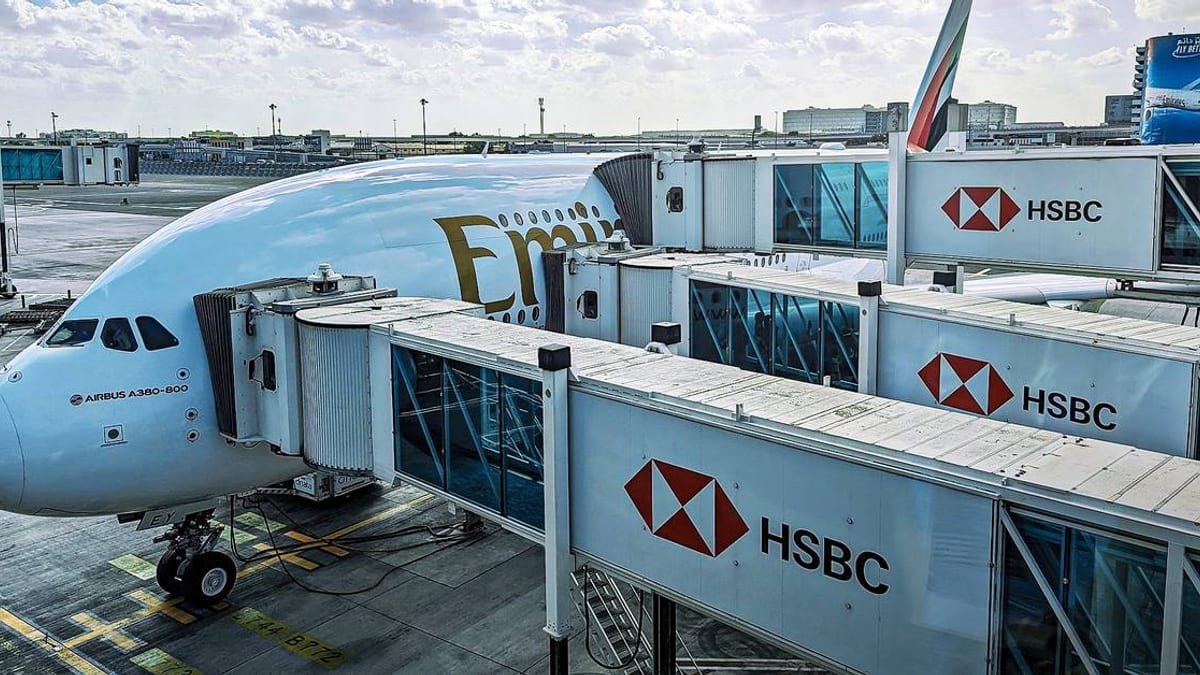
Two of the Airbus A380’s most prominent operators are taking sharply different paths, with Qantas bringing forward retirement of the superjumbo to 2028 as Emirates commits to flying the aircraft into the 2040s.
Get the latest news straight to your inbox!
Qantas Pulls A380 Exit Forward to 2028
New analysis of Qantas fleet plans indicates that the Australian carrier will begin phasing out its ten Airbus A380s from 2028, around four years earlier than previously outlined. Specialist fleet coverage reports that the airline has advanced its timetable as part of a broad move to modernize long haul operations and align capacity with demand using more efficient twin engine jets.
The A380s, which re-entered service progressively after the pandemic, were originally expected to remain in the fleet into the early 2030s. Industry data now points to 2028 as the start of withdrawals, coinciding with the arrival of new generation widebodies and the expansion of Qantas’s ultra-long-range "Project Sunrise" services.
Publicly available documents on Qantas’s fleet strategy have long signaled a transition away from four engine aircraft, highlighting lower fuel burn and emissions from new twin engine types such as the Airbus A350 and Boeing 787. The latest reporting suggests that improved delivery visibility for these models, together with network planning priorities, has allowed the airline to bring the A380 retirement window forward.
Qantas has invested in refurbishments to extend the usefulness of the superjumbo on high demand routes, but these updates were framed as a bridge to the next generation of aircraft rather than a long term bet. As newer jets arrive and international capacity continues to normalize, the role of a 450-plus seat quad jet in the carrier’s fleet composition becomes more limited, especially outside peak departure banks.
A380 Phase-Out Tied to New Widebody Deliveries
The decision to accelerate retirement aligns with Qantas’s published widebody orders, which include Airbus A350-1000s and additional Boeing 787s intended to replace older A330s and eventually larger aircraft. Company disclosures emphasize the fuel and emissions advantages of moving from four engine A380s to modern twin engine types, as well as improved maintenance economics over the life of the fleet.
According to investor presentations, the first of the new long haul aircraft are due to start arriving from the middle of this decade, with deliveries stretching into the 2030s. As these jets enter service, they are expected to take over key trunk routes to North America, Asia, and Europe, where the A380 has been a flagship presence. The earlier retirement window suggests confidence that these deliveries will be sufficient to maintain capacity while increasing frequency and flexibility.
Qantas is also reshaping its network strategy, focusing on nonstop "hub bypass" flights from Australia’s east coast to cities such as New York and London. These ultra long haul sectors are being designed around aircraft like the A350-1000, which can offer a more balanced mix of premium and economy seating on routes too long or thin for an A380 to operate efficiently. The superjumbo will likely remain concentrated on a shrinking number of very high demand city pairs until its exit begins.
For travelers, the change points to a gradual shift from the iconic double deck cabin layout toward more consistent products across the fleet. While the A380 has been popular for its spaciousness and quiet ride, newer aircraft introduce updated seats, improved cabin pressure, and lower environmental impact, which carriers increasingly highlight in customer messaging.
Emirates Extends A380 Horizon Into the 2040s
In contrast, Emirates is reinforcing its long term commitment to the A380. Public reporting from industry outlets and financial documents shows the Dubai based carrier now intends to operate the type into the late 2030s and at least the early 2040s. Aviation industry analysis notes that Emirates has indicated plans to retain a substantial subfleet of A380s beyond 2040, supported by an extensive retrofit and maintenance program.
The airline remains by far the largest A380 operator and has built its global connecting hub strategy around the aircraft’s seat density. While other airlines retired their A380s or brought only a portion back after the pandemic, Emirates has reactivated dozens of frames and is steadily returning more to service as demand climbs. Network planning commentary in trade publications suggests the A380 will continue to anchor high volume routes between Dubai and major markets in Europe, Asia, and the Americas.
Group reports and official communications outline significant investments to keep the aircraft competitive over the coming decades. These include multi billion dollar retrofit work covering more than 100 aircraft, with A380s receiving new cabins, refreshed interiors, and the addition of premium economy seating. The scale of this program is described in coverage as one of the largest aircraft retrofit efforts yet attempted by a single airline.
Supporting documents also reference long term contracts with engine and maintenance providers that extend into the 2040s, indicating a structured plan to secure spare parts and overhaul capacity for the A380 fleet. Analysts note that this level of commitment is designed to underpin reliable operation of the aircraft even as production has ceased and other carriers wind down their fleets.
Retrofit Programs Signal Diverging Strategies
Both Qantas and Emirates have invested heavily in their A380s, but the intent behind those investments appears different. In the case of Qantas, cabin upgrades undertaken in recent years were widely interpreted in specialist reporting as a means to keep the aircraft attractive for a finite period while waiting for new deliveries. The decision to pull retirement forward suggests that bridge strategy has served its purpose, and the airline is ready to pivot fully to next generation widebodies.
Emirates, on the other hand, has framed its retrofit effort as a cornerstone of future growth rather than a temporary measure. Information released through its media channels and annual reports details the transformation of dozens of A380s with updated business class seating, premium economy cabins, and refreshed decor. Industry observers point out that this level of refurbishment makes little sense for aircraft intended to leave the fleet in the near term.
Technical coverage of the program notes that Emirates has centralized the work at its engineering base in Dubai, giving the airline greater control over cost, scheduling, and quality. The program is designed to ensure that the A380 remains aligned with the carrier’s latest onboard product standards, reducing the risk that customers encounter older cabins on flagship routes.
These differing approaches highlight the flexibility of fleet planning in the post pandemic era. For some carriers, like Qantas, the priority is to reduce complexity, improve sustainability metrics, and build networks around smaller but more efficient aircraft. For others, such as Emirates, the economics of funneling large volumes of connecting passengers through a megahub still favor the very high capacity A380, even as it becomes a niche product globally.
What It Means for the Future of the Superjumbo
The contrasting decisions by Qantas and Emirates underline how the market for very large aircraft has fragmented. With Airbus ending A380 production and most operators either exiting or significantly shrinking their fleets, long term support for the type increasingly depends on a small number of committed airlines. Emirates, and to a lesser extent a handful of European and Asian carriers, are now central to the aircraft’s continued presence in global schedules.
Industry analysts argue that the A380’s long term viability rests on specific network models and airport constraints rather than broad, global demand for ultra large jets. In markets where slot restrictions, hub dominance, and strong connecting flows intersect, the aircraft can still deliver attractive seat mile costs when operated at high load factors. Where those conditions are absent, airlines are gravitating toward smaller widebodies that offer more scheduling flexibility and lower risk.
As Qantas prepares to transition away from the superjumbo while Emirates doubles down on it, travelers can expect to see the A380 become increasingly associated with particular hubs and brands. The aircraft is likely to remain a flagship experience on select routes rather than a common sight across many airlines, even if some frames continue flying into the 2040s.
For aviation enthusiasts, the Australian carrier’s earlier retirement plans mark the start of a countdown for Qantas A380 services, while Emirates’ strategy suggests that opportunities to fly on an upgraded, high density version of the jet will persist for many years. The split strategies capture the wider debate about whether the future of long haul travel lies in ever larger aircraft or in more numerous, efficient twins connecting cities around the world.
Qantas brings forward A380 retirement by four years as new widebodies arrive
Qantas moves A380 retirement forward to 2028
Emirates to fly Airbus A380 into the 2040s