


More news on this day
Qantas is introducing its new Economy Plus cabin on Airbus A330 services between Japan and Australia, adding a dedicated extra-legroom section with priority perks on some of the carrier’s busiest trans‑Pacific routes.
Get the latest news straight to your inbox!
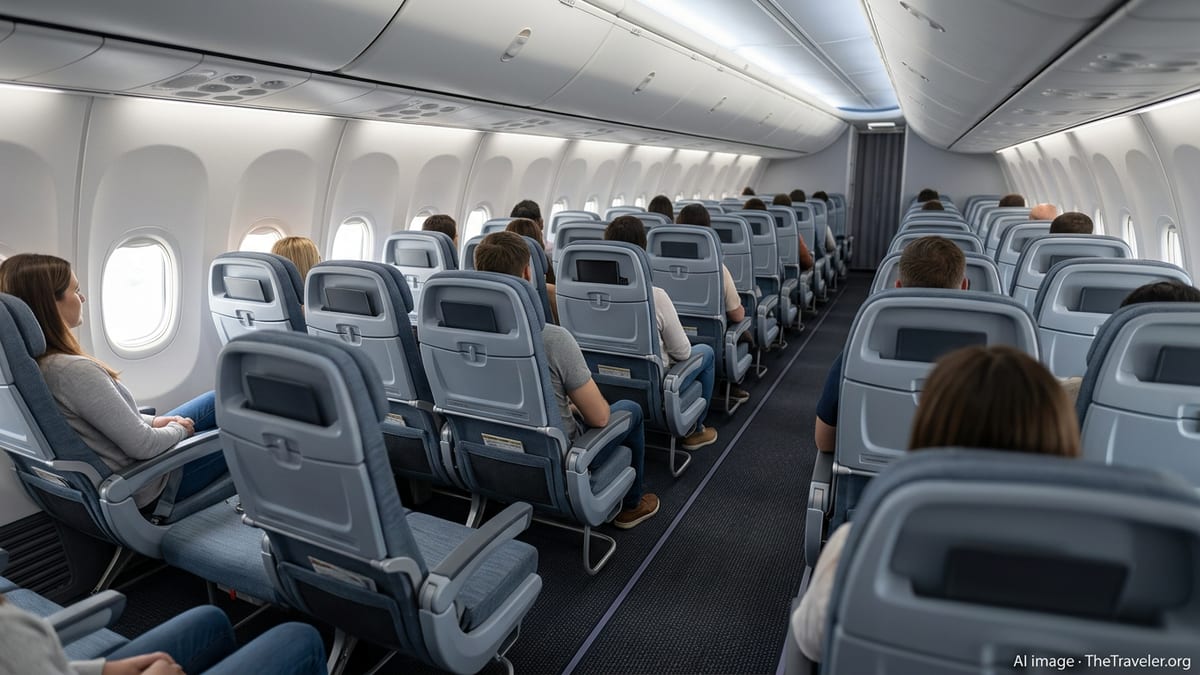
Dedicated Economy Plus Cabin Debuts on Japan Services
The new Economy Plus product is being introduced on Qantas A330 aircraft operating between Tokyo and Australian gateways, according to publicly available information from the airline and recent industry coverage. The cabin sits within the broader economy section but is marketed as a distinct zone with enhanced comfort features and booking conditions.
Reports indicate that the rollout focuses on A330-200 and A330-300 aircraft that already serve Japan routes, aligning with a wider refurbishment of the type. Seat maps published by the airline show a clearly defined Economy Plus area at the front of the economy cabin, separate from standard seats behind.
Industry analyses describe the move as part of a broader push by Qantas to offer more choice between traditional economy and higher priced cabins, especially on medium- and long-haul flights. Japan services are among the most in-demand Asian routes for the carrier, making them a natural candidate for the enhanced product.
The timing also coincides with a strong recovery in Japan–Australia travel, with tourism and business links continuing to rebuild. Positioning Economy Plus on these routes gives Qantas another lever to capture passengers willing to pay extra for comfort without moving up to premium cabins.
What Passengers Get With Economy Plus
Published information on Qantas Economy Plus highlights several key inclusions: additional legroom compared with standard economy, priority boarding, and priority access to overhead baggage space. These features mirror similar “extra legroom” or “economy comfort” offerings that have become common among full-service carriers on competitive international routes.
On the A330, Economy Plus seats are clustered in the forward section of the main economy cabin. Seat plans show that many of these seats are window pairs, which are often preferred by couples and leisure travelers, alongside some middle-block seats. This configuration allows Qantas to market a relatively intimate sub-cabin within the larger economy section.
The product remains part of the economy fare family, so passengers can expect the same core inclusions such as meals, checked baggage and inflight entertainment. The premium comes from the extra space and priority handling, which are designed to appeal to taller travelers, frequent flyers and those looking for more comfort on overnight sectors between Japan and Australia.
Pricing for Economy Plus is being positioned as an add-on above standard economy fares, either at booking or via seat selection closer to departure, according to trade coverage. This gives Qantas the flexibility to adjust availability and pricing in line with demand on specific flights.
Reconfigured A330 Cabins Support New Layout
The introduction of Economy Plus on Japan A330 routes is closely linked to ongoing cabin refurbishment across the Qantas A330 fleet. Previous updates have already brought new-generation economy seats and larger entertainment screens to these aircraft, and the latest changes build on that foundation by reshaping the layout to carve out a dedicated extra-legroom zone.
Seat maps released by the airline for A330-200 and A330-300 variants show revised row counts and the insertion of Economy Plus rows at the front of the economy section. In some configurations, a row has been removed in parts of the cabin to create additional pitch for these seats, while maintaining overall capacity at levels considered commercially viable.
For Japan routes, which often carry a mix of leisure, corporate and connecting traffic, the refreshed layout is intended to balance density with comfort. Economy Plus lets Qantas enhance the appeal of economy without significantly reducing the total number of seats, a key consideration on high-demand services where yield management is critical.
The A330 remains the workhorse for Qantas on many Asian routes, including to Tokyo. By aligning cabin features such as Economy Plus across the fleet, the airline can present a more consistent product proposition, regardless of which A330 variant is scheduled on a particular Japan rotation.
Competitive and Strategic Drivers in the Japan Market
Analysts note that the Japan–Australia market has become increasingly competitive, with both full-service and low-cost carriers targeting leisure and VFR traffic. In this context, the addition of Economy Plus on A330 flights gives Qantas another differentiator, especially for travelers comparing comfort options across airlines.
Extra-legroom economy products have proliferated globally in recent years, and Qantas has already begun rolling out similar offerings on domestic and regional aircraft. Extending the concept to Japan A330 services aligns the international network with that strategy, while also responding to growing passenger expectations on long sectors.
For corporate travel buyers, Economy Plus can serve as a mid-tier option when premium cabins are restricted by policy but additional comfort is still valued for employee wellbeing. Travel-management commentary suggests that such intermediate products are increasingly popular for Asia-Pacific business travel.
From a revenue perspective, selling a defined set of enhanced economy seats provides incremental income without the significant investment required for a full premium economy cabin on every aircraft. Japan routes, with relatively steady year-round demand, offer a favorable testing ground for how strongly the market will respond.
What Travelers on Japan Routes Should Expect Next
As Economy Plus becomes embedded on A330 Japan services, travelers booking flights between Tokyo and Australian cities can expect to see the new cabin option appear progressively in seat maps and fare displays. Availability may differ between flights as individual aircraft complete cabin changes and as Qantas fine-tunes the number of Economy Plus seats per rotation.
Frequent flyers and early adopters are likely to be among the first to experiment with the new seats, particularly on overnight or peak-season departures. Early feedback circulating in traveler forums indicates strong interest in the combination of extra legroom and priority boarding, especially for passengers connecting onward from Japan or Australia.
Industry observers will be watching how the product performs during key travel periods, including northern winter and major holiday peaks between the two countries. If take-up is strong, the model used on Japan A330 services could shape how Qantas refines Economy Plus on other parts of its network in the future.
For now, the move underscores how airlines are rethinking the traditional gap between economy and premium cabins. By giving passengers on Japan routes a clearer choice in the A330 economy cabin, Qantas is betting that more travelers will pay extra for comfort and convenience on one of its most important international corridors.