


More news on this day
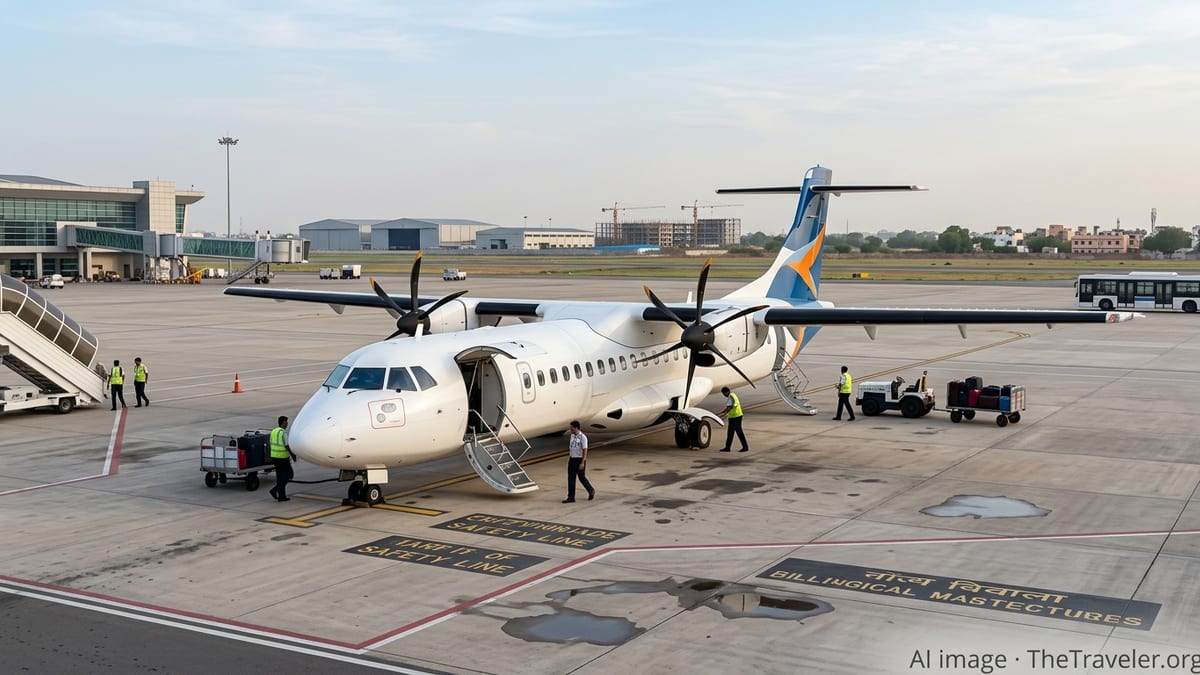
Japan’s newest regional carrier Toki Air has completed a landmark ATR 42-600 service to Sado Airport, inaugurating commercial operations on what industry data describes as the world’s shortest runway in use by the type and restoring regular air links to the remote island for the first time in more than a decade.
Get the latest news straight to your inbox!
A Historic Return of Scheduled Air Service to Sado
The milestone flight into Sado Airport follows years of efforts by local authorities and Toki Air to reconnect the island of Sado with Japan’s broader air network after scheduled services ended in 2014. Publicly available information shows that the new operation is being launched from Niigata, the airline’s home base on the Sea of Japan coast, re-establishing a fast link across a stretch of water that had largely relied on ferries.
Reports indicate that Toki Air initially operated charter and familiarisation flights with the ATR 42-600 to validate procedures and performance at Sado, before transitioning to regular passenger services. Aviation industry coverage notes that these proving flights took place in late May 2026, building experience for crews and ground handlers on the short 890-metre strip.
Regional planners have long viewed air connectivity as a key element for Sado’s economic revival, especially for tourism and medical access. The resumption of flights by a new-generation turboprop is being framed in local coverage as both a symbolic and practical step toward revitalising the island’s links with mainland Japan.
World’s Shortest Commercial Runway for the ATR 42-600
According to technical data shared by the manufacturer and summarised in recent trade press, Sado Airport’s 890-metre runway is now recognised as the shortest commercial strip worldwide on which the ATR 42-600 operates. The recognition followed performance assessments associated with Toki Air’s charter operations earlier in 2026, confirming that the aircraft could safely meet regulatory requirements at the airfield.
The ATR 42-600 is a twin‑engine turboprop designed for regional sectors and demanding airfields. Compared with earlier variants, the -600 series incorporates improved avionics, more efficient engines and optimised performance for short and narrow runways. These characteristics have made the type popular in island and remote markets across Asia, the Pacific and Europe.
Specialist aviation outlets report that the Sado operation is attracting attention because it pushes the aircraft’s capabilities close to their certified limits while still remaining within standard performance margins. The combination of runway length, surrounding terrain and maritime weather patterns around Sado makes the route a showcase for short-field regional operations.
Toki Air’s Growing Role in Japan’s Regional Network
Toki Air is part of a broader trend of Japanese regional airlines turning to turboprops to sustain thin routes and connect secondary cities. The Niigata-based carrier has been steadily building a network of short-haul services using ATR aircraft, complementing larger jet operators that focus on trunk routes between major hubs.
Industry profiles describe Toki Air’s mission as reconnecting regional and remote communities that have seen air links decline over the past decade. The launch of flights to Sado is consistent with earlier plans for the airline to focus on niche, high-social-value routes that may not attract large jets but still require reliable, year-round air access.
The Sado operation may also serve as a reference case for other Japanese regional airports with short runways seeking to attract modern turboprop services. Observers in the domestic aviation sector are watching how load factors, seasonality and operational reliability evolve on the route as indicators of the commercial viability of similar projects elsewhere in the country.
Implications for Island Tourism and Local Communities
Local tourism organisations and travel media are highlighting the new flights as an opportunity to reposition Sado as a more accessible destination for domestic and eventually international visitors. With flight times between Sado and Niigata measured in minutes rather than hours, the route opens the possibility of short breaks and same-day business or medical trips that were previously more difficult by sea.
Published analyses suggest that improved air access typically leads to higher visitor numbers, especially when paired with targeted promotion and seamless ground transport. For Sado, known for its historic gold mines, cultural festivals and coastal scenery, the convenience of a modern regional aircraft is expected to complement existing ferry services rather than replace them.
There are also social implications for residents, including faster access to mainland hospitals, universities and administrative services. Commentators on regional development note that reliable air links can influence decisions about whether younger residents remain on the island or choose to relocate, potentially affecting long-term demographic trends.
ATR Turboprops and the Future of Short-Runway Operations
The successful deployment of the ATR 42-600 on Sado’s runway is being seen within the aviation community as a broader endorsement of turboprop technology for short and environmentally sensitive routes. Trade publications point out that turboprops consume less fuel and typically emit less CO₂ per passenger on short sectors than comparable regional jets, aligning with national and airline-level sustainability goals.
Globally, the ATR 42-600 family has been introduced into a variety of challenging environments, from mountainous terrain to dispersed island archipelagos. Sado now joins a list of airports where operators balance tight runway constraints with community needs for air service, using aircraft configured specifically for these conditions.
Analysts tracking regional aviation trends suggest that the Sado operation will provide useful operational data on payloads, weather-related performance and scheduling resilience for short-field turboprop routes. As airlines and regulators look for ways to keep smaller communities connected without substantial new infrastructure, the lessons emerging from Toki Air’s Sado experience are likely to resonate far beyond the Sea of Japan.