


More news on this day
Qantas chief executive Vanessa Hudson has labelled recent air traffic delays at Sydney Airport “not OK,” sharpening public focus on chronic staffing shortages, mounting passenger disruption and new safety investigations at Australia’s busiest gateway.
Get the latest news straight to your inbox!
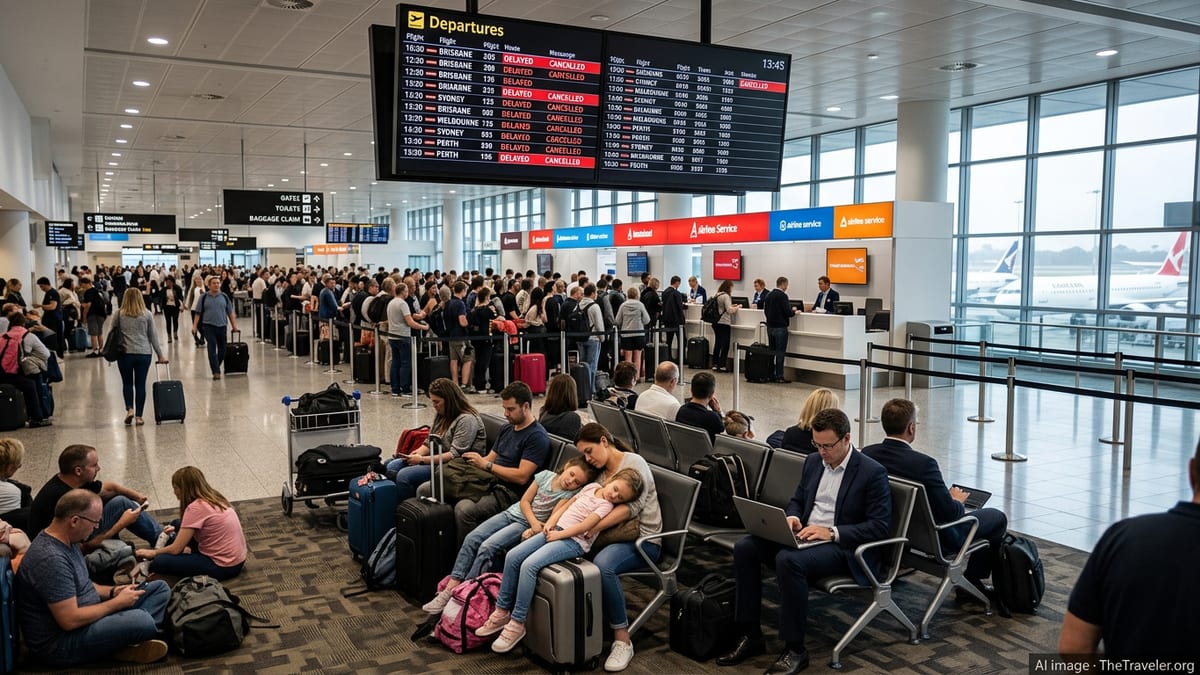
CEO comments put Sydney delays under fresh scrutiny
According to coverage of Qantas’ full-year results briefing in Sydney on 27 August, Hudson told investors that air traffic control staffing problems at Sydney Airport have directly affected the airline’s operations, impacting an estimated 60,000 Qantas customers in recent weeks. She described the situation as “not okay” and said the carrier is working with air traffic control providers to improve reliability.
Reports indicate Hudson drew a clear line between delays and safety, backing the integrity of air traffic control systems while acknowledging that resource constraints are disrupting schedules. The comments follow months of passenger complaints about late departures, long tarmac waits and missed connections on services into and out of Sydney.
Publicly available information from industry performance trackers shows that Sydney routinely records some of the highest rates of flight delays of any major Australian airport, with congestion in peak periods compounding the impact of even minor air traffic restrictions. The Qantas chief’s remarks add a major airline voice to a debate that has often centred on airport management and Airservices Australia, the government-owned air traffic control provider.
Qantas has previously argued in policy submissions that air traffic staffing constraints, weather and operational limits at Sydney can significantly reduce the number of flights allowed to take off or land each hour, creating knock-on disruption across the domestic network.
Safety investigations intensify pressure around Sydney operations
Hudson’s comments come as Australia’s transport safety watchdog expands its focus on Sydney’s airfield operations. In the past fortnight, the Australian Transport Safety Bureau has opened investigations into multiple incidents involving aircraft taxiing and runway movements at the airport, including one case where a Virgin Australia jet was forced to abort take-off when a Qantas 737 crossed its path on the same runway.
According to recent reporting, two additional ground taxi conflicts at Sydney, involving Virgin, Qantas and Jetstar aircraft, are now under formal investigation. In one August occurrence, incomplete traffic information about taxiing aircraft was passed to a Jetstar Airbus A320 before pushback, prompting concerns about how workload and staffing may be affecting controller performance.
Separate coverage of a third runway event last week highlights broader questions about how quickly serious occurrences are being reported to investigators. The ATSB has said that a delay of about a day in notifying one recent incident breached mandatory reporting rules and will itself form part of its inquiry. The combination of near-miss scrutiny and airline frustration about punctuality has turned Sydney’s air traffic operation into a focal point for Australia’s wider aviation debate.
Despite these investigations, both Qantas and regulators have consistently emphasised that safety protections, including multiple layers of air traffic procedures, remain in place. Hudson’s latest remarks align with that stance, acknowledging operational strain while reiterating that safety standards must not be compromised.
Chronic staffing shortages and peak-hour bottlenecks
The immediate trigger for the Qantas chief’s criticism is a series of days when air traffic control staffing shortfalls significantly reduced capacity at Sydney, forcing delays and cancellations across the network. Travel industry reporting notes that on affected days, delays of up to two hours have been recorded across dozens of Qantas and Jetstar flights as controllers implemented ground delay programs and spacing measures to manage workloads.
Public documents and previous submissions from Qantas indicate that the airline believes Sydney’s operational limits, including runway caps and curfew, require air traffic services to be fully staffed in order to run the published schedule. When staffing drops below planned levels, hourly “acceptance rates” for arrivals and departures can fall, particularly in bad weather, triggering widespread disruption that can take days to unwind.
Industry analysis also points to infrastructure and ground-handling constraints that intersect with air traffic limitations. Recent local reporting has highlighted taxiway bottlenecks and reliance on ground power units at congested gates, which can slow aircraft turnaround and contribute to delays even when airborne traffic is flowing. For travellers, the distinction between staffing, infrastructure and weather factors is largely academic, as all translate into longer waits at the terminal or on the tarmac.
Qantas has previously rejected accusations that it worsens congestion by “hoarding” take-off and landing slots at Sydney, pointing to government data showing that slots not used in line with minimum thresholds are forfeited. The airline maintains that when it cancels or retimes services, the driving causes are typically weather, air traffic staffing or engineering requirements, rather than deliberate tactical scheduling.
Passenger experience under the spotlight
For travellers passing through Sydney, the recent wave of air traffic-related disruption has underlined how vulnerable tight itineraries are to delays at a single hub. Online discussion boards and social media channels have been filled with accounts of missed onward connections, lengthy tarmac waits and late-night arrivals triggered by cascading delays on busy domestic routes into the city.
Government documents released under freedom of information laws show that previous ground delay programs at Sydney have already led to significant knock-on effects. One reported case involved a Perth to Sydney service that departed late because a ground delay program was in force at Sydney, which then limited the aircraft’s ability to depart on time for its next leg.
Qantas has reiterated in publicly available customer policies that some causes of delay, such as severe weather or air traffic control restrictions, sit outside its direct control. However, the airline also acknowledges in its tarmac delay contingency plans that long on-board waits are a major customer concern and commits to disembarking passengers within certain time limits when practicable.
Hudson’s characterisation of the recent delays as unacceptable is likely to resonate with frequent flyers who have faced repeated disruptions, even as she stresses that Qantas is working with air traffic providers to stabilise performance. For international visitors planning itineraries through Sydney, the situation underscores the value of longer connection buffers and flexible onward travel arrangements.
What could change for Sydney-bound travellers
Industry observers say the convergence of high-profile runway incidents, mounting passenger frustration and a rare public rebuke from a major airline CEO could accelerate efforts to strengthen air traffic staffing and resilience at Sydney. Airservices Australia has already acknowledged staffing challenges in previous statements and has been recruiting and training new controllers, although it can take several years for recruits to reach full operational status.
Policy submissions from Qantas and other aviation stakeholders have urged regulators to prioritise stable air traffic staffing and to improve transparency around capacity restrictions, so that airlines and passengers have clearer expectations about likely delays. Some analysts argue that better coordination between airport management, airlines and the air navigation provider during peak periods could help reduce the severity of disruptions when staff are short or weather conditions deteriorate.
For travellers, the near-term reality is that Sydney’s susceptibility to air traffic-related delays is unlikely to disappear quickly. However, heightened scrutiny from safety investigators, political attention to reporting gaps and renewed pressure from the country’s largest airline may collectively push for reforms that eventually deliver a more predictable experience.
In the meantime, trip-planning advice circulating among frequent flyers suggests allowing generous buffers for domestic connections into Sydney, especially during morning and evening peaks, and closely monitoring airline apps and airport information screens on the day of travel.
Travel Weekly coverage of Qantas CEO comments
SBS News reporting on Sydney Airport runway incidents