


More news on this day
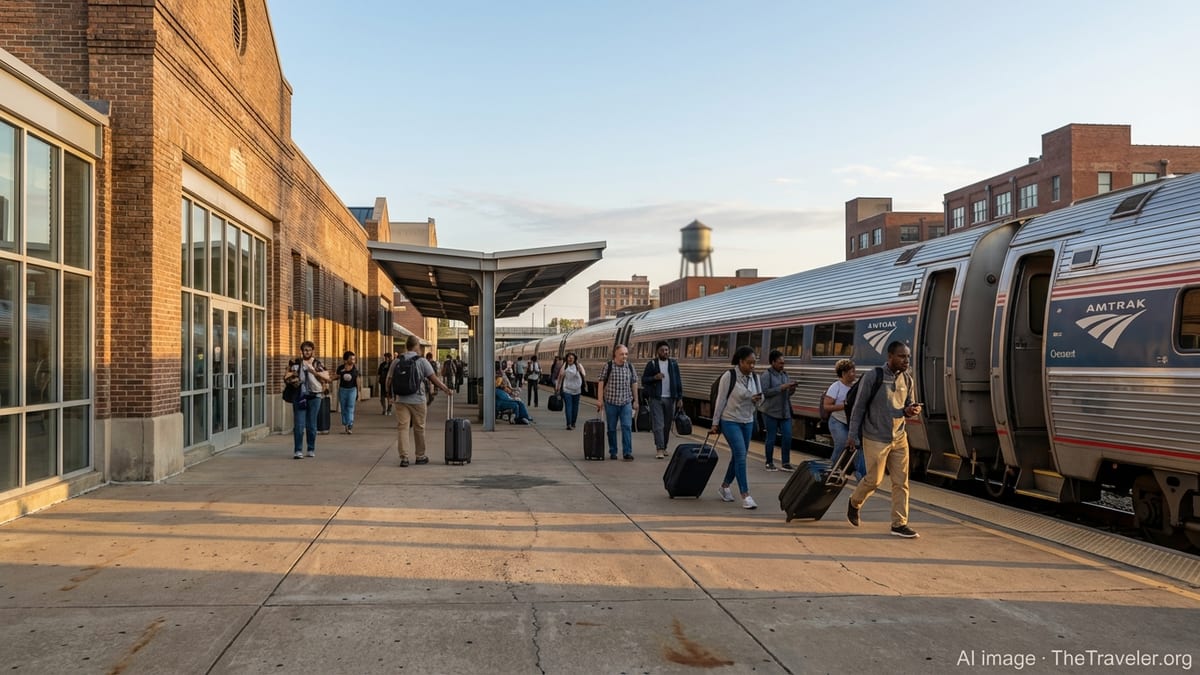
Major rail disruptions in recent months have left passengers around the world stranded on platforms and stuck in stalled trains, searching for reliable information and often paying extra for last-minute taxis, rideshares and hotel rooms to complete journeys derailed by failures, strikes and extreme weather.
Get the latest news straight to your inbox!
Recent disruptions expose fragile commuter lifelines
In the northeastern United States, early autumn storms on September 13, 2026, brought flash flooding across coastal New York, New Jersey and Connecticut, disrupting Metro-North and Amtrak services along the busy New Haven corridor. Publicly available information from regional news coverage indicates that trains serving Norwalk, Bridgeport and other Connecticut cities faced delays and cancellations as tracks and infrastructure were affected by high water. With limited trains running and platforms crowded, many riders turned to cars, rideshares and intercity buses, often at higher last-minute prices than their usual rail fares.
Earlier in the year, commuters into New York City confronted a different kind of disruption when Long Island Rail Road workers went on strike in mid-May 2026, halting what federal data identifies as the busiest commuter rail system in the United States. The stoppage affected roughly 250,000 weekday riders who ordinarily depend on LIRR services into Manhattan from Long Island suburbs. Media reports at the time described heavy traffic on major highways, packed Long Island bus routes and increased demand for rideshares and parking near subway stations as travelers improvised alternatives.
On the other side of the world, a mid-August 2026 incident on Sydney’s rail network underlined how quickly a single failure can cascade. Overhead wires came down on a South Coast passenger service near inner-city Redfern, according to national broadcaster coverage, forcing evacuations and causing major delays across multiple lines. Passengers described walking along tracks to replacement trains and contending with station crowding, with many seeking taxis or app-based rides to complete disrupted trips.
In the United Kingdom, a 90-second power outage at a key operating center in early August 2026 led to widespread cancellations and delays across parts of northwest England and the Midlands. Analysis from British media detailed how the brief loss of signaling systems brought trains to a standstill, creating knock-on effects that lasted hours. Travelers at major hubs such as Manchester Piccadilly searched concourse departure boards showing blank or constantly changing information, a scenario that pushed some to book last-minute intercity coach seats or share rental cars to reach their destinations.
Information gaps leave passengers guessing on platforms
Across these incidents, reports consistently highlight confusion as a defining feature of the passenger experience. When service halts suddenly or operates at reduced capacity, timely information on delays, alternative routes and ticket flexibility often lags behind events on the ground. Research into rail disruption management published in recent years notes that travel information delivered during disruptions directly influences how far passengers can mitigate delays and inconvenience, yet real-time updates are not always visible or accessible in crowded stations.
International guidelines from organizations studying rail passenger rights emphasize that information should flow through multiple channels in disrupted situations, including station signage, audio announcements, staff communication and digital tools. However, public documents and audits have found that information on train status, platform changes and assistance can be scattered across websites, apps and physical noticeboards, creating what some policy papers describe as an “information burden” for passengers already dealing with uncertainty.
Academic work focusing on Swedish railways and other European networks has attempted to place a monetary value on good disruption information. These studies indicate that accurate, early updates can reduce effective travel time losses by helping passengers re-route before they become trapped in bottlenecks. Conversely, late or inconsistent messages can amplify crowding as travelers hesitate between staying put and seeking other options, especially in oversaturated urban systems during peak hours.
As climate-linked extreme weather events increase in frequency, regulators in Europe warn that weather-related disruptions are consuming the equivalent of multiple years of rail capacity across the continent. Their recent reports underscore that digital passenger information needs to be resilient in parallel with physical infrastructure, so riders can make rapid, informed decisions when storms, heat waves or floods affect tracks and power systems.
Apps, aggregators and official tools fill some of the void
In many cities, real-time apps are becoming the first place stranded passengers turn when service falters. Official tools from major operators, such as the MTA app and its TrainTime functionality in the New York region, aggregate live train positions, service alerts and crowding information for subway, Long Island Rail Road and Metro-North riders. According to publicly available product descriptions, these apps now allow users to check service conditions, buy tickets and view alternative options in one interface, helping commuters decide, for example, whether to wait for a delayed train or seek a bus or subway connection.
Independent transit apps play a growing role as well. Services like Transit and Moovit use a mix of official data feeds and user reports to show nearby buses and trains, overlay service alerts and suggest alternative routes. Recent product updates described by the companies highlight features such as disruption detection, proactive rerouting and offline schedule access, aimed at keeping users informed even when station displays lag behind or mobile coverage is inconsistent.
For longer journeys, multimodal booking platforms and search engines help passengers compare rail against buses, flights and ferries when trains are unreliable. Companies such as Wanderu and several European-focused aggregators let users see side-by-side prices for coach and rail services, which can be crucial in disruption scenarios when last-minute demand pushes up fares on remaining seats. Technology coverage in consumer media has pointed out that these services often surface bus or regional rail options that general mapping apps do not prioritize.
Transit agencies themselves are increasingly publishing their real-time data to open standards so that third-party apps can incorporate disruption alerts. Documentation from North American systems, including Denver’s RTD and others, describes how service alerts and vehicle locations feed into both official apps and private developers’ tools. This approach can widen the audience for disruption notices, though it also depends on agencies keeping feeds current under stress.
When trains stop, household budgets take the hit
The financial impact of rail disruptions tends to fall directly on passengers who can least absorb it. When New York’s Long Island Rail Road shut down during the May 2026 strike, many commuters who normally travel on monthly rail passes faced the choice of working remotely, losing wages or paying for alternative transport. News photos and traffic reports from that week showed congested roadways into the city and crowded park-and-ride lots, indicating a steep shift to cars and buses. For workers paid hourly or whose jobs require physical presence, a missed shift due to unavailable trains can mean an immediate income loss.
Similar dynamics have played out during weather-related disruptions. When flooding or storms cut services, passengers arriving at stations with little warning often resort to booking rideshares at surge prices, sharing taxis or paying same-day coach fares that can exceed the cost of their usual rail ticket. While precise figures vary by corridor and carrier, transport economists note that sudden changes in demand, combined with limited capacity on roads and buses, put upward pressure on prices at exactly the moment travelers have the fewest alternatives.
Overnight disruptions or long-duration failures introduce lodging costs as well. In cases where long-distance trains are canceled mid-journey and onward connections are no longer available, some travelers end up booking hotel rooms near major hubs or airports at short notice. Industry coverage points out that standard passenger rights frameworks in some regions require operators to provide accommodation under certain conditions, but not all disruptions fall under those rules, particularly where extreme weather or labor disputes are involved.
Public policy discussions in Europe and North America increasingly frame these out-of-pocket expenses as part of a wider equity issue. Regular commuters who rely on rail because it is usually the most affordable and predictable mode can be disproportionately affected when disruptions push them into more expensive options. Advocacy groups argue that clearer compensation policies, better travel insurance awareness and more robust contingency planning could soften the financial blow.
Calls grow for clearer rules and more resilient information systems
Regulators and industry bodies are responding to this pattern of stranded passengers and escalating costs with a renewed focus on communication standards. European agencies examining climate resilience in rail have proposed strengthening legal frameworks around disruption information, including expectations that passengers receive clear, timely updates on delays and alternative transport. Similar themes appear in United Nations economic commission papers, which advocate for integrated digital platforms that keep riders informed even as conditions evolve rapidly.
In practice, this points toward closer coordination between infrastructure managers, train operators, bus companies and urban transit agencies. When a key rail corridor fails, replacement buses, intercity coaches and local transit routes can fill gaps only if schedules, capacity and ticketing are aligned. Planning documents and academic studies on disruption management suggest that pre-agreed contingency routes, shared data standards and cross-honored tickets are central to reducing the number of passengers left searching for answers on crowded platforms.
Technology researchers are also exploring how artificial intelligence could support passengers during network failures. Recent work on route guidance in oversaturated urban rail systems indicates that intelligent rerouting strategies can cut aggregate travel times during disruptions compared with unguided behavior. Other studies propose using large language models and conversational interfaces to help riders navigate complex networks during emergencies, layering real-time operational data with personalized preferences such as avoiding overcrowded stations.
For now, however, the everyday reality documented in news coverage from New York, Sydney, Manchester and other hubs remains more basic. When trains suddenly stop, many passengers still rely on a combination of station displays, mobile apps and word-of-mouth to piece together what is happening. Until information flows more smoothly and contingency plans are better rehearsed, rail disruptions are likely to keep forcing stranded travelers to pay more in time and money to complete journeys that began with a routine trip to the station.