


More news on this day
Australia’s aviation sector is preparing for a new phase of global growth as Qantas brings high-tech training back to Sydney, opening an advanced centre designed to support thousands of pilots and cabin crew each year and underpin the country’s expanding international and domestic networks.
Get the latest news straight to your inbox!
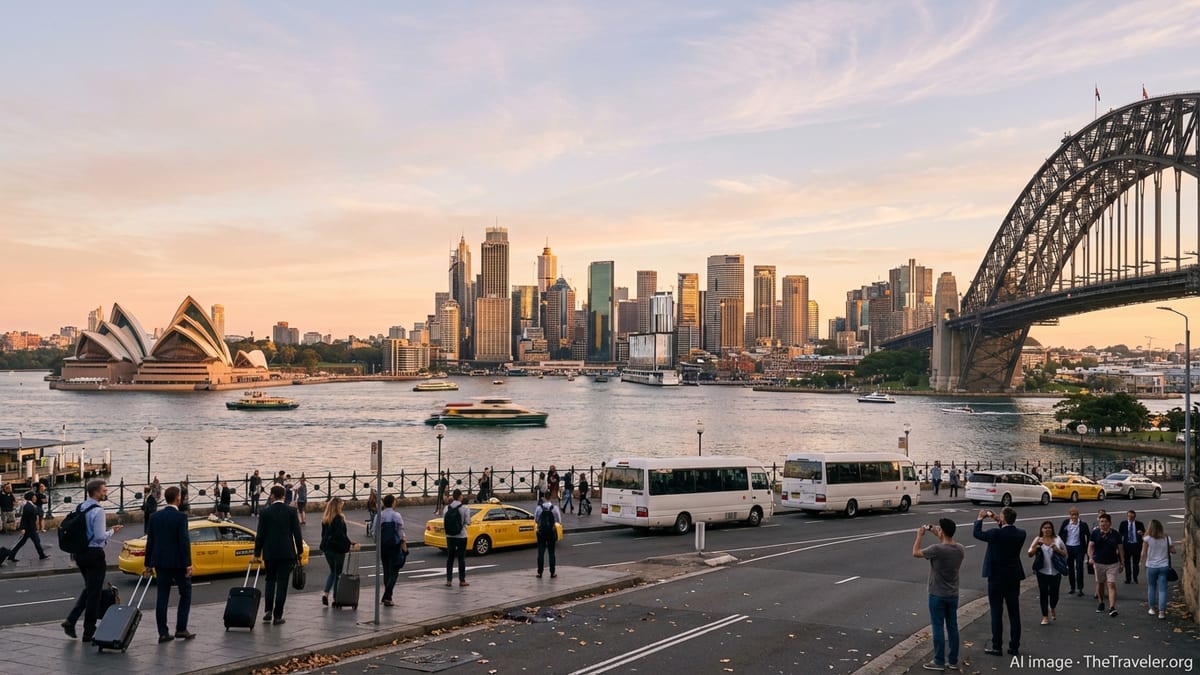
High-Tech Sydney Facility Anchors Qantas Training Network
The new Qantas Group Flight Training Centre in Sydney is emerging as a cornerstone of the airline’s long-term expansion strategy. Publicly available information shows that the purpose-built facility in St Peters, near Sydney Airport, currently houses five full-flight simulators, three fixed training devices and 10 classrooms, with scope to add more capacity over time. The site is being developed in partnership with global training provider CAE and is intended to support both Qantas and Jetstar pilots on multiple aircraft types.
Planning documents and recent corporate disclosures indicate the centre has been designed for up to eight simulator bays, creating room for additional devices as the group’s fleet evolves. Reports indicate that thousands of new and current pilots are expected to pass through the Sydney site every year for recurrent checks, type ratings and transition training, complementing existing training centres in Brisbane and Melbourne.
The opening marks a return of large-scale simulator infrastructure to Sydney after Qantas moved earlier devices to other states several years ago during major road works around the airport precinct. The relocation at the time had pushed more training activity interstate; the new facility reverses that shift and places one of the airline’s most advanced training hubs back in its home city.
CAE is responsible for operating the simulators and maintaining equipment at the site, which is configured to run around the clock to match the group’s global flight schedule. The arrangement is part of a broader, long-term partnership between Qantas and CAE focused on building resilient training capacity within Australia.
Backing Project Sunrise and Next-Generation Aircraft
The Sydney centre is closely tied to Qantas’ next-generation fleet plans, including Project Sunrise, the forthcoming series of ultra long-haul flights linking Sydney directly with destinations such as New York and London. Trade announcements and specialist aviation coverage highlight that the facility is slated to receive Australia’s first Airbus A350 full-flight simulator, tailored for the A350-1000 aircraft ordered for these non-stop routes.
According to published coverage of the project, the A350 simulator will allow Qantas to base training for Project Sunrise pilots in the same city where the long-haul services will originate. This is expected to reduce travel time for crew, streamline scheduling and ensure that flight operations for some of the world’s longest commercial sectors are supported by local, in-country training infrastructure.
The new hub is also aligned with the broader renewal of the Qantas and Jetstar fleets, which includes incoming Airbus A220 and A321neo family aircraft for domestic and regional operations alongside additional Boeing 787 Dreamliners for long-haul flying. Training devices at the Sydney site are being configured to support this changing mix, with new simulators added over the past year for Airbus narrow-body types and turboprop fleets as older models are retired.
Industry observers note that by clustering advanced simulators for multiple aircraft families in Sydney, Qantas can centralise more of its training while still balancing capacity across Brisbane and Melbourne. This model reflects a wider trend among global airlines that are investing heavily in in-house and partnered training centres to keep pace with accelerated fleet modernisation.
Supporting Australia’s Tourism Rebound and Capacity Growth
The investment in the Sydney training centre arrives as Australia’s international tourism sector continues rebuilding and diversifying after pandemic-era disruptions. Aviation analysts have linked increased training capacity to the broader goal of restoring and eventually expanding seat availability on key international and domestic routes, particularly from gateway cities such as Sydney.
Publicly available information on Qantas’ training strategy indicates that the group considers simulator infrastructure a critical enabler for adding new services, raising frequencies and launching longer-range flights. Each additional aircraft and route requires sufficient numbers of type-rated crew, and the new centre is designed to help deliver that pipeline at scale from within Australia.
The timing intersects with strong demand for travel into and out of the country, including returning long-haul leisure travel, business traffic and VFR (visiting friends and relatives) segments. By coupling a fleet renewal program with expanded training, the airline group is positioning itself to increase capacity on established trunk routes and open new city pairs that rely on high utilisation of technically advanced aircraft.
For inbound tourism operators, the additional training capability in Sydney is viewed as part of a wider infrastructure base that also includes airport upgrades and improved connectivity across regional centres. More pilots qualified on new-generation jets can support better schedule reliability, which remains a key consideration for long-haul visitors planning complex, multi-stop itineraries in Australia.
Skills Pipeline, Jobs and Industry Partnerships
The Sydney facility is expected to play a role in strengthening the aviation skills pipeline across Australia. Reports indicate that the centre sits alongside a broader investment program in training, including the Qantas Group Pilot Academy and a Safety Academy focused on ground-based emergency and safety procedures. Together, these initiatives are intended to attract and retain pilots, engineers and cabin crew at a time when many countries are facing skilled-aviation workforce shortages.
State-level planning and environmental filings for the flight training centre highlight potential employment benefits, both in direct operational roles and in supporting industries such as facilities management, technology services and simulator maintenance. While the Sydney centre itself is heavily automated and equipment-focused, demand for specialist instructors, technicians and support staff is projected to rise as usage ramps up.
The project has also involved collaboration with property and infrastructure partners to deliver a highly specified building suitable for sensitive simulator operations. Design documentation points to dedicated, acoustically treated simulator bays, secure access controls and flexible classroom spaces configured for both initial and recurrent training. These elements have been incorporated to allow the facility to scale up as new devices and training programs come online.
Beyond Qantas and Jetstar, the expanded capacity within Sydney is expected to support broader industry needs over time, including potential training for other carriers and aviation organisations that require access to advanced devices within Australia’s largest aviation market.
Positioning Sydney as a Regional Flight Training Hub
With the opening of the new centre, Sydney is being positioned as a key node in a national training network that already includes substantial facilities in Brisbane and Melbourne. Aviation media reports describe the combined footprint as seven major training sites around the country, reflecting a deliberate move to decentralise risk while still anchoring core capabilities in Sydney.
For Australia’s wider travel ecosystem, this concentration of training infrastructure reinforces Sydney’s status as a primary gateway and operations base. It also creates new opportunities for partnerships with universities, technical colleges and specialist training providers that support aviation degrees, engineering programs and cabin-crew pathways.
As international traffic to and from Australia trends upward and new long-range aircraft enter service over the coming years, the Sydney training centre is expected to remain central to how Qantas scales its operation. The combination of simulator capacity, fleet renewal and route expansion signals that the airline group is preparing for sustained growth in both inbound and outbound travel, with Sydney at the core of its global strategy.
Sector analysts note that other Asia-Pacific carriers are pursuing similar investments, suggesting a competitive regional landscape in which access to advanced training facilities may become a differentiator. In that context, Qantas’ decision to anchor a next-generation hub in Sydney underscores confidence in Australia’s long-term role in international aviation and tourism.
Qantas Group opens Sydney training centre – AFM.aero
Qantas pilot training centre returns to Sydney – Travel Weekly