


More news on this day
Qatar Airways has resumed double-daily passenger flights between Doha and Abu Dhabi, restoring a key Gulf corridor and expanding the airline’s United Arab Emirates network amid a wider restart of routes across West Asia.
Get the latest news straight to your inbox!
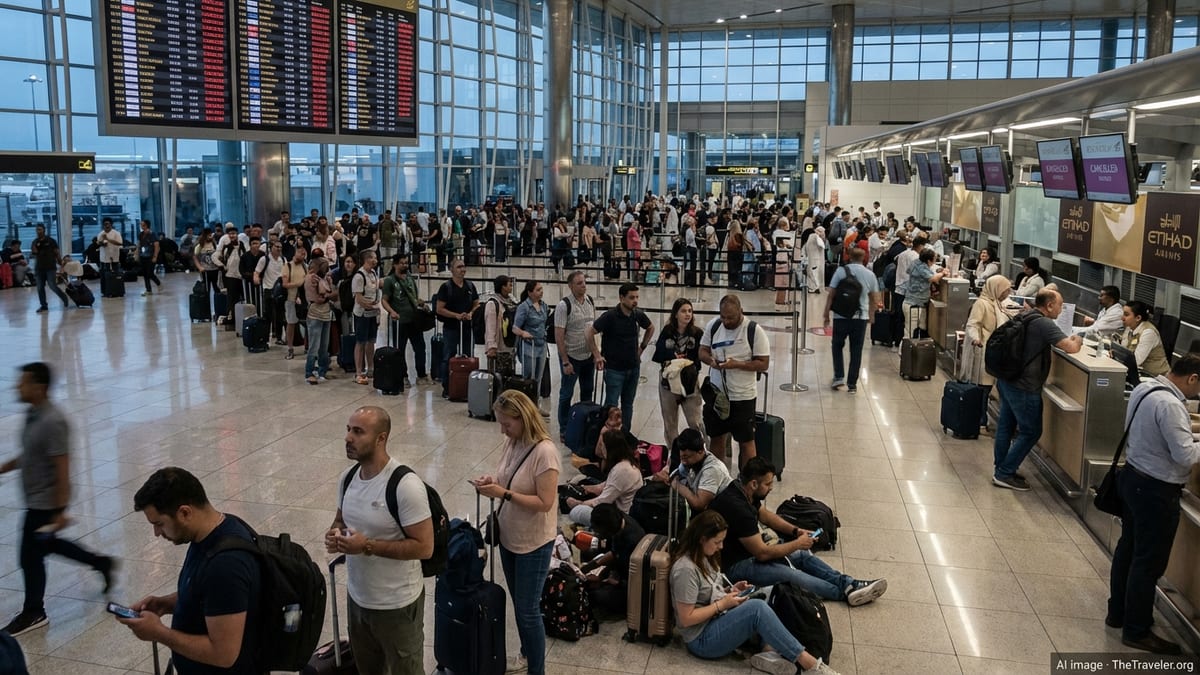
Key Route Returns After Regional Disruptions
Publicly available information from Qatar’s state news agency and aviation industry reports indicates that the Doha to Abu Dhabi service is once again operating, with two daily frequencies linking Hamad International Airport in Doha and Abu Dhabi’s Zayed International Airport. The move restores a high-demand short-haul link of around 70 minutes’ flight time between the Qatari capital and the UAE capital.
The reinstated service follows a period of disruption to flights in parts of the Middle East earlier this year, when airspace restrictions and security concerns led to widespread schedule changes and suspensions for several major Gulf carriers. According to published coverage, Qatar Airways is now steadily rebuilding its regional network as conditions stabilize, using Abu Dhabi as an early piece of that broader restart.
The return of Abu Dhabi flights strengthens Qatar Airways’ presence in one of its most important neighboring markets. The airline had maintained strong flows to the UAE before recent disruptions, with Abu Dhabi historically serving both business and leisure demand, as well as a vital source of connecting traffic through Doha to long-haul destinations.
Industry analysts note that the Doha–Abu Dhabi corridor is a strategic link within the Gulf Cooperation Council region, supporting corporate travel, government traffic, and a growing number of tourists moving between Qatar and the Emirates for events, conferences, and short-break leisure trips.
Expanding Qatar Airways’ Footprint in the UAE
With the resumption of Abu Dhabi services, Qatar Airways now serves three cities in the United Arab Emirates: Abu Dhabi, Dubai, and Sharjah. Reports indicate that the Doha based carrier is operating two daily flights to Abu Dhabi, complementing its existing schedule to Dubai International Airport and Sharjah International Airport.
This multi-city presence in the UAE gives passengers more options on where to begin or end their journeys, while still using Doha as a major connecting hub. Travelers from Abu Dhabi gain access to Qatar Airways’ broader network across Asia, Africa, Europe, and the Americas, while inbound passengers can connect onward from Doha to the UAE’s capital for business, tourism, and family visits.
Aviation industry data shows that Abu Dhabi’s main airport is one of the busiest in the region, supported by the home-based carrier Etihad Airways and several low-cost and regional airlines. Qatar Airways’ return adds another full-service option on the key Doha–Abu Dhabi sector, increasing overall capacity at a time when Gulf travel demand is recovering.
For the UAE, the revived Qatar Airways connection supports the broader strategy of positioning Abu Dhabi as a diversified hub for finance, culture, and tourism. With several major museums, entertainment districts, new beach developments, and business zones coming on line in recent years, improved air links from neighboring Gulf capitals are becoming increasingly important.
Regional Connectivity Strategy Beyond Abu Dhabi
The Abu Dhabi relaunch is part of a wider pattern of route resumptions across West Asia. Recent announcements highlighted by trade publications show Qatar Airways bringing back flights to Iraqi cities such as Baghdad, Basra, and Erbil, reinforcing links into a market that has seen renewed investment and business travel activity.
Additionally, the airline has resumed services to other key regional destinations including Bahrain, Damascus, and Kozhikode in India, according to airline-focused news outlets. These moves signal a deliberate strategy to restore the short and medium haul network that feeds traffic into Doha, helping rebuild connectivity that was constrained during recent geopolitical and airspace challenges.
Travel analysts point out that restoring regional spokes such as Abu Dhabi and Baghdad is crucial for the carrier’s global model, which relies on high-frequency connections and short transfer times through its Doha hub. A dense regional network supports long-haul routes to Europe, the Americas, and Asia by providing a steady flow of origin and destination traffic across the Gulf and wider Middle East.
The pattern also reflects a wider regional trend, as carriers in the Gulf, including those based in the United Arab Emirates and Saudi Arabia, move to re-establish or expand routes that had been reduced or suspended. The resulting increase in available seats is expected to intensify competition on some corridors but may also provide travelers with more competitive fares and schedule choices.
Implications for Travelers and Competition in the Gulf
The resumption of double-daily flights between Doha and Abu Dhabi is expected to provide greater flexibility for passengers planning short trips between the two capitals or onward connections via Doha. Multiple daily frequencies typically allow for better same-day return options for business travelers and tighter connections onto long-haul services in both directions.
Abu Dhabi based travelers can tap into Qatar Airways’ global network, while visitors heading to the UAE’s capital gain another one-stop option via Doha from cities across Europe, Africa, Asia, and the Americas. This is particularly relevant as Abu Dhabi seeks to attract more international visitors to its cultural institutions, theme parks, and beach resorts.
The renewed service also introduces further competitive pressure in the Gulf aviation market. Etihad Airways already operates multiple daily flights between Abu Dhabi and Doha, while other regional carriers connect the wider UAE and Qatar via various hubs. Qatar Airways’ additional capacity on the route may encourage adjustments in pricing, schedules, and product offerings as airlines vie for both origin passengers and connecting traffic.
Travel industry observers suggest that more robust connectivity between Doha and Abu Dhabi could benefit corporate clients managing operations in both markets, as well as multinational firms that base regional offices across the Gulf. Improved air links can reduce journey times, simplify itineraries, and support the wider goal of positioning the region as an integrated business and tourism corridor.
Ongoing Uncertainty in Flight Schedules
Despite the positive signal of Abu Dhabi flights returning, schedule volatility remains a feature of the current operating environment in the Middle East. Qatar Airways has publicly indicated in recent advisories that flight times and frequencies are still subject to change or cancellation in response to evolving operational, regulatory, and safety considerations.
For travelers, this means that planning flexibility remains important. Industry guidance commonly recommends that passengers monitor their bookings closely through airline apps or official channels in the days leading up to departure, particularly on routes in regions that have recently experienced airspace restrictions.
Several carriers in the Gulf have adopted similar messaging as they recalibrate networks, gradually restoring suspended routes while retaining the option to adjust capacity quickly if conditions change. While the return of the Doha–Abu Dhabi route signals improving stability on this particular corridor, the broader regional backdrop continues to evolve.
As Qatar Airways and its regional peers continue to rebuild flight schedules, the restored Abu Dhabi link underscores how critical short-haul Gulf routes are to the overall architecture of global air travel. The double-daily service between Doha and the UAE capital once again offers a familiar connection for travelers, while highlighting both the resilience and the ongoing fragility of aviation networks across the Middle East.