


More news on this day
Thousands of passengers across the United States faced cascading disruptions today as 143 flights were cancelled and at least 373 were delayed at Hartsfield-Jackson Atlanta, John F. Kennedy, LaGuardia, and O’Hare airports, snarling travel through three of the country’s busiest metropolitan areas and rippling across domestic and international networks.
Get the latest news straight to your inbox!
Storm System and Operational Strains Collide
Early forecasts and airline operation updates indicated that a fast-moving storm system sweeping through parts of the Midwest and East Coast triggered the first wave of schedule disruptions, with thunderstorms, low clouds, and shifting wind patterns affecting key arrival and departure corridors. These weather complications coincided with an already tight operating environment at major hubs, leaving carriers with limited flexibility to recover once delays began to stack up.
By midmorning, publicly available tracking data showed cancellations and protracted delays accumulating at Chicago O’Hare and Atlanta’s Hartsfield-Jackson, two airports that regularly rank among the busiest in the world by passenger volume. The same pattern soon appeared at New York’s John F. Kennedy and LaGuardia, where earlier incidents and infrastructure constraints have left operations particularly sensitive to spikes in traffic and changing conditions.
Aviation analysts note that this latest wave of disruptions follows a series of recent shocks to the U.S. air travel system, including powerful late winter storms, the shutdown of low-cost carrier Spirit Airlines, and rising concerns over airport capacity and staffing. In this context, a weather-driven disturbance at a handful of hubs can quickly escalate into a national event, particularly when schedules are running close to maximum utilization.
Atlanta, New York, and Chicago Bear the Brunt
In Atlanta, Hartsfield-Jackson’s role as a primary connecting hub meant that local weather and congestion had far-reaching effects. Reports from the airport showed clusters of cancellations and long departure queues as airlines adjusted to rapidly changing conditions. Travelers connecting through Atlanta on north-south itineraries, as well as those heading to transatlantic and transpacific flights, encountered missed connections and last-minute rebookings.
New York’s dual hubs of JFK and LaGuardia experienced a different but related set of pressures. LaGuardia has been recovering from a deadly runway collision earlier this year that resulted in heightened scrutiny of traffic levels and runway operations. Residual operational caution, combined with the usual congestion over the New York airspace, contributed to longer taxi times and airborne holding patterns once weather and traffic volumes intensified.
At JFK, a combination of international traffic, ongoing construction, and airspace bottlenecks created another chokepoint. International long-haul services are particularly vulnerable when early-morning arrival banks are disrupted, as late arrivals can push crews and aircraft out of their tightly scheduled rotations for the rest of the day. Today’s disruptions left some widebody aircraft out of position, forcing airlines to consolidate flights or postpone departures.
Chicago O’Hare, meanwhile, has been at the center of a broader debate about airport capacity and reliability. A recent cap on daily operations, implemented to address chronic congestion and delays, has made the system more orderly under normal conditions but also means there is less room to add recovery flights when weather or other issues take a toll. With thunderstorms passing through the region, O’Hare’s arrivals and departures quickly backed up, affecting flights across the Midwest and beyond.
Spillover Disruptions Across the National Network
Because Atlanta, New York, and Chicago serve as critical connecting nodes, even a few dozen cancellations at each can trigger widespread knock-on effects. Passengers traveling between secondary cities, far from the immediate impact zones, reported unexpected cancellations or multi-hour delays as aircraft and crews failed to arrive on schedule from the affected hubs.
Schedule data and recent performance reports highlight how interconnected the system has become. Airlines commonly route the same aircraft through multiple hubs over the course of a day, with crew assignments carefully choreographed to comply with duty-time regulations. When one leg of that chain is delayed or cancelled, subsequent flights may be forced to depart late, operate with substitute aircraft, or be removed from the schedule entirely.
Travelers with itineraries involving smaller regional airports were particularly vulnerable. Many such routes operate only a few times per day, often on smaller jets or turboprops. When a connecting flight from a major hub is cancelled, same-day alternatives can be limited or nonexistent, leaving passengers facing overnight stays or rebooking for the following day.
Industry observers also point to the lingering effects of earlier storms in March, when widespread cancellations at the same hubs produced multi-day disruptions. Some airlines have since adjusted schedules and staffing plans to build in more resilience, but today’s disruption underscores how quickly those buffers can be exhausted when multiple airports encounter constraints at the same time.
Underlying Issues: Staffing, Construction, and Capacity Limits
Beyond the immediate weather concerns, several structural factors are amplifying the impact of disruptions at these major airports. Airlines and ground handling companies continue to report tight staffing in key operational roles, from pilots and flight attendants to mechanics and ramp crews. Even modest absenteeism can reduce an airline’s ability to recover from delays, especially late in the day when crews approach their legal duty limits.
At O’Hare, a federal cap on daily operations introduced for the upcoming summer travel period reflects persistent worries about overcapacity and runway congestion. Recent analyses by aviation planners have shown that when scheduled movements approach or exceed an airport’s practical capacity, even minor disturbances can cascade into hours-long delays. The cap is intended to restore reliability, but in the short term it can constrain the number of extra flights airlines can add to clear backlogs.
New York’s airports are also in the midst of extensive construction and modernization projects intended to expand capacity and improve passenger experience. While these projects promise long-term benefits, they can temporarily reduce the availability of gates, taxiways, and terminal space, making it more challenging to reroute aircraft or quickly turn flights during irregular operations.
In Atlanta, the sudden exit of Spirit Airlines earlier this month has altered the competitive landscape, redistributing passengers across remaining carriers and adjusting gate and staffing patterns. Analysts note that while the removal of an entire airline from the schedule eliminates some flights, it also introduces new imbalances as other carriers absorb demand and adjust their networks.
What Impacted Travelers Are Facing Now
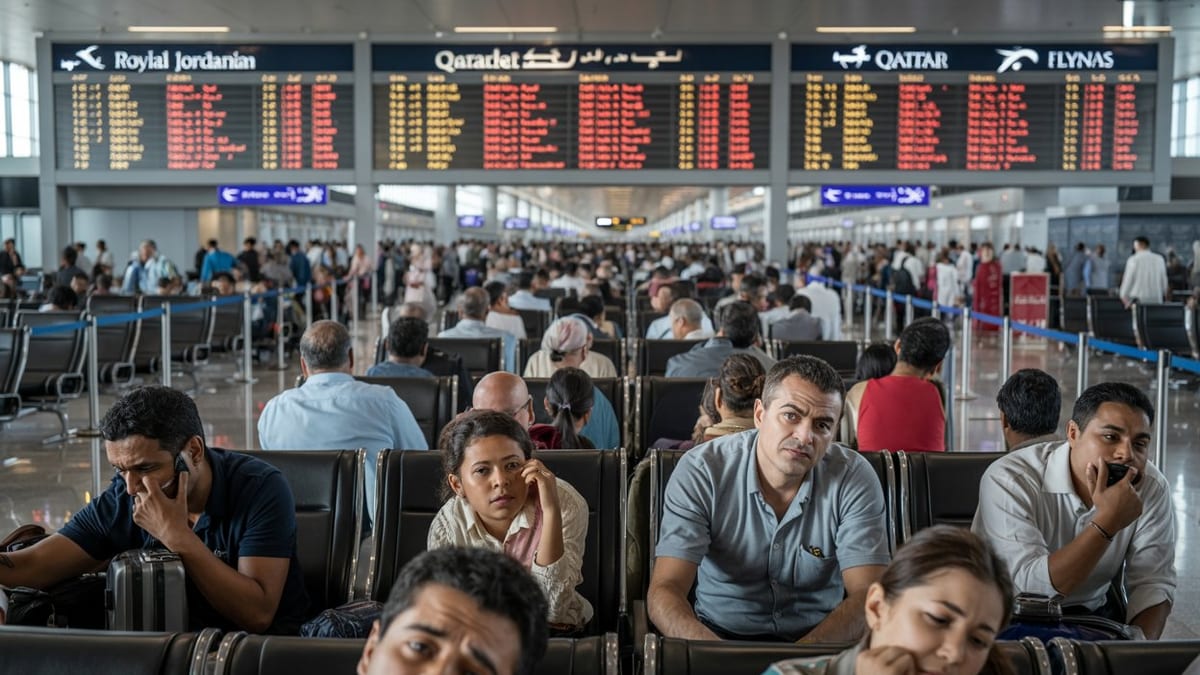
For travelers caught in today’s disruptions, the immediate consequences are long lines, crowded gate areas, and uncertainty about when they will reach their destinations. Airport concourses in Atlanta, Chicago, and New York experienced visible crowding as passengers waited for updated departure times and sought information on rebooking options.
Consumer advocates emphasize that passengers on U.S. carriers affected by cancellations or significant delays should familiarize themselves with airline policies on rebooking, meal vouchers, and hotel accommodations. While compensation rules in the United States differ from those in regions such as the European Union, many airlines offer waivers and flexible rebooking options during large-scale operational disruptions, particularly when widespread weather or airspace constraints are involved.
Travel planning experts advise that those with departures scheduled later in the day or on the following day monitor their flight status frequently, use airline apps for real-time notifications, and consider proactive rebooking if their route relies on one of the heavily affected hubs. In some cases, accepting an earlier or less direct itinerary can reduce the risk of being stranded if conditions worsen.
With the peak summer travel season approaching, today’s cascading cancellations and delays serve as a reminder of the fragility of the current air travel system. Weather, infrastructure limits, and staffing pressures are likely to intersect again in the coming months, and travelers may increasingly need to build extra time and flexibility into their plans when connecting through the country’s largest hubs.