


More news on this day
Britain’s Rail Accident Investigation Branch has released an initial update on its inquiry into the fatal collision between two East Midlands Railway passenger services near Elstow, south of Bedford, providing early details of the sequence of events and the evidence now being examined.
Get the latest news straight to your inbox!
Early findings from the Elstow collision inquiry
According to publicly available information from the Rail Accident Investigation Branch, the collision occurred on the evening of 19 June 2026 on the Midland Main Line near Elstow, a short distance south of Bedford. Two southbound East Midlands Railway services were involved, with a moving train striking the rear of a stationary passenger service that had come to a halt on the same line.
Reports indicate that the impact killed the driver of the moving train and injured around 90 passengers on board the two services, with a significant number described as seriously hurt. Images and descriptions published in UK media and specialist rail outlets suggest visible damage concentrated at the leading cab of the rear train and the trailing vehicles of the stationary unit, but without large-scale derailment.
In its update, the investigation branch confirms that it has deployed inspectors to the scene and has begun a detailed reconstruction of the moments leading up to the crash. The agency’s initial focus is on understanding why the following train continued into an occupied block of track, despite the presence of modern signalling and train protection systems on this busy section of main line between Bedford and Luton.
The update notes that investigators are now collecting data from the trains’ on-board recorders, analysing signalling logs from the control centre and examining the physical condition of track and equipment at the site. This early phase is intended to establish a clear, evidence-based timeline rather than apportion responsibility.
Signals, train protection and driver actions under review
Initial summaries of the inquiry indicate that particular attention is being paid to the status of signals encountered by the moving train in the minutes before the collision. Media coverage referencing the investigation notes that two cautionary signals were passed at yellow aspects before the train encountered a red signal protecting the stationary service ahead.
Publicly available material connected to the investigation suggests that the train passed that red signal shortly before striking the stationary unit. The update from the Rail Accident Investigation Branch points to a detailed analysis of the Automatic Warning System and any additional train protection systems fitted on the route, in order to understand both what information was presented to the driver and how the train responded.
Investigators are expected to examine whether the warning systems worked as designed, whether there were any technical faults, and how the driver responded to the sequence of indications. The agency’s standard practice in such cases is to combine data recorder downloads with interviews and technical analysis of braking performance, visibility and workload in the driving cab at the time.
The update also highlights that the inquiry will consider wider operational factors, including traffic patterns on the Midland Main Line at the time of the incident, any late-running services, and the way trains were routed through the Bedford corridor. This is intended to identify whether timetable pressure, signalling configuration or unexpected events may have contributed to the circumstances that allowed two passenger services to occupy the same section of line.
Impact on services and reassurance for passengers
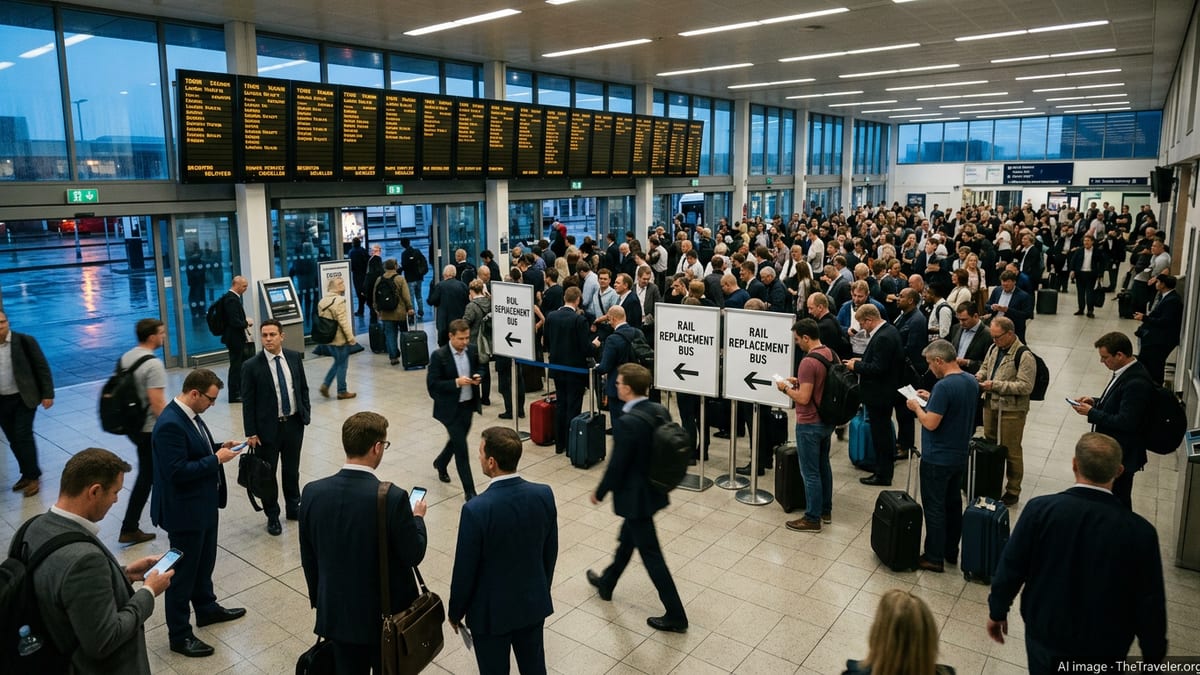
In the days since the collision, published reports from rail operators and local media show that the main line between Luton and Bedford has faced significant disruption, with services suspended or heavily reduced while the wreckage is removed and safety checks are carried out. Travel updates indicate that long-distance and commuter passengers have been advised to seek alternative routes as engineers and investigators work at the scene.
The update from the Rail Accident Investigation Branch confirms that the track remains under controlled access, with priority given to securing evidence and ensuring that infrastructure is safe before normal operations resume. This includes checks on signalling equipment, overhead power systems and track geometry in the area surrounding the crash site.
For rail users across the UK, the Elstow incident has prompted renewed questions about how such collisions can still occur on a network that is extensively signalled and equipped with train protection technology. Publicly available information about the inquiry underlines that the agency’s role is to identify safety learning and recommend improvements designed to reduce risk, rather than to determine civil or criminal liability.
Industry commentators note that the eventual findings are likely to inform future decisions on investment in train control technology, cab design, and operational rules for busy multi-service corridors similar to the Bedford section of the Midland Main Line. In the meantime, the update is intended to provide some transparency about the scope and direction of the ongoing inquiry.
How the Elstow inquiry fits into a wider safety record
The Rail Accident Investigation Branch’s latest update places the Elstow crash within a broader programme of inquiries into serious rail incidents across Britain. The agency has previously investigated collisions between passenger trains in Wales and at Salisbury, as well as a range of freight and infrastructure accidents, and routinely publishes detailed reports setting out causes and safety recommendations.
Recent publications from the agency and specialist rail media show a continued emphasis on issues such as driver awareness, signalling design, adhesion and braking performance, and the resilience of train protection systems. The Elstow collision adds a further high-profile case to this body of work, particularly given the number of injuries and the location on one of the country’s key intercity routes.
Observers expect that the final report on Elstow will examine whether previous recommendations on train protection, driver training, and control room procedures were relevant to the circumstances of this crash, and if so, whether they had been fully implemented. By placing the incident in this wider context, the investigation aims to identify whether systemic lessons can be drawn for the whole network rather than treating the event as an isolated failure.
The update stresses that the inquiry remains at an early stage and that conclusions will only be set out once all technical, operational and human factors evidence has been assessed. A more detailed preliminary report is typically released once the initial fact-finding work is complete, followed by a full report that includes any formal safety recommendations for the rail industry.