


More news on this day
Severe weather and low cloud ceilings across key U.S. hubs led to hundreds of cancellations and thousands of delays on June 22, stranding travelers from California to New York and rippling through airline schedules nationwide.
Get the latest news straight to your inbox!
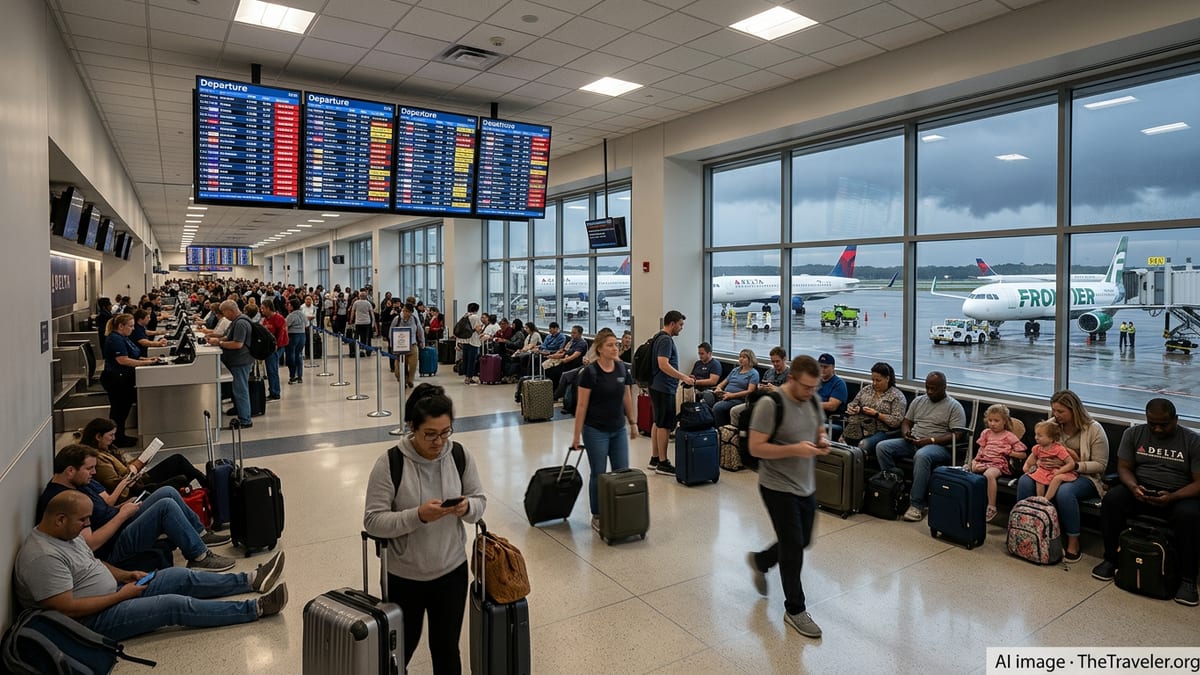
Nationwide Disruptions Hit Major Hubs and Regional Airports
Publicly available tracking data for June 22 indicates at least 448 flights were cancelled and 3,758 delayed across the United States, with disruptions concentrated at some of the country’s busiest airports. The impact was felt across California, New York, Texas, Pennsylvania, Tennessee and Kentucky, as well as other states positioned along the latest storm corridor.
Dallas Fort Worth International was among the hardest hit, recording close to 600 delays and around 60 cancellations as thunderstorms slowed departures and arrivals. Other major hubs including New York John F. Kennedy, San Francisco, Boston Logan, Hartsfield Jackson Atlanta and Washington Reagan National also reported clusters of delayed and cancelled services as storms and low visibility rolled through.
Secondary and regional airports saw knock-on effects as aircraft and crews failed to reach their next rotations. Facilities such as Orlando, Nashville, Fort Lauderdale, Philadelphia, Pittsburgh, Buffalo Niagara and Cincinnati Northern Kentucky all reported significant schedule changes, extending the disruption far beyond a single metropolitan area.
The pattern reflected a familiar challenge in the U.S. air network, where problems at a few large hubs quickly cascade through regional routes. With multiple weather systems converging over heavily traveled corridors, recovery times stretched well beyond the passing of individual storm cells.
American, Southwest and Regional Carriers Bear the Brunt
The wave of disruption affected a broad mix of airlines, from large network carriers to regional operators. Data compiled from airport and flight-status platforms shows American Airlines and Southwest Airlines among those with the highest numbers of delayed and cancelled flights as storms swept through their core markets.
Regional partners that operate flights under major-brand banners were also heavily affected. Republic Airways, Endeavor Air and PSA Airlines, which fly many feeder routes for the largest U.S. carriers, all registered cancellations and late operations as their tightly timed schedules unraveled.
United Airlines and other mainline carriers similarly experienced schedule pressures, particularly at hub airports along the East Coast and in Texas. With jets and crews out of position, some cancellations were driven less by the immediate weather at a given airport and more by the lack of available resources to operate subsequent legs.
Industry performance data released in recent federal consumer reports has already highlighted how even modest spikes in cancellations can reverberate through operations when staffing and fleet utilization are stretched. The latest disruptions appear consistent with that pattern, underscoring the vulnerability of high-frequency networks to weather shocks.
Storm Systems and Low Ceilings Blamed for Daylong Slowdowns
Meteorological reports for June 22 point to widespread showers and thunderstorms tracking along a cold front, combined with periods of low cloud ceilings and poor visibility across parts of the eastern half of the country. These conditions triggered flow restrictions, slower arrival rates and intermittent ground delays at multiple hubs.
Forecast discussions emphasized that the Washington to Newark to Boston corridor was particularly exposed, with repeated rounds of storms and instrument flight rules conditions limiting the number of aircraft controllers could safely handle at once. Where storms lingered near approach paths, arrival rates were trimmed, leading to backups on the taxiways and at departure gates.
Farther south and west, convective weather near major Texan hubs and along portions of the Gulf Coast created additional pockets of disruption. As those storms intersected with already busy weekend schedules, airlines were forced to reshuffle routes and occasionally cancel flights outright when safe alternatives or crew options were not available.
While conditions gradually improved into the evening, residual congestion and aircraft misplacements meant that delays continued well after the most intense cells had moved away, reinforcing the growing challenge of recovering quickly from afternoon and evening storms during the summer travel period.
Peak Summer Travel Faces Fresh Test of Airline Resilience
The timing of the latest cancellations is particularly sensitive, coming as U.S. carriers move deeper into the summer peak, when planes are fuller and spare capacity is limited. Recent government consumer reports have already documented how on time performance can deteriorate as schedules tighten and weather events become more frequent.
On busy days, airlines have less flexibility to rebook passengers onto later flights, since many departures operate at or near capacity. When hundreds of services are delayed, a portion of travelers face missed connections and overnight stays, raising the stakes for how quickly airlines can stabilize their operations.
The June 22 disruptions also follow a series of earlier weather related events in 2026 that tested operational resilience in different regions of the country. Analysts note that repeated bouts of severe storms, heat and other extremes can magnify staffing strains and stretch maintenance windows, creating additional points of vulnerability in already complex networks.
For travelers, the latest wave of cancellations and delays serves as another reminder that even a single day of poor weather can reshape itineraries across multiple states, particularly when it affects large connecting hubs that link regional and cross country routes.
What Travelers Can Expect in the Days Ahead
With unsettled summer weather forecast to persist in parts of the country, aviation and meteorological dashboards suggest that additional pockets of delay are possible, especially during afternoon and evening peak periods when thunderstorms are most likely. Travelers connecting through historically busy hubs may continue to encounter extended taxi times and gate holds, even on days without headline making disruption.
Publicly available guidance from airlines and consumer advocates consistently stresses the importance of monitoring flight status closely, using mobile apps and airport displays to track gate changes and rolling delays. On days with widespread storms, same day rebooking options can diminish quickly, particularly for smaller markets with limited daily service.
Passengers whose trips cross multiple weather affected regions are being urged by travel experts to build in longer connection times and consider early morning departures, when daily operations are less exposed to the cumulative impact of rolling delays. Those with flexible plans may find it easier to adjust travel dates away from the worst of the forecast.
As carriers work through the latest backlog, the focus will remain on how effectively they can move aircraft and crews back into position while keeping new disruptions to a minimum. With the heart of the summer season still ahead, performance over events like the June 22 wave of cancellations is likely to be closely watched by passengers and regulators alike.