


More news on this day
The family of train driver Shaun Burton, who died in last week’s fatal collision near Bedford, has issued a heartfelt public statement as the railway community and passengers continue to grapple with the scale of the tragedy.
Get the latest news straight to your inbox!
Family issues public tribute after driver is named
Publicly available information shows that British Transport Police named the driver killed in the Bedford-area collision as 60-year-old Shaun Burton, following the crash involving two East Midlands Railway services on the busy main line between Bedford and Luton. The collision, which occurred on the evening of 19 June, left around 100 people injured and brought one of the United Kingdom’s key intercity corridors to a standstill.
According to coverage in UK national media, Burton’s family released a written statement describing themselves as devastated by his loss and expressing that their thoughts were also with everyone affected by the incident. The words, shared through official channels, have quickly become a focal point for tributes circulating across the rail community, from colleagues and unions to regular commuters on the route.
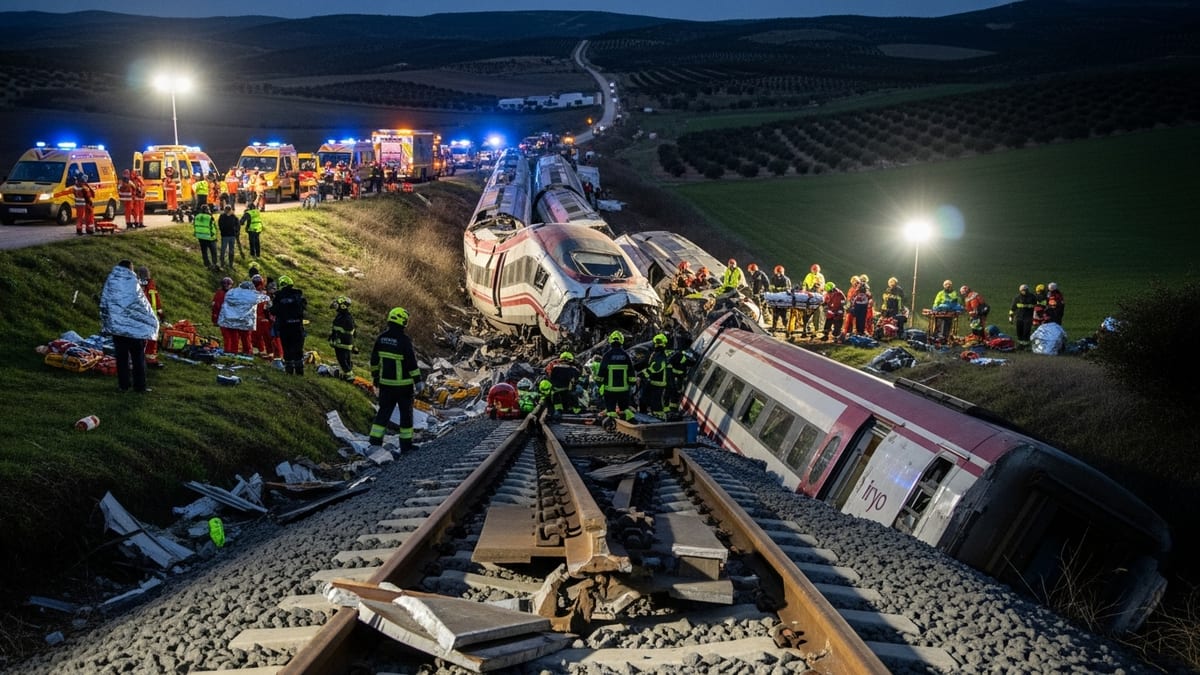
Reports indicate that Burton was driving the Corby to London St Pancras service which struck a stationary Nottingham to London train south of Bedford. Images from the scene published by broadcasters and newspapers have highlighted the force of the impact, with the leading car of the Corby service bearing the brunt of the damage. Rail commentators note that the severity of the crash has underlined both the risks faced by front-line staff and the importance of the ongoing investigation.
As the family’s words were shared, online tributes from rail workers, enthusiasts and passengers drew a portrait of an experienced professional whose working life was spent on the network he loved. Public messages referenced his reputation for calmness and reliability in the cab, further intensifying the sense of loss felt across the industry.
Railway community rallies around grieving relatives
Coverage from outlets including Sky News, the Guardian and the Independent indicates that rail unions and industry bodies moved quickly to express sympathy for Burton’s family. Statements from unions have referred to the driver’s death as a profound loss to the railway community, with many members noting the dangers that staff can still face despite the network’s strong overall safety record.
Publicly shared messages from colleagues have also focused on the impact on Burton’s relatives, acknowledging that while investigations and operational recovery will continue for weeks, the family’s bereavement is only beginning. Commentators have stressed that behind the statistics on serious injuries and disruption lies a single household now facing the practical and emotional consequences of a sudden death.
Travelers who were on board the affected trains have contributed to that sense of reflection, recounting through media interviews the professionalism of rail staff who helped passengers evacuate and reach safety. These accounts have reinforced the perception of Burton and his fellow crew members as the first line of response when incidents occur, even as they themselves are exposed to risk.
At stations along the Midland Main Line, reports describe a subdued atmosphere in the days following the collision, with some passengers leaving flowers and handwritten notes. While informal and small in scale, such gestures have added a human dimension to a story otherwise dominated by technical analysis and service updates.
Travel disruption and ongoing investigations shape passenger experience
Network Rail and the train operator have confirmed through public statements that services around Bedford will remain disrupted for several days while a complex recovery and repair operation continues. According to widely reported updates, the damaged trains have had to be carefully removed from the site, and engineers are assessing damage to track, signalling and overhead line equipment before full services can resume.
For travelers, the immediate impact has been a patchwork of rail replacement buses, diversions via alternative routes and longer journey times on the key corridor between the East Midlands and London. Media coverage has featured accounts from stranded commuters and leisure travelers navigating last-minute changes to itineraries, illustrating how a single point of failure on a high-frequency main line can ripple through timetables across a wide region.
The Rail Accident Investigation Branch has opened a formal inquiry, with a preliminary report already published online. Summaries in the press note that investigators are examining how a rear-end collision could occur on a modern, signal-controlled main line equipped with multiple safety systems designed to prevent precisely this type of crash. While the technical detail will take months to emerge in full, early commentary within the rail sector suggests that a combination of signalling configuration, protection systems and human factors is likely to be scrutinised.
For visitors and regular travelers alike, these developments mean an extended period of uncertainty. Travel journalists are advising passengers heading through Bedfordshire to check the latest service information before setting out, allow additional time for connections and be prepared for changes at short notice as sections of line reopen in stages.
Safety questions resonate beyond Bedford
Beyond the immediate response, the Bedford collision has prompted renewed discussion about rail safety in the United Kingdom. According to analysis in national newspapers, the crash follows a series of serious rail incidents over the past six years, including collisions at Salisbury and in Powys, which had already triggered debate about signaling protections and infrastructure investment.
Commentary pieces note that Britain’s rail network maintains a strong overall safety record by international standards, but argue that each major accident challenges assumptions about how robust existing systems really are under unusual or stressed conditions. The fact that the Bedford crash occurred on a major, well-equipped main line has particularly caught the attention of industry observers and policymakers.
For Burton’s family, these broader conversations unfold in parallel with their private grief. Their public statement, which extended sympathy to all who were injured or otherwise affected, has been interpreted by some commentators as an appeal for the tragedy to drive meaningful safety improvements. Travel-focused outlets have suggested that passengers are likely to follow the findings of the investigation closely, given how many journeys rely on this corridor each week.
Rail users’ groups and commentators have begun to call for clear communication about any lessons learned from the crash once the investigation concludes. For many travelers, understanding how and why the collision happened, and what measures are being taken to prevent a recurrence, will be key to restoring full confidence in services through Bedford.
Human stories behind a disrupted travel corridor
As trains are gradually reintroduced and timetables rebuilt, the Bedford line is slowly transitioning from emergency response back to routine operation. Yet reports from the area make clear that the human effects of the collision will last far longer than the physical repairs. For Burton’s family, the daily rhythm of rail travel has been permanently altered by the loss of a loved one whose job was to bring people safely to their destinations.
Passengers caught up in the crash or its aftermath are also processing their experiences. Some have described in media accounts how a familiar commuter journey suddenly turned into a scene of confusion and fear, while others have reflected on how quickly rail staff and emergency responders moved to help. These recollections underscore the unpredictable nature of travel incidents and the resilience often shown by those involved.
For visitors passing through Bedfordshire in the coming weeks, visual reminders of the crash may linger in the form of repair works, speed restrictions and altered stopping patterns. Travel writers note that such scenes often prompt reflection about the hidden systems and people that keep modern rail networks moving, most of whom are noticed only when something goes wrong.
Amid those realities, the statement from Burton’s family continues to resonate as a central reference point in public discussion of the crash. As tributes accumulate and investigations proceed, their words serve as a reminder that the story of the Bedford collision is, above all, a family’s loss at the heart of a major transport tragedy.