


More news on this day
Holiday travel plans around Washington, D.C., and concerns about long-haul flight safety are colliding this summer as unprecedented airspace closures for America250 celebrations converge with a high-profile British Airways 787 cabin fire investigation.
Get the latest news straight to your inbox!
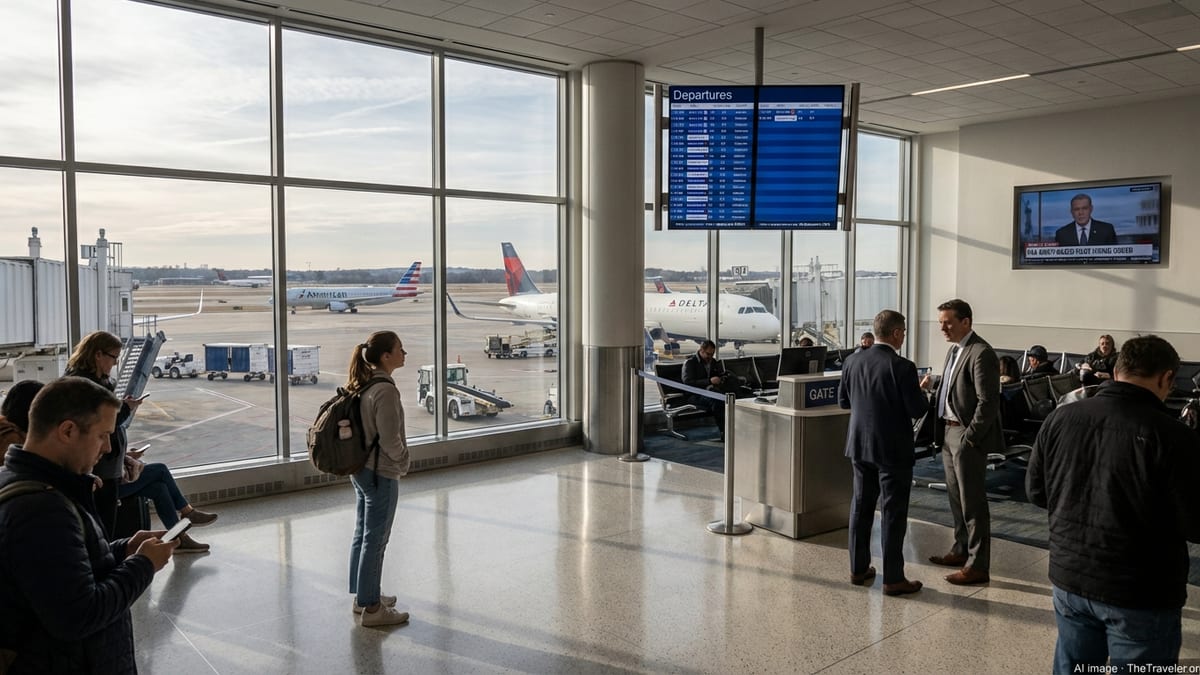
America250 Triggers Rare Shutdown at Reagan National
Ronald Reagan Washington National Airport is preparing for one of its most significant operational disruptions in years as complex airspace restrictions are readied ahead of America250 festivities around the Fourth of July weekend. Publicly available notices and local coverage indicate that flights to and from the close-in airport will be halted or heavily curtailed for several hours at multiple points, allowing for large-scale celebratory events over central Washington.
Advisories describe a series of temporary flight restrictions around the National Mall and Potomac River as organizers plan expansive fireworks displays and aerial elements tied to the semiquincentennial. The Metropolitan Washington Airports Authority has outlined windows when commercial traffic at Reagan National must pause so that the airspace directly above core celebrations can be cleared.
The restrictions are being layered on top of the airport’s already tight operating environment, where constrained runways and security-sensitive airspace frequently require precision scheduling. For airlines that rely on quick turns at Reagan National, these added blocks of time without movements are expected to ripple through the network, particularly for short-haul routes along the East Coast.
Travelers flying in or out of Washington around July 4 are being urged by airlines and airport communications to monitor itineraries carefully, as many carriers are proactively shifting departure times to avoid the most restrictive closure periods.
Regional and River Closures Add to Disruption
The impact will not be limited to runway operations. Coast Guard and local safety notices show that sections of the Potomac and Anacostia rivers will also be closed to recreational boating for several days surrounding the holiday, affecting a swath of paddling outfitters, tour boats, and waterfront businesses that typically see peak demand in early July.
Reports from Washington-area outlets describe a no-go zone stretching along the Potomac between prominent river crossings, with additional limits near the Tidal Basin. For residents and visitors accustomed to celebrating the holiday on the water, the combination of river closures and airspace restrictions represents a marked break from past years.
Community reaction has been mixed. Some residents see the measures as a necessary tradeoff for what is being billed as one of the most ambitious Independence Day celebrations in decades. Others view the late-stage details and scope of the closures as a burden on commuters, travelers, and small businesses that depend on predictable access during the high summer season.
Transportation observers note that Washington is accustomed to security-driven adjustments for major events, but the semiquincentennial’s duration and geographic footprint appear broader than typical Fourth of July preparations, amplifying the effect on aviation and river traffic.
British Airways 787 Cabin Fire Raises Global Safety Questions
Even as Washington prepares for managed airspace shutdowns, a separate aviation incident involving a British Airways Boeing 787 has renewed attention on in-flight fire risks. According to published coverage from U.S. and aviation-focused outlets, a London to Las Vegas service on June 15 experienced a cabin fire attributed to a mobile phone or lithium-ion battery shortly before landing.
Reports indicate that the aircraft, operating as a long-haul flight to Harry Reid International Airport, was nearing its destination when smoke and flames were observed in the cabin. Air traffic control audio referenced in media accounts captures the flight crew describing a phone fire that scorched interior fittings, while emphasizing that the situation was contained on board.
The flight landed safely and on schedule, and airport statements cited in news reports say that an alert was raised to position emergency services, though a formal emergency declaration was not ultimately made. Investigators at the Federal Aviation Administration have opened a review into the event, transitioning it from a routine incident report into a more detailed examination of circumstances surrounding the battery failure.
Early descriptions suggest that cabin crew and passengers quickly intervened with onboard fire extinguishers and thermal containment procedures, underscoring both the effectiveness and the critical importance of training for rapidly evolving in-flight emergencies involving personal electronic devices.
Scrutiny on 787 Operations and Lithium-Ion Risks
The British Airways incident adds to an established body of concern about lithium-ion batteries in aviation, rather than pointing to an inherent flaw unique to the Boeing 787. Industry data compiled over the past decade documents a series of battery-related smoke and fire events across multiple aircraft types, as portable electronics and power banks have become ubiquitous in cabins.
However, the combination of a high-profile international flag carrier, a modern long-haul aircraft, and visible interior damage has drawn particular attention. Specialists interviewed in existing coverage highlight the narrow margin for error when dealing with energetic battery failures at altitude, reinforcing policies that restrict charging, require devices to be carried in the cabin instead of checked luggage, and mandate specific procedures for extinguishing and cooling affected items.
Regulators will now assess whether the Las Vegas-bound flight points to any gaps in current guidance. Possible outcomes range from reiterated safety bulletins to refreshed crew training materials or revised messaging to passengers on safe device handling. Any broader design or equipment implications for the 787 fleet would depend on what investigators determine about the ignition source and how the fire interacted with cabin materials and systems.
For British Airways, the event comes at a time when widebody deployment and fleet reliability are central to transatlantic and transpacific schedules. While no injuries have been widely reported in connection with the June 15 fire, heightened scrutiny can influence passenger perceptions, particularly on routes where extended overwater segments limit diversion options.
Travelers Caught Between Commemoration and Caution
Together, the America250 airspace plans in Washington and the British Airways 787 fire illustrate the twin pressures shaping air travel at the midpoint of 2026. On one side, large-scale national events require aggressive safety buffers that temporarily curtail normal airport operations. On the other, emerging risks tied to modern technology continue to test aircraft systems and crew procedures.
For travelers, the practical implications are clear. In and out of the U.S. capital, those flying around July 4 face a higher likelihood of schedule changes, longer connection times, and more congested alternatives at nearby airports such as Dulles and Baltimore/Washington. On long-haul journeys worldwide, passengers are being reminded via airline advisories, cabin announcements, and public reporting to handle personal electronics carefully, keep them accessible, and alert crew immediately if devices overheat.
Aviation analysts note that both developments ultimately revolve around layered safety: cleared skies over a dense urban core for a once-in-a-generation celebration, and robust protocols on board advanced airliners carrying increasingly tech-laden travelers. As investigations progress and event timelines firm up, airlines and airports are expected to refine contingency plans, but the message for passengers is steady preparation and close attention to updated guidance in the weeks ahead.