


Florence is a city of palaces, but two names rise above the rest for most visitors: Palazzo Vecchio and Palazzo Pitti, better known as Pitti Palace. Both are grand, historic, and packed with art, yet they deliver very different experiences. If you only have time or budget for one, choosing between them can shape how you remember Florence itself. This guide compares the two, using current opening hours, typical ticket prices, and on-the-ground examples, to help you decide which palace is the better fit for your style of travel.
Get the latest updates straight to your inbox!
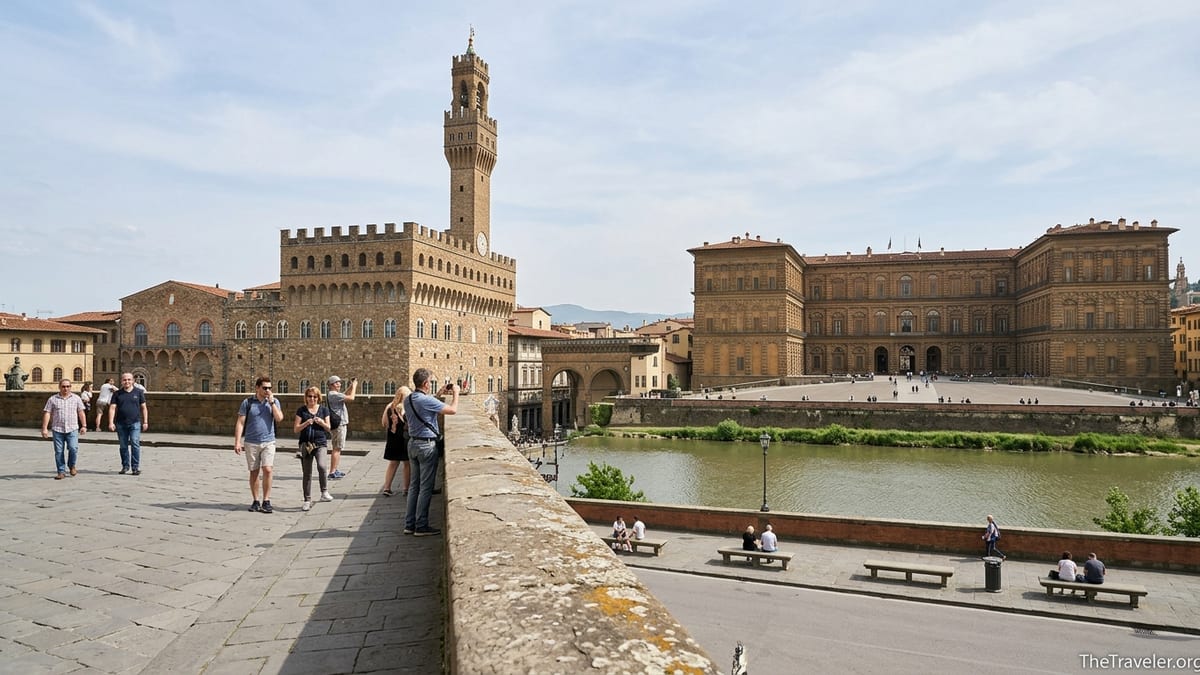
Palazzo Vecchio vs Pitti Palace at a Glance
Palazzo Vecchio stands on Piazza della Signoria, the political heart of Florence. Since the early 14th century it has served as the city’s town hall, a fortress-like symbol of civic power. Today it is part working city hall, part museum, and part lookout point thanks to the Arnolfo Tower. Walking inside feels like stepping into a medieval and Renaissance power center, with frescoed council chambers and rooms that once housed the Medici before they moved across the river.
Pitti Palace, on the opposite bank of the Arno in the Oltrarno district, is the former grand ducal residence of the Medici and later the Habsburg-Lorraine and the Savoy royal family. It is Florence’s largest museum complex, housing the Palatine Gallery, Royal Apartments, Gallery of Modern Art, Treasury of the Grand Dukes, and more. It opens onto the Boboli Gardens, a vast historic park that many travelers treat as a second major attraction in its own right.
In practical terms, Palazzo Vecchio is more compact and easier to fit into a half-day of sightseeing, while Pitti Palace and its museums are a half- to full-day commitment. Palazzo Vecchio tends to appeal to travelers interested in civic history, architecture, and city views; Pitti Palace rewards those who love painting-filled galleries and courtly interiors on a grand scale.
For many itineraries, the most realistic comparison is a two- to three-hour visit to Palazzo Vecchio and Arnolfo Tower versus a three- to five-hour visit that combines Pitti Palace with at least a walk through the Boboli Gardens. The right choice depends on whether you want depth in one place or a shorter, punchier experience in the very center of town.
Location, Atmosphere, and First Impressions
Location may be the single biggest difference in how these palaces feel. Palazzo Vecchio anchors Piazza della Signoria, one of Florence’s busiest and most dramatic squares. You approach it past outdoor sculptures, street performers, and the constant energy of tour groups and locals crossing the square. The fortress facade and off-center tower are instantly recognizable, and the sense of being in the historic core is unmistakable.
Pitti Palace, by contrast, sits across the river, about a five-minute walk from Ponte Vecchio. The approach is calmer: a broad open space in Piazza de’ Pitti, stone benches, and the massive rusticated facade rising in tiers. Tour groups gather in the square, but crowds rarely feel as compressed as on Piazza della Signoria. The Oltrarno neighborhood around Pitti tends to be slightly less hectic, with artisan workshops and quieter streets once you move a block or two away.
Atmospherically, Palazzo Vecchio leans fortified and solemn. Thick stone walls, narrow staircases, and tall, guarded wooden doors recall its role as a defensive stronghold. Even the grand Salone dei Cinquecento, with its towering ceilings and battle frescoes, feels like a ceremonial power hall rather than a comfortable residence. Pitti Palace, on the other hand, presents itself as a home of rulers, with suites of rooms, ornate furnishings, and walls fully carpeted in paintings. The scale is imposing, but the mood is more residential and decorative.
If you want to feel plugged into Florence’s public life, watching the square from the crenellated battlements and stepping back out onto Piazza della Signoria, Palazzo Vecchio has the edge. If you prefer to wander a palace that feels like walking through a royal residence and art gallery, with the option to step into a large garden afterward, Pitti Palace will likely feel more satisfying.
Art and Interiors: Civic Drama vs Royal Splendor
Palazzo Vecchio is best known for the Salone dei Cinquecento, a vast chamber lined with large battle scenes attributed to Vasari and his workshop. The sheer volume of painted and gilded surface is striking. Overhead, painted ceiling panels celebrate Medici rule and Florentine victories. Nearby, smaller rooms such as the Studiolo of Francesco I offer intricate, almost mysterious spaces layered with allegorical paintings and hidden doors.
Most of the art in Palazzo Vecchio is integrated into the architecture itself: frescoes on walls, carved ceilings, monumental sculptures and decorative programs celebrating the city and its rulers. You do see movable works of art, such as statues and decorative objects, but this is not a picture gallery in the same sense as Pitti. For many visitors, the main thrill is the combination of political history and spectacular ceremonial rooms rather than individual masterpieces.
In Pitti Palace, the Palatine Gallery alone contains more than 500 paintings, mostly from the Renaissance and Baroque periods. Highlights include multiple works by Raphael, such as the Madonna del Granduca and La Velata, and important canvases by Titian, Rubens, and Andrea del Sarto. These hang in a dense, 17th-century style: paintings arranged from floor almost to ceiling in gilded frames, often without modern-style labels underneath every work. It feels like walking into a grand private collection rather than a didactic museum.
Beyond the Palatine Gallery, the Royal Apartments show how the Medici and later dynasties lived, with period furniture, portraits, and rich fabrics. The Treasury of the Grand Dukes presents decorative arts, including jewelry and tableware, while the Gallery of Modern Art focuses mainly on 19th- and early 20th-century Italian painting. Travelers who like to linger in front of individual masterpieces and appreciate different schools of art will generally find more to sink into at Pitti Palace. Those who prefer a stronger narrative of Florentine politics and a museum where art and architecture are inseparable may favor Palazzo Vecchio.
Views, Towers, and Outdoor Space
For many visitors, the decisive factor is the view. Palazzo Vecchio offers access to the Arnolfo Tower, a 95-meter-tall bell and clock tower with a lookout walk near the top. Access usually requires a separate ticket or a combined ticket that includes the tower, and capacity is limited to keep the staircase safe and manageable. Current guidance suggests booking a few days in advance in high season, as online allotments can sell out and day-of slots may be scarce in the afternoon.
Climbing the Arnolfo Tower involves steep, narrow stone steps and is not suitable for everyone. Once you reach the top level, though, you are rewarded with one of the best urban views in Florence. The dome of Santa Maria del Fiore, Giotto’s Campanile, and the terracotta roofs of the historic center seem almost within reach, while the Arno cuts across the city below. Because numbers are limited, the experience can feel surprisingly calm compared with other famous climbs, though it depends heavily on time of day.
Pitti Palace does not have a tower climb equivalent, but it opens directly onto the Boboli Gardens, a vast hillside park rising behind the palace. Standard Pitti tickets sold through official channels and major resellers typically include garden access, though exact ticket bundles can change, especially when combined with Uffizi visits or city museum passes. Boboli offers long views over Florence and the surrounding hills from several terraces, shaded walks, fountains, and scattered sculptures. The experience is less about a single dramatic panorama and more about wandering, sitting on a bench, and escaping the city’s noise.
As an outdoor experience, Boboli Gardens is a better choice for those who want green space, especially in good weather. A typical visit might include an hour or more strolling up to the amphitheater and Belvedere areas, resting under trees, and taking photos of the skyline from a more distant vantage point. If you want the sense of being high over the city center and do not mind stairs, Arnolfo Tower is more intense in a shorter burst. If you prefer a gentler, less stair-heavy experience with room to breathe, the gardens behind Pitti Palace are the stronger option.
Practicalities: Hours, Tickets, and Crowds
As of mid-2026, Palazzo Vecchio generally opens daily from around 9 am to 7 pm, with shorter hours on Thursdays when closing time is early afternoon. Last access to the Arnolfo Tower is usually in the late afternoon, often about two hours before the museum closes, and access can be suspended in bad weather. The palace is managed by the City of Florence, and special events or civic functions can affect opening hours or temporarily close parts of the building, so it is wise to check the latest schedule close to your visit date and allow some flexibility if you plan the tower climb around sunset.
Pitti Palace, managed as part of the Uffizi Galleries network, normally opens Tuesday to Sunday from 8:15 am, with closing times varying slightly by season but often around 6:30 pm, and sometimes extending to 7 pm in peak summer months. Mondays are the standard closure day. Tickets for Pitti Palace typically cost in the mid-teens in euros for adults when bought at standard rates, with a small surcharge for advance online booking. A single ticket usually covers the palace’s main museums, and separate garden-specific or combined tickets are sometimes available depending on current policy.
For crowds, both palaces can be busy in spring and early summer, but they behave differently. Palazzo Vecchio’s ticket desk is right off Piazza della Signoria, and anecdotal reports from recent travelers mention ticket lines of 60 to 90 minutes at peak midday times in May and June. Pre-booking tickets online can significantly cut waiting, especially if you want the Arnolfo Tower. Inside, the Salone dei Cinquecento can be lively with tours, but the upper-level rooms often feel more spacious and manageable.
Pitti Palace rarely sees the same intensity of queuing as the Uffizi, but late morning on a weekend can still mean a noticeable line in the piazza. Because the palace represents a cluster of museums rather than one star attraction, visitors tend to spread out. In practice, that means that even during peak season you can usually find relatively calm rooms in the Gallery of Modern Art or further corners of the palace, while the Palatine Gallery and Royal Apartments stay busier. If you combine Pitti with Boboli Gardens, consider starting early when the gates open and saving the gardens for the hotter midday hours, using the shade and open space as a break from indoor galleries.
Which Offers Better Value for Time and Money?
Value is highly personal, but some patterns emerge from recent visitor experiences and current pricing. Palazzo Vecchio’s base museum ticket is typically a bit lower in cost than a full Pitti Palace ticket, but if you add the Arnolfo Tower climb, the combined price comes closer to what you might spend on Pitti plus gardens. For many travelers, a two- to three-hour visit that includes both the palace interiors and the tower feels like strong value, especially if they are interested in photography or want a high city panorama without also climbing the cathedral dome.
Pitti Palace tickets cost more, but they cover more square meters of museum and a broader variety of collections, particularly if the Boboli Gardens are included. A traveler who loves European painting and palace interiors can easily spend three or four hours inside the palace alone, making the per-hour cost of admission relatively low. Add an hour or two in Boboli, and a single ticket can anchor most of a day, especially if you factor in a lunch break in the nearby Oltrarno streets.
Families with children often find Palazzo Vecchio easier: the story of a fortress-town hall, the sense of secret passages and thick walls, and the possibility of a shorter visit all work well with younger attention spans. Some families choose to skip the tower if stairs or heights are an issue and still come away happy after an hour or so in the frescoed halls. On the other hand, older children and teens who enjoy wandering outdoors may prefer a combination of the palace and Boboli Gardens, where they can move more freely, climb gentle slopes, and explore fountains and viewpoints.
From a strict budget perspective, if you care most about seeing one or two major rooms and getting a rooftop-level view, Palazzo Vecchio with tower access is often the better deal. If your priority is to immerse yourself in masterpieces and palatial decor with the option of a substantial garden walk, Pitti Palace, especially paired with Boboli, offers deeper value for a longer, slower visit.
Accessibility, Comfort, and Seasonality
Accessibility considerations can significantly tilt the decision between these two sites. Palazzo Vecchio offers lift access to the main museum floors, making much of the interior visit feasible for visitors with limited mobility. However, the Arnolfo Tower is stair-only and includes narrow, sometimes uneven steps, which can be difficult or impossible for those with mobility challenges or severe vertigo. Even for visitors without mobility impairments, the tower climb can feel confined on busy days, particularly when groups meet in passing on the staircase.
Pitti Palace’s interior museums are generally more accessible, with staircases often supplemented by lifts and staff accustomed to helping visitors navigate alternative routes between floors. Boboli Gardens, though, are built on a hillside with gravel paths, slopes, and steps. Some main routes are more manageable than others, but the garden as a whole can be tiring for those who struggle with inclines or uneven ground. In hot months, shade in the gardens helps, but water, hats, and pacing matter for comfort.
Season also plays a role. In winter, when days are shorter and weather can be damp, Palazzo Vecchio’s concentrated indoor experience is appealing, and the tower climb is more enjoyable on clear, crisp days when the air is bright. In summer, queues for tower climbs and the press of people in central Florence can feel intense by midday, so early morning or late afternoon entries are preferable. Pitti Palace, combined with Boboli, comes into its own in late spring and early autumn when garden greenery is at its best, but not yet at peak summer heat.
If you are visiting in July or August, a strategy that many travelers adopt is to book timed entries early in the day, then retreat to shaded areas through the afternoon. In that context, Pitti plus Boboli can be a good choice, since you can alternate between air-conditioned galleries and outdoor spaces, and then wander into quieter Oltrarno streets for a late lunch or gelato. In shoulder seasons, Palazzo Vecchio is easier to fit spontaneously between other sights without too much planning, especially on days when the tower is not fully booked.
The Takeaway
So which Florence palace offers the better experience: Palazzo Vecchio or Pitti Palace? The honest answer is that each excels in a different dimension. Palazzo Vecchio is the better choice if you want a concentrated encounter with the city’s political history, dramatic architecture, and a top-tier city view in a compact visit. Its location on Piazza della Signoria, fortress-like profile, and memorable tower climb make it ideal for first-time visitors who want an intense taste of Florence in two or three hours.
Pitti Palace, by contrast, is the stronger option for travelers who love art-filled interiors and have the time and energy for a half- or full-day immersion. Its galleries, royal apartments, and connection to the Boboli Gardens deliver a richer and more varied experience, especially if you enjoy lingering among Renaissance paintings and then stepping outdoors into a historic park. It fits best into itineraries where you can slow down and give it the time it deserves.
If you can manage both, a balanced approach is to visit Palazzo Vecchio and its tower early in your stay to orient yourself to the city’s layout from above, then spend a later day exploring Pitti Palace and Boboli at a gentler pace. If you must choose only one, think in terms of your priorities: urban views and civic drama point to Palazzo Vecchio; great art, royal ambiance, and garden strolls point to Pitti Palace. Either way, you will be walking through spaces that shaped Florence’s history and still define its skyline today.
FAQ
Q1. If I only have half a day in Florence, should I choose Palazzo Vecchio or Pitti Palace?
With only half a day, Palazzo Vecchio is usually the more efficient choice. You can see the key rooms and, if you plan ahead, climb the Arnolfo Tower in around two to three hours, leaving time for a walk through nearby streets and Piazza della Signoria.
Q2. Which palace is better for art lovers?
Pitti Palace generally wins for art lovers. The Palatine Gallery alone contains hundreds of Renaissance and Baroque paintings, including major works by Raphael, Titian, and Rubens, while other wings add decorative arts and 19th-century painting.
Q3. Are the Boboli Gardens always included with Pitti Palace tickets?
Ticket combinations can change, but many standard Pitti Palace tickets sold through official channels or major resellers include access to Boboli Gardens. Always check the specific ticket description when you book, as some passes or discounted tickets may have different inclusions.
Q4. How far in advance should I book the Arnolfo Tower at Palazzo Vecchio?
In peak seasons like late spring and summer, it is prudent to book tower access several days in advance, especially if you want a specific time such as late afternoon. Capacity is limited and same-day slots can sell out by midday when the city is busy.
Q5. Which palace is more suitable for visitors with limited mobility?
For interiors, both offer accessible routes with lifts, but Palazzo Vecchio’s Arnolfo Tower is not accessible due to steep stairs. Pitti Palace’s museums are generally manageable with staff assistance, though Boboli Gardens present hills and uneven paths. For the least stair-dependent experience, focus on the indoor galleries at Pitti or the main floors of Palazzo Vecchio.
Q6. Can I visit both Palazzo Vecchio and Pitti Palace in one day?
Yes, it is possible, but it makes for a demanding day. If you try to do both thoroughly, you may end up rushing. A more comfortable plan is to pair Palazzo Vecchio with a lighter activity, such as a stroll through the historic center, and reserve a separate day or long morning for Pitti Palace and Boboli Gardens.
Q7. Is there a dress code for visiting either palace?
There is no strict dress code beyond standard museum norms, but comfortable shoes are important in both places, especially for stairways in Palazzo Vecchio and slopes in Boboli Gardens. Shoulders and knees do not need to be covered as they would in some churches, though respectful attire is always appreciated.
Q8. Which palace offers better photo opportunities?
For skyline views and dramatic cityscapes, Palazzo Vecchio’s Arnolfo Tower is hard to beat. For interior photography, Pitti Palace provides richer opportunities with its heavily decorated ceilings, gilded frames, and long enfilades of rooms, as well as garden vistas if you visit Boboli.
Q9. Is one of the palaces noticeably less crowded than the other?
Palazzo Vecchio often feels busier in its ticket hall and main rooms due to its location in the very center and smaller footprint. Pitti Palace can also be crowded in the Palatine Gallery, but its size and multiple wings let visitors spread out, and the Boboli Gardens typically feel more relaxed than any indoor space at peak times.
Q10. For a family visit with children, which palace is more engaging?
Families with young children often find Palazzo Vecchio more engaging because of its fortress atmosphere, shorter visit length, and clear highlights like the vast council hall and tower climb for those old enough to handle the stairs. Families with older children who enjoy walking and exploring outdoors may prefer a combined visit to Pitti Palace and Boboli Gardens, where there is more room to roam.