

More news on this day
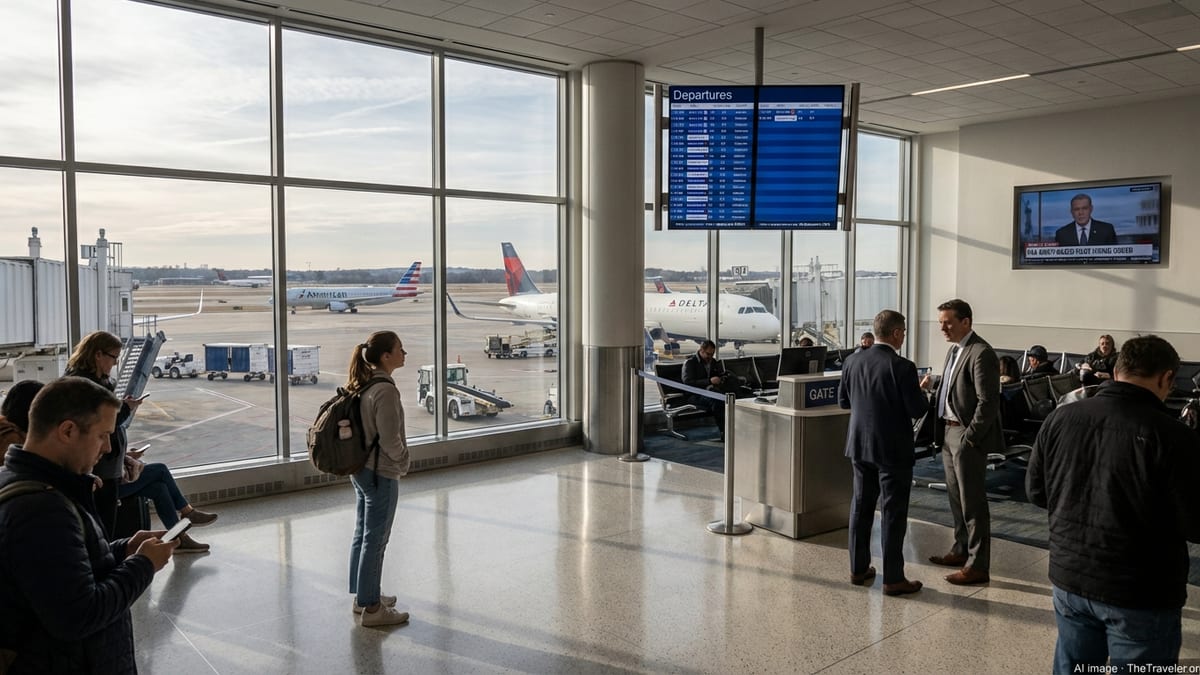
Travelers moving through Ronald Reagan Washington National Airport on May 22 faced an increasingly difficult day as more than 100 delays and a small number of cancellations along vital United States and Canadian corridors disrupted operations for PSA, Republic, JetBlue, Jazz and Southwest, with the knock-on effects felt at major hubs including Philadelphia, New York LaGuardia, Atlanta and Miami.
Get the latest news straight to your inbox!
Localized Gridlock at Reagan National Strands Passengers
Publicly available flight-tracking boards on Friday showed Ronald Reagan Washington National Airport experiencing 101 delayed departures and arrivals and at least two cancellations tied to U.S. and cross-border Canadian routes, creating long queues in concourses and extended waits on the tarmac. The pattern left point-to-point travelers and those relying on connections equally vulnerable to missed itineraries and last-minute rebookings.
Reports indicate that the disruption was concentrated in peak morning and early afternoon banks, when regional operators PSA Airlines and Republic Airways handle dense shuttle traffic up and down the East Coast and into eastern Canada on behalf of larger network carriers. As delays accumulated, gate changes and rolling schedule adjustments became common, with passengers advised to remain close to departure areas while revised boarding times were posted.
Operational data suggest that the combination of tightly scheduled turnarounds, crowded mid-Atlantic airspace and unsettled late-spring weather contributed to a fragile operating environment. When congestion flared around Washington, it quickly narrowed the margin for on-time departures, particularly for regional jets tasked with multiple short sectors over the course of the day.
Although only two flights were formally canceled in the corridor by midday, aviation performance histories show that even a modest number of cancellations can cascade when aircraft and crews are out of position, especially at constrained airports such as Reagan National where gate and runway capacity are limited.
Regional Carriers PSA and Republic Shoulder Heavy Burden
The disruption placed particular strain on PSA Airlines and Republic Airways, two regional carriers that link Washington with secondary cities in the northeastern United States and with Canadian gateways through codeshare arrangements. These operators typically run frequent short-haul services, meaning that a delay early in the day can propagate across multiple subsequent legs.
Historical data from the U.S. Department of Transportation show that PSA and Republic usually maintain on-time performance in line with or better than many peers, but also highlight their sensitivity to national aviation system delays, including airspace congestion and minor weather that do not trigger formal ground stops. When those systemic pressures emerge around Washington, Philadelphia and New York, regional carriers often face limited flexibility to recover schedules quickly.
Because PSA and Republic often serve as the “first and last mile” of a longer itinerary, even a 45-minute delay can jeopardize onward connections to mainline flights bound for larger hubs such as Atlanta, Miami or Canadian cities. Passengers who began the day with simple one-stop journeys through Reagan National found themselves weighing same-day alternatives, overnight stays or complete itinerary changes when tight connections evaporated.
Consumer advocates frequently note that travelers on regional partners may experience disproportionate disruption compared with those on mainline jets, partly because smaller aircraft have fewer spare seats available for rebooking and because some routes operate only a handful of frequencies each day.
JetBlue, Jazz and Southwest Feel Network Strain at Other Hubs
The ripple effects from gridlock in the mid-Atlantic were not confined to Washington. JetBlue, Air Canada’s regional affiliate Jazz and Southwest Airlines all recorded elevated delay counts at key hubs and focus cities, particularly Philadelphia, LaGuardia, Atlanta and Miami, according to aviation tracking dashboards and contemporary coverage.
JetBlue, which operates a dense schedule along the Northeast corridor and into Canada, saw its LaGuardia and Philadelphia operations repeatedly affected as late-arriving aircraft from Washington and Boston compressed turnaround times. Past federal performance reports for JetBlue underline how congestion in New York airspace can amplify even minor disruptions into longer waits, a dynamic that appeared to be at work again as Friday’s delays mounted.
Jazz, serving cross-border routes that connect U.S. cities with Canadian hubs, also faced challenges aligning inbound and outbound flights when Reagan National and other eastern gateways ran behind schedule. Cross-border corridors are particularly vulnerable because customs and immigration procedures reduce the flexibility to swap aircraft or crews at short notice.
Southwest’s primarily domestic network was pressured from a different direction, as delays intersected with weather-related constraints at other U.S. hubs. Recent travel coverage has emphasized how storms and ground stops at airports such as Denver and Atlanta have repeatedly spilled over into Florida and mid-Atlantic operations, leaving Southwest to juggle aircraft rotations and crew duty limits while demand remains strong heading into the summer travel period.
Major Hubs From Philadelphia to Miami Log Elevated Delays
Beyond Washington itself, major airports across the eastern United States reported heightened disruption as the day progressed. Operational summaries and real-time dashboards pointed to Philadelphia, LaGuardia, Atlanta and Miami as key pressure points, with each hub handling a mix of mainline and regional traffic that interacted with the problems originating at Reagan National.
Philadelphia, an important connecting point for both domestic and transborder flights, experienced rolling departure holds that affected smaller markets disproportionately. When banks of regional arrivals from Washington and other nearby cities were late, the knock-on effect delayed departures to Canadian destinations and secondary U.S. airports that rely on precise timing to maintain viable connections.
At New York LaGuardia, already one of the nation’s most slot-constrained airports, any schedule drift from Washington and Philadelphia contributed to crowded taxiways and longer-than-usual queues for takeoff and landing. Aviation analysts frequently highlight that LaGuardia’s lack of buffer capacity means that even modest upstream delays can translate into system-wide challenges, a pattern visible again in Friday’s data.
Atlanta and Miami, both critical southeastern hubs, registered elevated delay levels as they absorbed late-arriving flights that had been scheduled to flow smoothly from the Northeast and mid-Atlantic. Carriers were left to choose between operating flights significantly behind schedule or canceling select sectors to reset their networks, driving frustration for travelers who suddenly found their plans upended hours before departure.
Why Delays Escalate Quickly in U.S.–Canada Corridor Traffic
Industry performance data and historical Department of Transportation reporting provide context for how a disruption involving roughly 101 delays and two cancellations at a single airport can resonate far beyond its immediate surroundings. The U.S.–Canada corridor relies heavily on short-haul segments that are tightly timed to feed larger hubs and long-haul departures, with little slack built into schedules during peak travel periods.
On days when weather, airspace programs or staffing constraints tighten capacity, airlines must juggle multiple competing priorities, including crew duty limits, maintenance windows and aircraft positioning for the following morning’s departures. Once delays cross certain thresholds, carriers often find it operationally more efficient to cancel a flight rather than operate many hours late, even when formal cancellation numbers remain relatively low.
Cross-border flights add another layer of complexity. Carriers and regional partners such as Jazz have fewer opportunities to swap aircraft or crews across the U.S.–Canada boundary, meaning that a delay on one leg can force rescheduling throughout the day. Customs and immigration processing requirements also limit the ability to move passengers quickly between alternative routings when connections are missed.
For travelers, episodes like Friday’s gridlock at Reagan National highlight the importance of allowing additional time for connections through congestion-prone airports, especially when itineraries involve regional feeders or cross-border segments. Travel specialists routinely suggest booking earlier departures, choosing slightly longer layovers at hubs such as Philadelphia, LaGuardia, Atlanta and Miami, and monitoring airline apps closely so that rebooking options can be pursued quickly when disruptions begin to unfold.