


More news on this day
Ronald Reagan Washington National Airport has become the latest flashpoint in a turbulent summer for U.S. aviation, with a surge of cancellations and diversions involving regional carriers PSA Airlines and Republic Airways turning routine short-haul trips into hours-long odysseys for passengers across the Northeast and Midwest.
Get the latest news straight to your inbox!
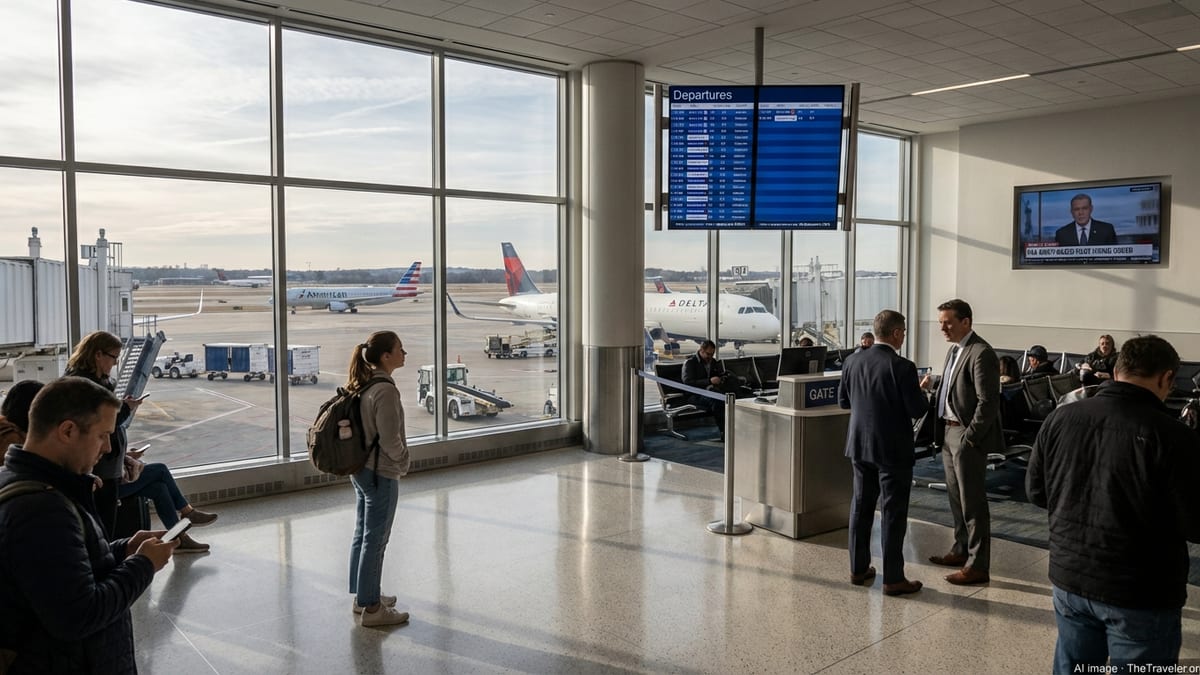
Regional Carriers at the Center of a DCA Breakdown
Recent operational data and published coverage indicate that Reagan National has seen a sharp uptick in disruption as summer travel ramps up, with regional partners bearing a disproportionate share of the turmoil. PSA Airlines, which operates flights under the American Airlines brand, and Republic Airways, a key feeder for several major carriers, have each recorded clusters of cancellations and extensive delays on tightly scheduled short-haul routes.
On days marked by thunderstorms and air traffic flow restrictions over the Washington region, tracking services show Reagan National’s operation tipping into what some outlets describe as a functional meltdown, with more than two thirds of flights either delayed or canceled in the most severe episodes. Regional jets ferrying passengers between Washington and smaller cities have been especially vulnerable, amplifying frustration among travelers who rely on these connections for work trips and family travel.
Travel-focused reporting notes that PSA’s short-hop departures from Reagan National are frequently among the first to be scrubbed when weather or congestion compresses available capacity. Online passenger accounts echo that pattern, describing days when mainline flights continued to operate while multiple PSA regional segments were canceled outright, forcing last-minute rebookings, extended layovers and, in some cases, overnight stays.
The disruption has not been confined to a single afternoon. Aviation trackers and consumer coverage portray a recurring cycle at Reagan National, where one day of heavy cancellations can ripple into the next as aircraft and crews end up out of position. For regional partners working on thin staffing and utilization margins, even modest schedule shocks at the D.C. hub have translated into cascading route changes across their networks.
High-Profile Diversions Highlight Operational Strain
The pressure on the regional network around Washington has been underscored by high-visibility diversions involving flights scheduled to depart Reagan National. One widely reported incident on June 18 involved a PSA-operated regional jet flying on behalf of American Airlines from Washington to White Plains, New York, that abandoned its planned route and diverted to Philadelphia instead.
Publicly available flight-tracking information shows that the aircraft, a CRJ700 series regional jet, departed Reagan National with a standard northbound routing before ultimately diverting amid broader mid-Atlantic congestion and weather issues affecting multiple airports. The diversion added hours to the travel day for passengers, who then had to navigate onward connections or ground transportation from Philadelphia.
Aviation analysts cited in recent coverage point out that diversions of this kind, while not uncommon during summer storm season, are particularly disruptive when they affect regional aircraft. Because these jets serve as feeders into larger hubs and operate on dense rotations, a single off-schedule arrival can unsettle an entire day’s worth of flying, from early-morning departures to late-night returns.
In the Reagan National case, the diversion occurred against the backdrop of elevated national disruption. On the same mid-June dates, nationwide statistics compiled by flight-tracking platforms recorded hundreds of cancellations and thousands of delays, with regional operators including PSA and Republic contributing a significant share of the affected flights. The episode illustrated how quickly localized weather and traffic constraints over the capital region can magnify into a broader network challenge.
Republic Airways Feels the Shockwaves Across Multiple Hubs
While much of the immediate attention has centered on PSA’s performance at Reagan National, Republic Airways has simultaneously faced intense pressure across several major airports, adding another layer of complexity for travelers connecting through Washington. Recent data-driven reports describe Republic as one of the hardest-hit regional carriers during mid-June disruptions at Chicago O’Hare and Washington Dulles, where clusters of cancellations and delays snarled itineraries on both domestic and transborder routes.
At Washington Dulles, analysis of real-time tracking information for June 16 showed Republic cancelling a notable share of its scheduled flights and delaying many more, contributing to what some outlets characterized as a “mega-meltdown” for the airport. The problems affected flights feeding larger partner networks to destinations across the United States, Canada and Europe, undercutting schedule reliability for passengers attempting to move through the broader mid-Atlantic corridor.
Two days later, on June 18, separate reporting on conditions at Chicago O’Hare detailed another spike in Republic cancellations amid a wider operational crunch that also involved SkyWest and Envoy. That disruption produced more than 200 cancellations and over 1,000 delays at O’Hare alone, radiating onward to secondary cities. For travelers whose journeys linked Chicago and Washington through regional carriers, the combination of issues at multiple hubs translated into missed connections, unplanned overnights and complex rebookings.
These episodes underline the structural importance of Republic’s role within the U.S. aviation system. As a contract carrier flying for several major brands, Republic’s aircraft are deeply embedded in banks of connecting flights. When its operations are curtailed by weather, staffing or congestion, the impact is felt far beyond any single airport, and the recent problems at Dulles and O’Hare have only intensified scrutiny of how resilient the regional model is under sustained stress.
Passenger Experience Deteriorates Amid Mounting Frustration
The human impact of Reagan National’s recent turbulence has been visible across social platforms and traveler forums, where passengers recount last-minute cancellations, extended tarmac waits and limited real-time communication from carriers. Numerous posts in recent days describe travelers arriving at the airport to find their short-haul PSA flights canceled with little advance notice, followed by long queues at service desks and difficulty securing same-day alternatives.
Some travelers connecting from Reagan National through other hubs have reported being rebooked via more circuitous routings, including unexpected overnight stops in cities such as Charlotte, Philadelphia or Chicago when regional legs on PSA or Republic failed to operate as scheduled. Others describe missing time-sensitive events due to multiple rolling delays that eventually turned into cancellations late in the day.
Advocacy groups and consumer-focused outlets have used the latest disruptions to reiterate long-standing advice for flying through delay-prone airports such as Reagan National. Common recommendations include booking earlier departures to preserve buffer time for connections, monitoring both airline apps and independent flight-tracking tools, and keeping essential items in carry-on bags instead of checked luggage in case rebookings require unexpected overnight stays.
There is also renewed attention on travel insurance and credit card protections that may reimburse costs such as hotel stays or meals during extended disruptions. While coverage varies, the volume of mid-June cancellations and diversions has prompted many travelers to revisit the fine print on their benefits, particularly when planning itineraries that rely heavily on regional operators at weather-sensitive airports.
Broader Questions for a Strained U.S. Air Network
The meltdown conditions at Reagan National and the associated turmoil involving PSA and Republic are unfolding amid a wider period of volatility for U.S. air travel in 2026. In the weeks leading up to the latest D.C. disruptions, national statistics repeatedly showed thousands of daily delays and dozens of cancellations across the country, driven by a mix of storm systems, operational bottlenecks and robust demand.
Travel industry analysts note that the current pattern is exposing the delicate balance underpinning the regional-jet model. Carriers such as PSA and Republic operate high-frequency schedules with tight turnaround times, often through congested airports where weather, construction and airspace constraints are persistent factors. When any of those elements falter, the knock-on effects can be swift and severe, particularly for smaller communities that depend on a single daily flight to major hubs like Reagan National.
For now, scheduling data and airline statements suggest that major carriers are making targeted adjustments rather than wholesale cuts, trimming capacity on select routes and reshuffling aircraft to shore up reliability. Even so, the mid-June chaos at Reagan National has intensified scrutiny from travelers and watchdogs, who are questioning whether current contingency plans are sufficient for an era of increasingly frequent extreme-weather events and chronic air traffic congestion.
As the peak summer travel period continues, Reagan National’s experience serves as an early stress test for the broader U.S. network. Passengers connecting through Washington, Chicago, New York and other key hubs will be watching closely to see whether regional partners like PSA and Republic can stabilize performance, or whether further meltdowns will become a defining feature of the 2026 travel season.