


More news on this day
A fresh wave of disruption across the United States aviation network has left travelers facing 338 flight cancellations and more than 4,100 delays, as operational problems at regional carriers SkyWest, Republic Airways, Envoy Air, and GoJet ripple through the country’s busiest hubs and smaller regional airports alike.
Get the latest news straight to your inbox!
Regional Carriers at the Center of Widespread Disruption
Publicly available flight tracking data for major US airports indicates a sharp spike in same day disruptions linked to regional operators that fly under big brand banners such as American, Delta and United. These carriers typically operate short and medium haul routes, feeding passengers into large hubs where they connect to longer domestic and international services.
On the day of the disruption, combined totals show 338 cancellations recorded for flights operated by or marketed through SkyWest, Republic Airways, Envoy Air and GoJet, alongside approximately 4,106 delays affecting departures and arrivals. While the majority of flights eventually departed, many were pushed back well beyond their scheduled times, complicating onward connections and forcing some passengers to rebook entirely.
Regional airlines account for a significant share of domestic departures in the United States, particularly in smaller communities where large mainline aircraft are not commercially viable. As a result, concentrated problems at just a handful of these carriers can translate quickly into nationwide disruption, even when weather and air traffic conditions elsewhere appear relatively benign.
Industry data from recent months shows that these carriers generally run high volumes of daily operations with relatively lean fleets, which can compound irregular operations. When a single aircraft is taken out of service or a crew rotation falls out of sync, knock on effects can cascade across multiple routes during the course of a single day.
System Strain Exposed Across the Hub and Spoke Network
The cancellations and delays have highlighted how dependent major US airlines are on regional partners to maintain schedule integrity. Flights operated by SkyWest, Republic, Envoy and GoJet often carry the flight codes of much larger brands, meaning disruption at the regional level can appear to passengers as problems with the country’s biggest carriers.
Operational records from recent transportation statistics show that regional airlines typically post on time performance that is broadly comparable to the industry average, but with cancellation and delay rates that can fluctuate quickly in response to crew, maintenance or scheduling constraints. When those fluctuations occur during busy travel days, the tight connections built into the hub system leave little margin for recovery.
This latest disruption wave has been particularly visible at key connecting airports in the Midwest, Mountain West and South, where regional jets make up a large share of daily movements. Travelers using these hubs reported extended gate holds, aircraft swaps and rolling departure times as carriers sought to reposition aircraft and crews.
The resulting challenges underscore the delicate balance underpinning the hub and spoke model. To offer frequent service to smaller markets, airlines rely on complex patterns of short haul flights that must operate in near lockstep. When several of those patterns break simultaneously, large parts of the network feel the strain.
Passengers Confront Missed Connections and Overnight Stays
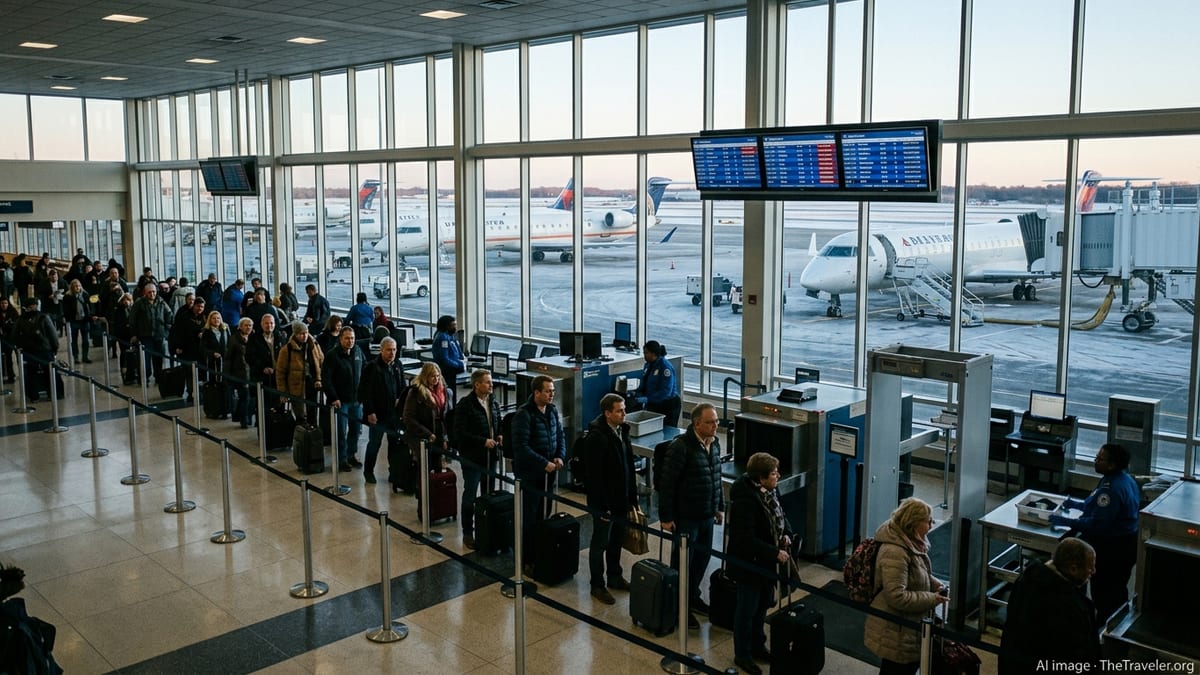
For travelers, the practical impact of 338 cancellations and thousands of delays has been felt in missed family events, business meetings and vacation plans. Airport departure boards in affected hubs showed significant clusters of flights marked delayed or cancelled, forcing passengers to join long rebooking queues at service desks or in airline apps.
According to published coverage and consumer reports, some travelers were offered same day rerouting via alternate hubs, while others accepted overnight accommodations when the final legs of itineraries could not be operated. In markets with limited alternative service, passengers sometimes faced waits of a full day or more for the next available seat.
The scale of delays also created congestion in airport gate areas and security lines, as rolling schedule changes saw passengers lingering in terminals for longer than planned. Airlines encouraged customers to monitor mobile applications and text alerts for gate and departure time changes, a practice that has become standard in the era of real time operational adjustments.
Travel insurance providers and credit card issuers that include trip interruption benefits are likely to see an uptick in claims from affected passengers, particularly where overnight stays or documented missed connections occurred. Policy wording often distinguishes between weather related delays and those linked to carrier operations, a factor that can influence eligibility for reimbursement.
Operational Factors Behind the Groundings
Publicly available data and prior performance reports for SkyWest, Republic Airways, Envoy Air and GoJet point to several recurring stress points that can contribute to days of elevated disruption. These include aircraft maintenance issues, uneven crew availability, tight turn times at busy hubs and the ripple effect of earlier delays that propagate through the day’s schedule.
Industry analyses of on time performance show that relatively modest percentages of flights being cancelled or significantly delayed can have outsized effects when they occur on high density routes or at critical connecting times. A morning cancellation on a regional feeder flight can cause dozens of downstream misconnects as passengers fail to reach onward flights.
Regional carriers also operate under the same air traffic control and weather constraints as larger airlines, but with fewer spare aircraft and crews available at short notice. When conditions deteriorate at a key airport or along a corridor, these operators often have limited flexibility to absorb the shock without resorting to groundings and schedule reductions.
Recent federal aviation statistics illustrate that carriers such as SkyWest and Republic handle tens of thousands of flights over a reporting period. On days when irregular operations strike, this density of flying means that even a small shift in cancellation or delay percentages represents many thousands of disrupted passengers.
What Travelers Can Expect in the Coming Days
While operations at the affected regional carriers are gradually stabilizing, residual delays and scattered cancellations are likely to persist as airlines reposition aircraft and crews and work through backlogs of displaced passengers. Travelers with upcoming trips that include flights marketed by major carriers but operated by SkyWest, Republic, Envoy Air or GoJet may see minor schedule adjustments as timetables are updated.
Industry guidance suggests that travelers monitor their flight status frequently in the 24 hours before departure, using official airline apps or airport information displays. Early awareness of a delay or cancellation can improve the chances of securing a desirable alternative routing, particularly from smaller airports with limited daily service.
Consumer advocates also recommend that passengers review the flight disruption policies of the airline that sold their ticket, as obligations regarding rebooking and refunds typically rest with the marketing carrier, even when a regional partner operates the aircraft. Transportation Department resources provide an overview of common practices, but specific terms can vary from airline to airline.
As the system recovers, the latest disruption episode is likely to fuel ongoing debate about the resilience of the United States hub and spoke model and the crucial role played by regional partners. For the thousands of travelers affected, it has served as a pointed reminder that many domestic journeys depend on the smooth functioning of a relatively small group of operators that seldom appear on the front of the ticket.