


More news on this day
When a CSX freight train derailed near the Neshaminy Falls area of Bensalem Township on June 30, a nearby resident recalls the evacuation as sudden, confusing and uncomfortably close to home.
Get the latest news straight to your inbox!
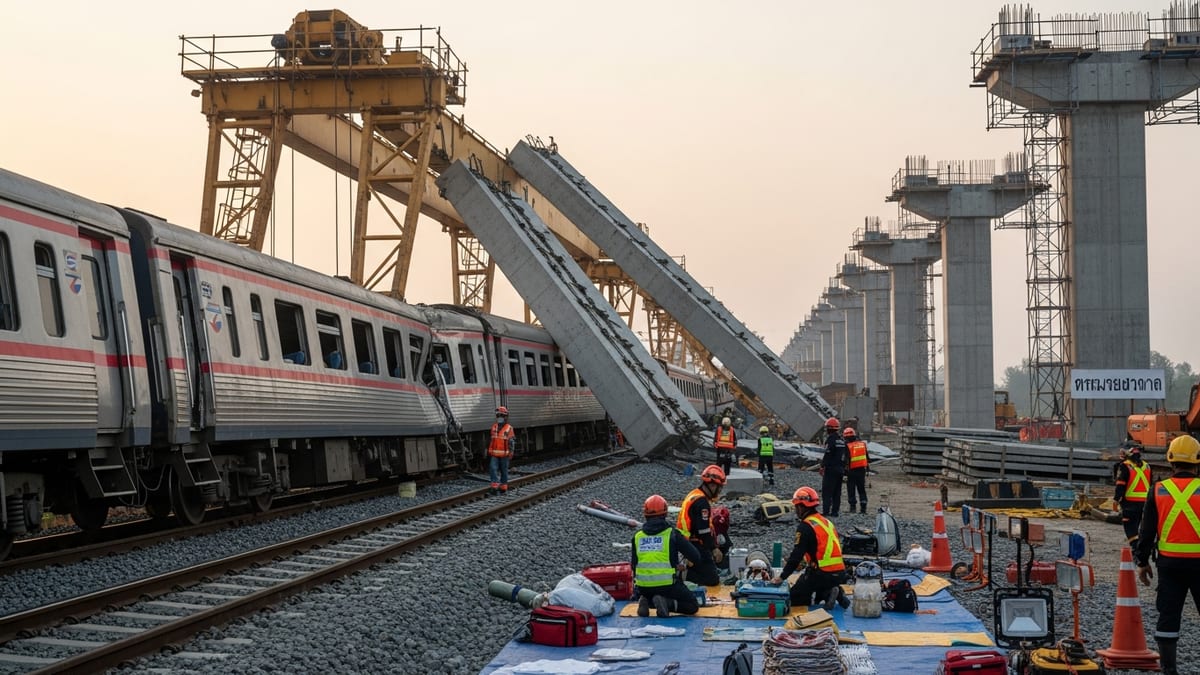
Freight cars off the tracks near Neshaminy Falls
Publicly available information shows that the derailment happened on the afternoon of June 30 near East Bristol Road and Grove Avenue, close to the Neshaminy Falls train station in Bensalem Township, Bucks County. More than a dozen freight cars left the tracks, some of them overturning, in a tangle of steel and debris beside a residential and commercial corridor.
Reports indicate that the CSX freight train was traveling through a stretch of track bordered by homes, small businesses and busy commuter routes. Photos and videos shared by local outlets and on social media show railcars leaning at sharp angles, some lying on their sides, and emergency vehicles clustered along closed roadways.
As hazmat teams, firefighters and other responders converged on the site, local agencies issued shelter-in-place and evacuation instructions for parts of the neighborhood. Traffic was diverted and sections of Bristol Road and nearby streets were shut, turning a familiar suburban landscape into a tightly controlled incident zone.
While early reports emphasized that no one appeared to be injured, the scale of the derailment and the presence of hazardous materials cars quickly raised questions for residents watching from driveways, parking lots and apartment windows.
Evacuation orders ripple through a residential block
According to published coverage and first-hand online posts, alerts urging people to evacuate or stay indoors reached the community in waves rather than all at once. One resident who lives a short walk from the tracks recalls receiving a cellphone alert instructing them to leave immediately, with little detail beyond a reference to a train incident nearby.
They describe grabbing a wallet, keys and a phone before stepping outside to find neighbors already in their cars, some with children in the back seats and pets perched on laps. A few houses down, another household appeared uncertain whether the alert applied to their side of the street, creating a patchwork of lit porches, open car trunks and residents lingering on the sidewalk with bags half-packed.
Publicly available accounts suggest that the evacuation zone covered a limited area nearest the derailment, while other streets were advised to shelter indoors and keep windows closed. That distinction was not always clear on the ground. The resident remembers a brief but tense exchange with a relative who works elsewhere in Bensalem and had not received any notification, raising questions about who was being reached, and how.
Within minutes, the resident joined a slow line of vehicles edging away from the tracks, past flashing lights and sawhorses marking fresh roadblocks. The short drive to a friend’s home in a neighboring community, usually uneventful, felt stretched by the uncertainty over what exactly had happened behind them.
Concerns over hazardous materials and public safety
Reports from multiple news organizations indicate that some of the derailed cars were carrying hazardous materials, prompting a significant precautionary response. Hazmat specialists were called to examine the overturned freight cars and check for leaks, while officials monitored air quality in the surrounding area.
The resident describes scrolling through local news and community forums from the relative safety of their temporary refuge, trying to make sense of conflicting snippets of information. Headlines mentioned hazardous cargo and a possible chemical risk, even as early assessments suggested that no leaks had been detected.
According to subsequent updates from regional media, inspections at the scene found no release of dangerous substances from the derailed cars and no indication of a broader environmental threat. Evacuation and shelter-in-place instructions were lifted by late afternoon, and residents were told they could return home once barricades were removed.
For the resident who had evacuated, the relief was tempered by residual questions about how close their neighborhood had come to a more serious emergency. The quiet return drive took them past the same streets they had hurried down hours earlier, now dotted with utility trucks, clean-up crews and curious onlookers.
Returning home to a changed sense of distance
When the resident arrived back in their neighborhood, the most obvious signs of disruption were the road closures and the growl of heavy equipment near the tracks. Many houses looked unchanged from the street: lawns trimmed, porch lights glowing, delivery boxes still tucked by doors.
Inside, however, the resident describes a subtle but insistent shift. The tracks that had always been part of the background, audible mainly as the distant clatter of passing freight, suddenly felt much closer. The short distance between the derailment site and their front door, measured on a map or traced by a familiar walking route, took on a new weight.
Publicly available information about previous rail incidents in other communities, shared widely online in recent years, added to that feeling. The resident recalls thinking about how quickly an ordinary day can tilt into emergency, and how much depends on what stays contained within the steel walls of a freight car.
In the days after the derailment, cleanup work continued along the tracks and investigators began examining what caused the cars to leave the rails. For neighbors like this resident, the focus turned to more practical questions: what kind of alerts they might receive next time, whether evacuation routes were clear, and how prepared their households really were for a scenario that had once seemed distant and unlikely.
A community weighs lessons from a near miss
Coverage in regional outlets notes that rail traffic through suburban Bucks County is a long-standing fact of life, carrying both routine freight and, at times, regulated hazardous materials. The Bensalem derailment, while resulting in no reported injuries or leaks, has nevertheless sharpened local attention on that daily reality.
The resident who evacuated says the incident has already changed simple habits. Train horns and track noise, once easy to tune out, now prompt a glance toward the window. Weather alerts and emergency notifications are checked more carefully. A small bag with documents and essentials, hastily assembled during the evacuation, has been repacked and left near the door.
Neighbors have compared notes about who received which alerts, and when. Publicly available posts about the incident show a mix of gratitude that the outcome was relatively mild and frustration over gaps in communication and traffic control. The evacuation, though brief, offered an unwelcome but vivid rehearsal of what a more severe rail emergency could look like.
As Bensalem Township moves from emergency response to investigation and long-term recovery, this resident’s experience underscores how quickly complex transportation systems intersect with daily life. The derailment near Neshaminy Falls may ultimately be recorded as a significant but limited incident, yet for those who packed up and drove away with only a few minutes’ notice, it has redrawn the mental map of what it means to live alongside the tracks.