


More news on this day
The cost of traveling to and working in the United States is climbing again as a series of visa fee increases, new surcharges and premium services reshape the financial calculus for global professionals and the companies that rely on them.
Get the latest news straight to your inbox!
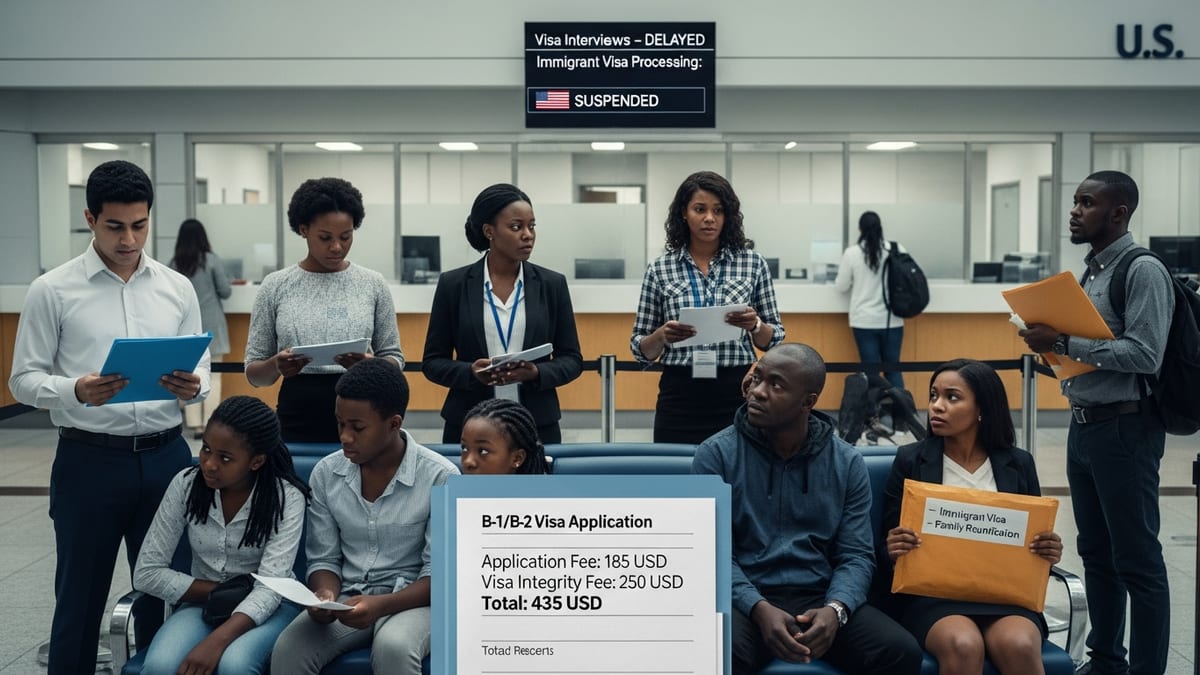
Higher Application Fees Hit Work and Business Travelers
Over the past two years, the fees associated with obtaining US visas have risen across multiple categories, affecting everyone from short-term business visitors to highly skilled professionals on temporary work assignments. Publicly available information from the US Department of State shows that nonimmigrant visa application fees for many categories were increased in mid-2023, including for business and tourist visitors and for petition-based work visas.
Under the updated schedule, the basic machine-readable visa fee for most visitor visas for business or tourism rose from 160 dollars to 185 dollars per applicant. Petition-based categories that are widely used by employers, such as H, L, O, P, Q and R visas, saw their standard application fee move from 190 dollars to 205 dollars. Treaty trader and investor visas in the E category experienced a steeper jump, with the fee increasing from 205 dollars to 315 dollars, significantly raising costs for entrepreneurs and executives who rely on these visas.
While each individual increase may appear modest in percentage terms, the cumulative effect is substantial for frequent travelers, multinational teams and companies that sponsor large numbers of employees. Immigration advisers note that a single overseas assignment might now involve multiple applications for an employee and family members, multiplying the impact of higher government charges before any legal or administrative costs are added.
Business travel groups and professional associations have warned that these changes risk dampening demand at the margins, particularly for smaller firms and independent contractors who often operate on tighter budgets than large corporations. For some, the higher up-front cost can be the difference between pursuing a short-term US opportunity or looking to alternative hubs in Europe, the Middle East or Asia.
New Premium Fees Create a Two-Speed Visa System
In addition to higher baseline application fees, US authorities have introduced new, optional surcharges that aim to speed up visa processing for those willing and able to pay more. A temporary rule published in 2026 created a 750 dollar fee for an expedited interview appointment for B1 and B2 visitor visas at selected consular posts, offering interview slots within ten business days for travelers who purchase the service.
This premium offering sits on top of the standard nonimmigrant visa fee, effectively creating a two-tier system in which time-sensitive travelers with greater financial resources can move more quickly through the queue. Travel industry observers say such measures may help reduce wait times for some applicants and generate additional revenue, but they also highlight the risk that regular applicants will face longer delays if consular capacity is heavily allocated to expedited cases.
For professionals in consulting, technology, finance and other sectors where last-minute travel is common, the new premium fee can easily become a routine cost of doing business. Companies weighing the expense against the risk of missing a crucial client meeting or conference are likely to absorb the surcharge in many cases, further increasing the overall price tag of US-related assignments.
Critics in the business travel community have raised concerns that reliance on premium services may erode the principle of equal access to consular appointments. They argue that systemic investment in staffing and digital processing, rather than layered surcharges, would offer a more sustainable path to reducing the long wait times that have plagued some high-demand posts since the pandemic.
USCIS Petition Fee Hikes Add Pressure on Employers
Beyond consular application charges, employers must also contend with higher fees payable to US Citizenship and Immigration Services for the underlying petitions that support many work visas. A final rule issued in early 2024 substantially increased the filing costs for several popular classifications, including the H 1B specialty occupation category, the L 1 intracompany transferee visa and the O 1 category for individuals with extraordinary ability.
Analyses of the rule by immigration law firms indicate that the base filing fee for standard H 1B petitions rose from 460 dollars to 780 dollars for most employers, with separate, higher charges introduced for larger organizations that are heavily dependent on foreign professionals. L 1 petitions saw some of the steepest increases, with the main filing fee for many employers more than doubling compared with previous levels. The government has cited the need to fund adjudication operations and invest in technology as key drivers behind the adjustments.
For companies sponsoring significant numbers of employees each year, the combination of higher USCIS petition fees, increased consular application charges and existing fraud prevention and border security surcharges represents a meaningful shift in cost structure. Human resources departments and mobility managers report recalibrating budgets and, in some cases, tightening criteria for which roles will justify the expense of US deployment.
Experts in global mobility note that the new pricing environment may accelerate a trend toward offshoring high-value functions to talent hubs outside the United States, particularly when roles can be performed remotely. Firms that previously rotated staff through US offices for training or client development may increasingly rely on virtual engagements if travel and immigration costs continue to rise.
Bond Requirements and Targeted Measures Add Uncertainty
Alongside across-the-board fee increases, more targeted measures are reshaping the landscape for travelers from certain regions. Recent reporting indicates that a pilot program requiring some applicants from a group of primarily African and developing countries to post refundable visa bonds is being made permanent, with bond amounts reaching as high as 20,000 dollars in some cases.
The bond initiative, which applies mainly to business and tourist visa seekers, is designed to address concerns about visa overstays by creating a substantial financial incentive to depart the United States on time. However, travel advocates argue that the policy adds a heavy upfront burden for legitimate travelers and could further depress inbound trips from markets that already face economic challenges and higher documentation hurdles.
The layering of bond requirements on top of increased fees compounds the total cost for affected travelers and their sponsors. In practical terms, professionals from these countries now confront a significantly higher financial barrier to attending conferences, negotiating contracts or exploring partnerships in the United States compared with peers from other regions.
Analysts point out that such differential treatment may complicate efforts to expand economic and educational ties with emerging markets, especially in sectors like technology, healthcare and infrastructure where face-to-face engagement remains crucial. Companies with global footprints are being advised to factor the possibility of bond obligations into their planning when sending staff from affected countries to US-based meetings and projects.
Implications for Global Talent Flows and Travel Planning
The evolving structure of US visa fees is prompting both individuals and organizations to rethink how and when they travel. Professionals are increasingly encouraged to build longer lead times into their plans, not only to account for processing delays but also to compare the total cost of US trips with alternative destinations that may offer more predictable or lower-priced entry requirements.
Universities, research institutions and multinational firms are updating internal guidance to reflect the new fee landscape, warning students, scholars and staff that the overall cost of a US stay may be higher than in previous years. Some career advisers recommend that early-career professionals factor visa-related expenses into salary negotiations or assignment packages when considering roles that involve frequent or extended US travel.
Travel industry commentators suggest that, over time, higher fees and premium service layers could reshape inbound demand toward travelers with greater financial means or strong corporate backing, while discouraging more cost-sensitive visitors. This potential shift raises questions about long-term competitiveness as the United States competes with other countries seeking to attract international conferences, investment and top-tier talent.
For now, the message from mobility specialists is that anyone planning a professional trip or assignment to the United States should conduct a careful, up-to-date review of all government charges involved. With visa fees, petition costs, optional premiums and possible bond requirements all in motion, the price of accessing opportunities in the US is becoming a more significant strategic variable for travelers and employers alike.