


Staying online while you travel no longer has to mean shocking roaming bills or hunting for a SIM card kiosk after a red-eye flight. Roamless is one of the newer eSIM players promising flexible, pay-as-you-go data in more than 200 destinations, with prices that look far cheaper than traditional roaming. But how does Roamless pricing really work in 2026, and when is it actually a good deal compared with local SIMs and rival eSIM brands? This guide breaks down the costs, real-world use cases, and trade-offs so you can decide if Roamless is worth it for your next trip.
Get the latest updates straight to your inbox!
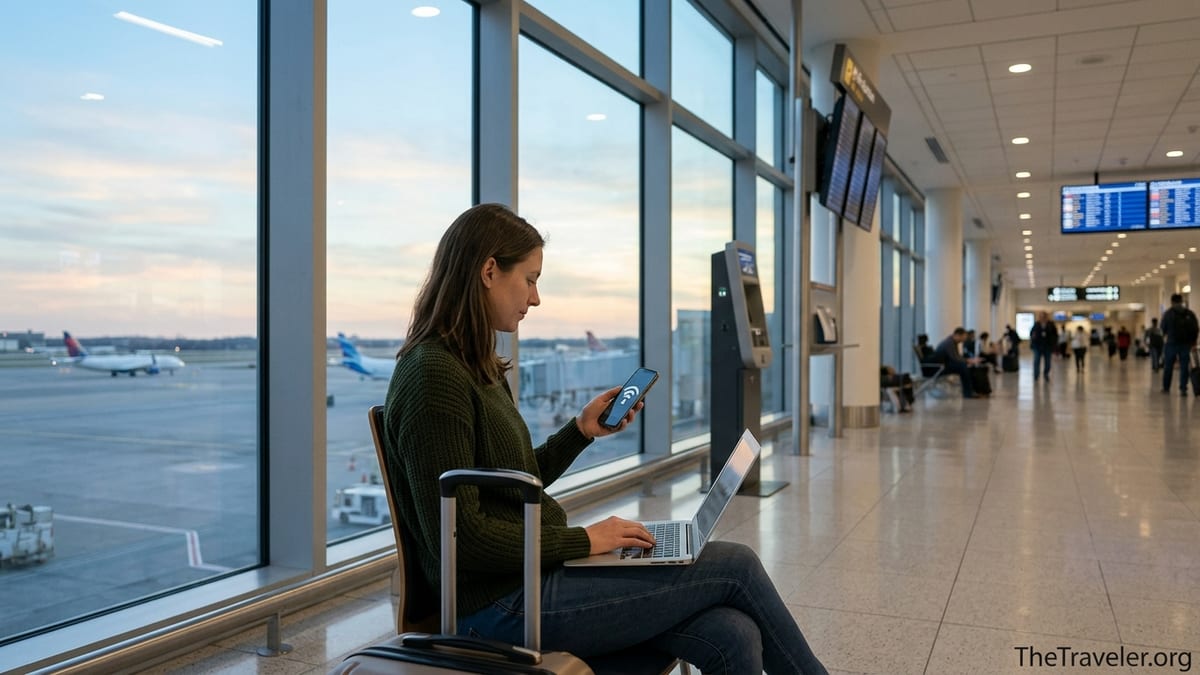
What Roamless Is and How Its Pricing Model Works
Roamless is a global travel eSIM service built around two main ways to pay for data: pay-as-you-go credits (often branded as Roamless FLEX) and traditional 30-day data plans (sometimes referred to as Roamless FIX). Instead of buying a new eSIM profile in every country, you install a single Roamless eSIM on your phone. As long as you have either credits or a data plan attached to your account, that same eSIM can connect in more than 200 destinations without further setup.
With pay-as-you-go, you load money into your Roamless account like a wallet. Your balance is then consumed per gigabyte of mobile data as you travel, and for in-app calls if you use the Roamless app to make voice calls. Roamless markets this as having no expiration on credits, which is a key selling point for people who travel a few times a year but do not want their unused balance wiped out between trips.
The newer data plans layer on top of this wallet model. Instead of paying fully per gigabyte, you pre-purchase a bundle such as 10 GB valid for 30 days in a specific country or region. According to Roamless support documentation updated in February 2026, you can buy a plan months in advance and it will only start its 30-day clock once you actually use data on that plan, not on the purchase date. This lets you prepare before you leave home without worrying that an early flight delay will waste days of validity.
All of this runs on the same eSIM profile. You do not have to delete and reinstall eSIMs for different countries. Under the hood, Roamless automatically decides whether to draw data from an active data plan or from your pay-as-you-go credits depending on where you are and what you have active in your account.
Pay-As-You-Go Credits: Typical Rates and Real Trip Costs
Roamless’s core product remains its pay-as-you-go credits. You top up in US dollars and then pay a per-gigabyte rate that varies by country. Roamless’s own support pages state that in many destinations mobile data through credits starts at around 2.45 dollars per GB and can be up to about 90 percent cheaper than standard operator roaming. Independent reviews in late 2025 and early 2026 echo that figure, with TechRadar citing an average of roughly 2.45 dollars per GB for Roamless FLEX plans worldwide.
In practice, you see the actual price inside the app when you select a country. For example, a traveler looking at Spain in 2026 might see a pay-as-you-go option beginning with a small starter credit around the five to six dollar mark, which can then be consumed at a per-GB rate in that range. A separate reseller site listing Roamless Spain options in 2026 shows a pay-as-you-go product priced at about 5.85 dollars to get started, illustrating the ballpark cost of getting your first chunk of credit for a European trip.
To understand what this means on the ground, imagine a one-week vacation from the United States to Italy and France, where you mostly use maps, ride-hailing apps, email, and occasional social media. Conservative travelers who keep video streaming to a minimum often stay under 3 GB per week. At an average of about 2.50 dollars per GB, that is roughly 7.50 dollars in data for the entire week, plus whatever initial credit top-up you choose. Compared with a typical US carrier roaming package that might charge 10 dollars per day for limited high-speed data, that is a notable saving once your trip passes even a couple of days.
Now consider a more data-hungry trip: two weeks across Thailand and Vietnam where you are uploading short videos, using Google Maps heavily, and working remotely for a few hours on cloud documents. It would be easy to use 10 to 15 GB over 14 days. At 2.50 to 3 dollars per GB, you might spend 25 to 45 dollars in Roamless credits. That may still be cheaper than nonstop roaming on a home carrier, but it is more expensive than buying a local tourist SIM in Bangkok or Ho Chi Minh City, where 50 to 100 GB data packages often cost under 20 dollars for a month.
Roamless Data Plans: When Bundles Beat Credits
To address heavier data usage, Roamless introduced 30-day data plans that sit alongside its pay-as-you-go credits. These plans are destination-specific and give you a fixed amount of data, generally at a lower per-GB cost than credits. Roamless’s international support documentation notes that these plans can start at around 0.58 dollars per GB in some markets, particularly when you buy larger gigabyte bundles.
For a concrete example, imagine you are spending a full month in Germany for a work assignment. You know you will be using your phone as a hotspot and expect 20 GB of usage. On pure pay-as-you-go at about 2.50 dollars per GB, that could run around 50 dollars. A dedicated 20 GB 30-day data plan, where pricing in some countries can drop closer to around 0.60 to 1 dollar per GB, might cost more like 12 to 20 dollars, a significant discount. You could then keep a small pay-as-you-go credit balance as a backup in case you take a side trip to Switzerland or Denmark where that Germany-only plan does not apply.
A key practical detail is how activation works. Roamless states that you have up to 18 months after purchase to activate a data plan, and the 30-day validity starts only when you first consume data from that plan. In real travel terms, this means you can sit at home in Chicago in April, install your eSIM, purchase a 10 GB plan for your August trip to Japan, and confidently forget about it. Even if your flight is rescheduled from August 2 to August 4, the plan will remain unused until your phone actually starts using data in Japan.
Roamless’s system also prioritizes data plans over credits when you are in a destination covered by your plan. Using the previous example, if you bought a 10 GB Italy plan but also keep 20 dollars of credits in your account for general travel, the moment you land in Rome the app will draw from the Italy plan. If you hop to Switzerland for a day trip mid-holiday, the Italy plan pauses and Roamless automatically switches to pay-as-you-go credits there. When you return to Italy, data consumption resumes from the Italy plan. This automatic switching matters for multi-country itineraries, removing the need to constantly toggle eSIMs or buy multiple regional packages.
Comparing Roamless With Local SIMs and Other eSIM Brands
To know if Roamless pricing is worth it, you have to compare it against realistic alternatives: your home carrier’s roaming, buying a local SIM or eSIM on arrival, and other travel eSIM players like Airalo, Nomad, Holafly, and regional specialists. The result varies significantly by region and by how you travel.
In high-cost roaming markets such as the United States and Canada, Roamless often looks very competitive for inbound travelers. A European visiting New York for five days might otherwise pay 5 to 10 euros per day in roaming surcharges to their home carrier. With Roamless, using 4 GB across those five days might cost about 10 dollars, depending on the US per-GB rate shown in the app, which is frequently lower than branded roaming bundles from major European operators.
In Europe, where EU residents benefit from “roam like at home” rules and can often use their domestic data allowance across the bloc at domestic prices, Roamless is more attractive for non-EU travelers. For a Canadian backpacker visiting six Schengen countries over three weeks, Roamless can remove the friction of buying a separate SIM card in each place, even though local deals might be cheaper. A typical pattern some travelers share is to use Roamless for the first days in a new country, then switch to a local eSIM once they are settled and have found a good deal, especially in places like Portugal or Greece where generous tourist SIM bundles are available.
In lower-cost data regions such as Southeast Asia or parts of Eastern Europe, Roamless is usually more expensive than going directly to a local carrier. A Reddit user comparing Roamless credit pricing to Montenegro’s tourist packages pointed out that 100 gigabytes from a local provider might cost around 15 euros, while the same usage via Roamless credits could run into the hundreds of dollars. For digital nomads staying a month or more in one country and consuming large amounts of data, local SIMs almost always win on price even if they require a passport check and a short store visit.
Where Roamless Pricing Shines: Key Use Cases
Roamless’s pricing model is most compelling for certain traveler profiles rather than for everyone. The clearest winners are multi-country travelers, infrequent travelers, and light to moderate data users who prioritize convenience over chasing the absolute lowest price in each market.
Consider a US-based traveler who takes three or four international trips a year: a long weekend in Mexico, a week in Spain, and a two-week tour through Singapore, Malaysia, and Vietnam. With no expiry on Roamless credits, they can load 40 or 50 dollars once and draw down slowly over all those trips. They do not need to delete and reinstall eSIMs or re-verify identity in every new country. Reviews on Trustpilot in 2025 and 2026 from people visiting multiple destinations, such as trips through Scotland, Vietnam, Indonesia, the Philippines, Korea, Japan, and Turkey, often highlight that they simply left Roamless on and stayed connected wherever they landed.
Roamless is also a strong option for “arrival coverage” even for travelers who plan to buy a local SIM later. Several Reddit users describe a pattern where they use Roamless to get online the moment their plane lands, handle airport transport and accommodation check-in, then shop for a cheaper local eSIM the next day. In this scenario, paying a few dollars in higher-per-GB rates feels like a good tradeoff for avoiding airport chaos with no connectivity.
Finally, Roamless data plans can shine for medium to heavy users who stay in one higher-cost country for a few weeks. For instance, a remote worker spending three weeks in Japan might burn 15 GB between video calls, maps, and social media. A Japan-specific Roamless data plan bought in advance at a favorable per-GB rate could end up much cheaper than either Japanese carrier tourist plans aimed at short-stay visitors or the traveler’s home carrier’s roaming add-ons, while avoiding language barriers and contract complexity.
Where Roamless Can Be Poor Value or Frustrating
Roamless is not always the cheapest or simplest option. Heavy data users in single countries are the group most likely to overpay relative to local SIMs. If you plan to spend a month in Thailand, Turkey, or Montenegro streaming video, tethering a laptop, and backing up photos, the per-GB cost of Roamless credits will stack up very quickly compared with local tourist data bundles that often offer tens or hundreds of gigabytes at very low prices.
Another important consideration is that while many reviewers praise Roamless’s ease of setup and competitive pricing, not all experiences are positive. Trustpilot reviews from 2025 and 2026 include complaints about difficulty getting the eSIM to work in certain countries, patchy connectivity in rural or island areas, and occasional confusion about how credits and plans interact. Some Reddit posts describe situations where Roamless did not connect reliably in India or showed no coverage on particular phone models, even when other devices on the same networks worked fine.
These mixed experiences matter for decision-making. If your itinerary includes remote hiking in the Scottish Highlands, Japanese countryside, or small Italian villages where coverage in general can be patchy, relying exclusively on any single eSIM brand, Roamless included, can be risky. In such cases, many seasoned travelers keep Roamless as a backup while also buying a local SIM from a major domestic carrier known to have the best coverage in that specific region.
Finally, Roamless is data-focused. While you can subscribe to a separate Roamless number to handle calls and SMS inside the app in some markets, that adds another cost layer and is still not a perfect substitute for having a true local mobile number that works across all services. If you need a local number for banking SMS codes or local delivery apps, you may still need a domestic SIM even if you are otherwise happy with Roamless for data.
How to Evaluate If Roamless Pricing Works for Your Trip
To decide whether Roamless is worth the money for a specific journey, it helps to run some realistic numbers based on your itinerary and habits rather than just relying on headline per-GB prices. Start by estimating your data usage. Light users who only check messages, use maps, and browse occasionally might consume 0.3 to 0.7 GB per day. Moderate users who watch a few short videos and use social media more heavily might use 1 to 2 GB per day. Remote workers running video calls or constant cloud backups can easily hit 3 to 5 GB per day.
Next, open the Roamless app before your trip and check the pay-as-you-go and data plan options for each country you will visit. For a two-week, five-country European trip where you expect to average 1 GB per day, you might see that credits alone will cost roughly 35 dollars. A series of single-country 10 GB plans might lower the per-GB price but add complexity. In this scenario, many travelers stick with credits for simplicity and accept a slightly higher per-GB cost as the price of convenience across multiple borders.
Then, compare that Roamless estimate to your other options. If your US carrier offers a 100-dollar roaming add-on that covers the same two weeks with limited high-speed data, Roamless will likely be cheaper. If local SIM pricing in your destinations indicates you could get 50 GB for 15 to 20 dollars in each country, heavy users will probably be better off mixing Roamless for the arrival day with local SIMs for the bulk of their usage.
Finally, consider your risk tolerance and tech comfort level. Travelers who hate fiddling with APN settings, scanning QR codes from different providers, or dealing with staff in foreign languages often see real value in paying a moderate premium for a single, persistent eSIM like Roamless that “just works” across countries once installed. On the other hand, budget-focused backpackers who are happy to chase deals and spend time comparing local telco offers can often undercut Roamless’s costs significantly.
The Takeaway
Roamless’s pricing in 2026 is built around a flexible pay-as-you-go model supplemented by destination-specific 30-day data plans, all running on a single global eSIM. In many mainstream destinations, credits priced around 2.45 dollars per GB do come in substantially below traditional operator roaming and make it easy to stay connected as you cross borders, with no pressure from expiring balances.
The service delivers especially good value for multi-country trips, occasional travelers who want a reliable backup, and moderate data users in relatively expensive roaming regions. Its 30-day plans can also be a smart move for heavier users staying several weeks in one country, bringing per-GB costs closer to what you might expect from a decent local package without the hassle of signing up with a local carrier.
Roamless is less compelling for long stays in low-cost data countries or for very heavy users who stream, tether, and upload constantly. In those cases, local SIMs or country-specific eSIMs usually win on price, even if they involve a bit more legwork. Mixed user reviews also suggest that, as with any travel eSIM, you should not assume perfect coverage everywhere, particularly in rural or island locations.
If you are planning your next trip, the most practical approach is to treat Roamless as one tool among several. Check its current per-GB rates and data plan prices for your destinations, compare them against your carrier’s roaming offers and local SIM options, and decide whether its blend of flexibility, no-expiry credits, and one-eSIM convenience is worth the potential premium for how and where you travel.
FAQ
Q1. How much does Roamless cost per gigabyte in 2026?
The exact price per gigabyte varies by country, but many destinations fall around 2.45 dollars per GB for pay-as-you-go credits, according to Roamless documentation and independent reviews. Some higher-cost or remote destinations may be more expensive, while 30-day data plans can reduce the per-GB price when you buy larger bundles.
Q2. Do Roamless credits really never expire?
Roamless markets its pay-as-you-go credits as not having a fixed expiry date, which is a major appeal for infrequent travelers. However, specific terms can change over time, so it is always wise to check the latest conditions inside the app before topping up a large amount, especially if you plan to use the balance over multiple years.
Q3. Are Roamless data plans cheaper than pay-as-you-go?
In many countries, yes. Roamless’s own support pages reference data plan pricing that can start at roughly 0.58 dollars per GB for larger bundles, which is significantly cheaper than the average 2.45 dollars per GB on credits. The tradeoff is that data plans are typically tied to a specific country or region and expire 30 days after you first start using them.
Q4. Is Roamless cheaper than buying a local SIM card?
Often it is not, especially in countries where mobile data is very inexpensive, such as parts of Southeast Asia or Eastern Europe. Local carriers there may offer dozens of gigabytes for under 20 dollars. Roamless’s strength is convenience and multi-country flexibility rather than always beating the lowest local price. For heavy data use in a single country, local SIMs usually remain the best value.
Q5. How does Roamless compare with other eSIM providers like Airalo or Nomad?
Roamless stands out for its single global eSIM and pay-as-you-go credits with no set expiry, which many competitors do not offer in exactly the same way. Services like Airalo and Nomad, on the other hand, often focus on fixed data packages per country or region that must be used within a set number of days. Depending on your route and usage, those packages can be cheaper, while Roamless is more flexible when you are hopping between many destinations.
Q6. Will Roamless work as my only mobile service while traveling?
For many short trips, yes. Roamless can handle mobile data in over 200 destinations and, with a Roamless number, can support calls and texts through its app. However, it is not a full replacement for a domestic mobile plan in your home country, and it may not always be recognized as a local number for services that require SMS verification. Most travelers still keep their regular SIM active for home-country calls and authentication codes.
Q7. Is Roamless worth it for digital nomads or long stays?
It depends on your data usage and budget. For nomads who move every few weeks and want a single eSIM that works in many countries, Roamless can be a convenient base layer, especially with its no-expiry credits. But if you often spend months in one country and use large amounts of data, buying local SIMs will almost always be cheaper, and you might use Roamless mainly as an interim or backup solution.
Q8. How reliable is Roamless coverage?
Roamless partners with local networks and usually offers solid coverage in major cities and popular tourist areas. Many users report smooth experiences across Europe, Asia, and Oceania. That said, some reviews mention patchy service in rural areas or certain countries, and occasional difficulties getting an eSIM to activate on specific phone models. As with any roaming solution, having a backup option or a local SIM can be prudent if connectivity is mission-critical.
Q9. Can I use Roamless for tethering and hotspot on my laptop?
In general, yes. Most modern phones allow you to share your Roamless data connection over Wi-Fi hotspot or tethering, and many travelers do this for light laptop use. Heavy hotspot use, such as streaming or large file uploads, will quickly consume data and make pay-as-you-go credits expensive, so frequent tethering is usually a strong argument for buying a larger data plan or local SIM instead.
Q10. How do I know if Roamless is a good deal for my specific trip?
The most reliable method is to estimate your data needs, check Roamless’s current per-GB and data plan prices for each country in the app, and then compare those figures with your home carrier’s roaming add-ons and typical local SIM prices in your destinations. For short, multi-country trips with moderate data use, Roamless often comes out ahead on a mix of cost and convenience. For long stays or very heavy usage in one country, local options usually provide better value, with Roamless acting as a useful complement rather than your primary solution.