


More news on this day
Royal Caribbean enters late July 2026 amid a flurry of fleet expansion milestones, itinerary reshuffles and weather-related adjustments, underscoring how dynamic the cruise giant’s global operation has become.
Get the latest news straight to your inbox!
Icon Class Expansion Reaches a New Milestone
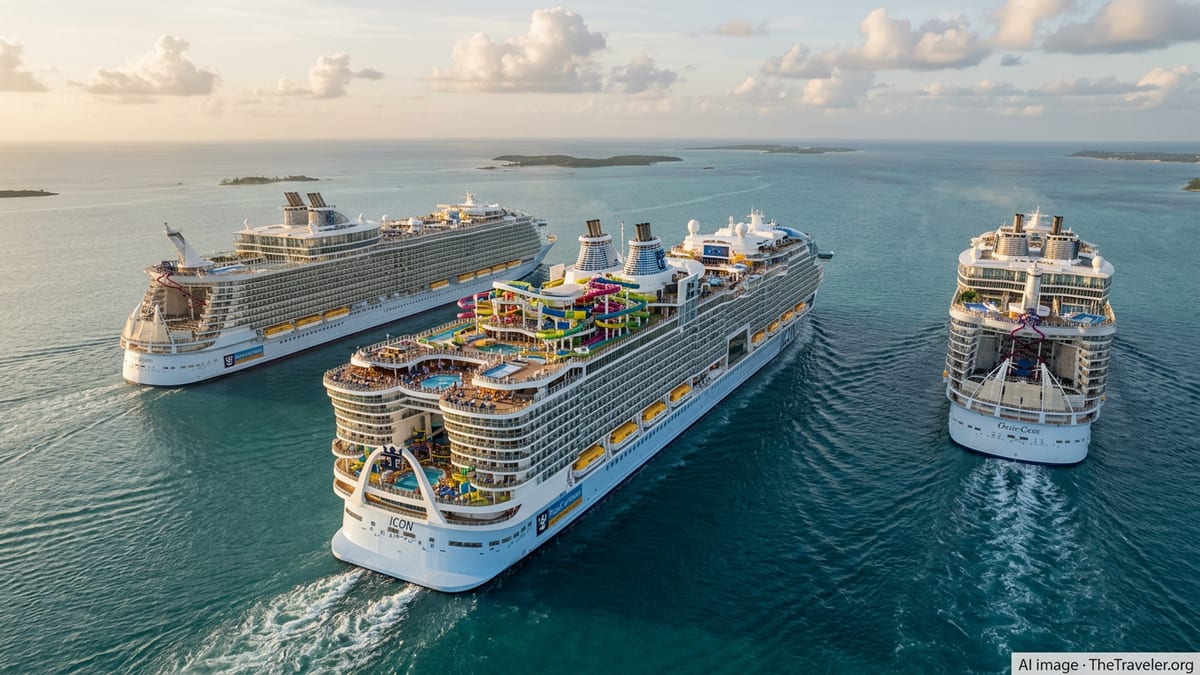
Royal Caribbean Group is marking mid-2026 with a major step forward in its Icon Class strategy, as preparations intensify for the debut of Legend of the Seas, the third vessel in the record-setting series. Publicly available fleet data and corporate materials indicate that Legend of the Seas is scheduled to enter service in July 2026, joining Icon of the Seas and Star of the Seas in what the company positions as its flagship family-focused offering.
According to Royal Caribbean’s own ship overviews and investor communications, Legend of the Seas will continue the Icon Class formula of multiple themed neighborhoods, high-capacity water and activity zones, and a broad dining mix. The ship is expected to operate Western Mediterranean routes in its inaugural season, extending the Icon brand beyond the Caribbean and into one of the line’s most competitive European markets.
The emphasis on Legend of the Seas comes as Royal Caribbean continues to describe Icon Class as its “best family holiday” platform, with marketing centered on combining beach-style relaxation, resort amenities and high-adrenaline attractions. This latest addition reinforces a wider strategy that leans on larger ships, destination-style onboard experiences and year-round deployment in regions with strong airlift and port infrastructure.
Beyond Legend of the Seas, the company has already confirmed additional Icon Class orders into the next decade, signaling confidence in sustained demand for large-scale, experience-heavy ships. For travelers watching ship innovation as closely as itineraries, July 2026 is shaping up as a key pivot point in the evolution of Royal Caribbean’s fleet.
More Newbuilds on the Horizon as Orderbook Grows
Royal Caribbean’s newbuild pipeline extends well beyond Legend of the Seas, with recent corporate announcements confirming a further expansion of the Icon Class family and outlining an ambitious seven-ship rollout over a six-year window. Coverage from industry-focused outlets and investor filings shows that the group has ordered sixth and seventh Icon Class vessels for delivery in 2029 and 2030, locking in additional capacity at the Meyer Turku yard.
Separate reporting from cruise-enthusiast publications details how Royal Caribbean plans to introduce multiple new ships in the late 2020s, including additional Oasis and Icon Class units as well as the forthcoming Discovery Class. The plan envisions two new vessels entering service in several years of the period, which would mark one of the most aggressive growth phases in the company’s history and significantly expand its share of the premium mega-ship segment.
This enlarged orderbook is being framed as a response to persistent demand for short, high-energy sailings from key homeports and for longer itineraries that pair headline ships with marquee destinations. Analysts following the company have noted that larger, more efficient ships can help manage operating costs while supporting premium pricing for new hardware and unique onboard experiences.
For guests planning beyond 2026, the practical outcome is a progressively wider choice of ship styles and sailing lengths, particularly in core markets such as the Caribbean and Europe. The July 2026 snapshot therefore captures Royal Caribbean mid-stride in a long-running capacity buildout that is set to shape itineraries for the rest of the decade.
Navigator of the Seas Rerouted Around Tropical Weather
Operationally, Royal Caribbean’s late July news cycle has been dominated by weather, with Navigator of the Seas adjusting its current voyage out of Los Angeles in response to a developing tropical system off the Pacific coast of Mexico. Cruise-focused news sites report that the sailing, which departed on Friday, July 24, has undergone a substantial itinerary overhaul designed to keep the ship clear of rough seas.
Published coverage indicates that a call to Ensenada has been dropped, with the schedule reworked to include altered port timings and an additional sea day. One report notes that the visit to Cabo San Lucas is now planned for Sunday, July 26, with a slightly shorter time in port than originally advertised. The modifications are being presented as a proactive safety and comfort measure as forecasters track the storm’s path along the Baja California region.
Weather-related itinerary changes are a recurring feature of the Eastern Pacific and Caribbean cruise seasons, but the scale of this adjustment has drawn particular attention from regular Royal Caribbean guests. Commentary on cruise forums and social platforms shows a mix of disappointment over missed ports and acknowledgement that route changes are preferable to sailing directly into adverse conditions.
Travelers booked on Navigator of the Seas and other affected sailings are being advised by commentators and travel advisors to monitor their cruise documentation frequently and to review any independent shore plans or air arrangements for flexibility. July’s developments serve as a timely reminder that even in a period of fleet expansion and strong demand, day-to-day operations remain highly sensitive to weather.
Pricing, Promotions and Itinerary Flexibility in Focus
Alongside fleet news and storm detours, Royal Caribbean’s pricing and promotional framework continues to evolve in mid-2026. The company’s public terms for popular offers such as Kids Sail Free outline specific blackout dates across the summer 2026 period, including much of the late May to late August peak window. These conditions highlight how high-demand school-holiday sailings are often excluded from headline promotions, even as the marketing of those offers remains prominent.
Recent discussion threads among frequent cruisers also illustrate how itinerary changes can interact with pricing. Some guests report receiving revised invoices after route adjustments, prompting questions about when a fare can be repriced and under what circumstances original rates are honored. While individual situations vary, the pattern underscores the value of tracking booking records closely when a ship’s schedule is updated.
Independent commentary further suggests that the most in-demand ships, including the newest Icon and Oasis Class vessels, continue to command premium pricing relative to older tonnage, particularly on short Caribbean and weekend itineraries. Observers point to strong booking trends and limited berth capacity at key private destinations as drivers of those sustained fares.
For travelers evaluating 2026 and 2027 sailings, the emerging picture is one where promotional headlines coexist with selective availability and dynamic pricing tied to ship, season and itinerary. The July 26 landscape reinforces the importance of reading offer terms carefully, building flexibility into travel plans and monitoring communications for any schedule changes that might affect value calculations.