


More news on this day
Egypt is emerging as one of the world’s tourism outliers in 2025, attracting millions of visitors from Russia, Europe, the Gulf and Asia even as the Iran conflict and wider regional tensions weigh on traditional Middle Eastern destinations.
Get the latest news straight to your inbox!
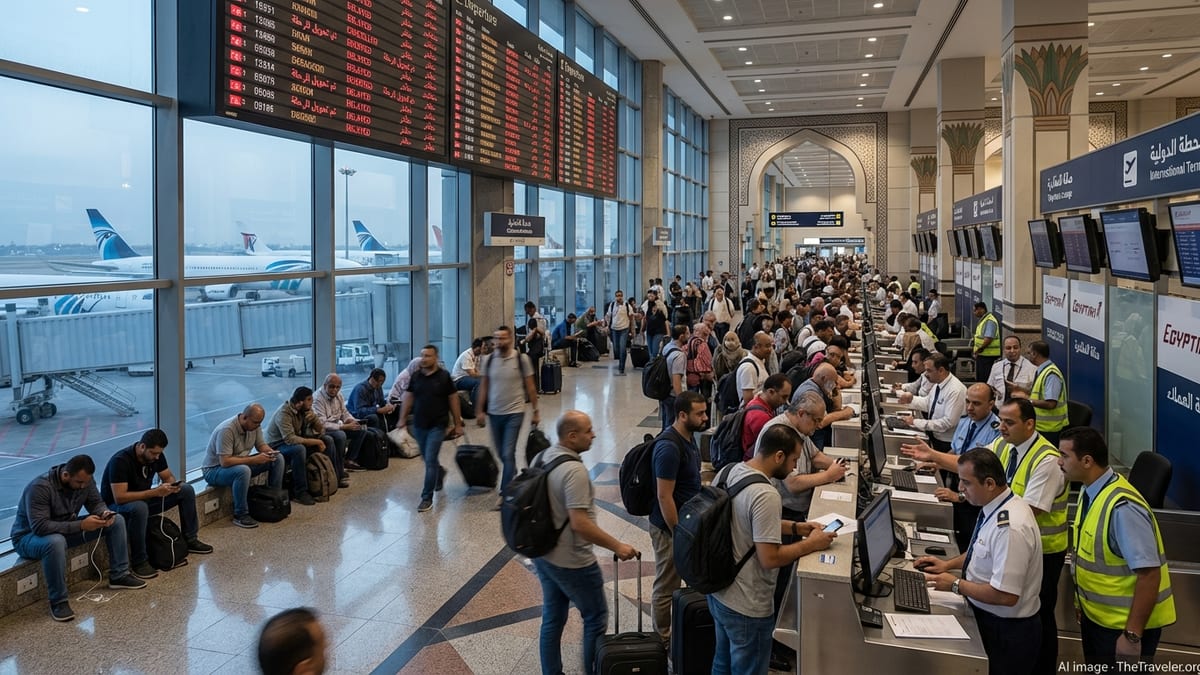
Record arrivals push Egypt to the top of regional tourism
Publicly available government and multilateral data show that Egypt has moved into a new tourism cycle since the pandemic, with foreign arrivals rebounding from barely a few million visitors in 2020 to well over 14 million in 2023 and continuing to climb in 2024 and early 2025. Tourism has become one of the few bright spots in an economy squeezed by high debt levels, inflation and reduced Suez Canal revenues linked to Red Sea shipping disruptions.
Egypt’s Ministry of Tourism and Antiquities and international reporting indicate that the country broke its previous 2010 visitor record in 2023 and then exceeded that again in 2024, putting total arrivals in the mid‑teens of millions. Analysts tracking Egypt’s balance of payments note that tourism receipts have risen to more than 14 billion dollars annually, softening the blow from lower canal income and offering crucial foreign currency at a time of repeat devaluations of the Egyptian pound.
Industry observers point out that this growth is not confined to one source market. While classic European feeder markets such as Germany, the United Kingdom and Poland remain central, recent traffic from Russia, Saudi Arabia and China has helped to spread risk and underpin high occupancy levels in Red Sea and Nile Valley destinations. The result is that Egypt now ranks among the most visited countries in the wider Middle East and North Africa, and, unlike several Gulf hubs, is still reporting year‑on‑year growth.
At the same time, Egypt has been rolling out a long‑term tourism strategy that targets 30 million annual visitors by the end of the decade. This blueprint includes expanding hotel capacity on the Red Sea coast, easing visa procedures for key markets and improving airport infrastructure at gateways such as Sharm el‑Sheikh, Hurghada and the new Sphinx International Airport near Cairo.
Russia and Europe drive a surge on the Red Sea
Russia has re‑emerged as one of Egypt’s anchor tourism markets, particularly for all‑inclusive resort stays on the Red Sea. Following previous suspensions, Russian charter and scheduled services to Sharm el‑Sheikh and Hurghada have been restored and scaled up, according to aviation schedules and carrier announcements. Russian tour operators have been packaging Egypt as a sun‑and‑sea alternative to destinations constrained by sanctions and airspace restrictions, making it one of the most accessible warm‑weather options for Russian holidaymakers.
Trade and tourism publications estimate that around 1.2 million Russian tourists visited Egypt in 2023, placing Russia among the top source countries for the Red Sea. Tour operators report strong demand through 2024 and into 2025, supported by comparatively competitive prices, a wide range of mid‑market resorts and the perception among Russian travelers that Egypt remains relatively insulated from the direct fallout of the Iran conflict.
European demand has also been robust. Germany remains Egypt’s single largest European market, with German travelers heavily represented in Red Sea beach resorts and Nile cruise itineraries. Poland has emerged as a fast‑growing source, helped by low‑cost carriers and charter flights that connect Polish regional airports to Egyptian resort towns. British visitor numbers, while influenced by changing travel advisories, have continued to recover, particularly for winter sun escapes and cultural trips that combine Cairo with Luxor and Aswan.
European travel media note that, as parts of the eastern Mediterranean and Gulf have faced periodic air‑space disruptions, higher fuel costs and traveler concerns linked to the Iran conflict, Egypt has in some cases benefited from re‑routed capacity. Airlines and tour operators that might otherwise have expanded further into Gulf city‑break destinations have instead reinforced Red Sea and Nile Valley programs, strengthening Egypt’s position on European holiday brochures.
Gulf and Asian tourists diversify beyond traditional hubs
Egypt’s recent tourism expansion is not only a European and Russian story. Gulf Cooperation Council nationals, particularly from Saudi Arabia, are increasingly choosing Egypt for family holidays and second‑home stays along the North Coast and in Cairo’s newer satellite developments. Publicly available data on hotel performance suggest that high‑end properties in the capital and Alexandria have seen a rise in intra‑Arab leisure and medical tourism, with Egyptian cities offering cooler summer climates than parts of the Gulf and a wide range of Arabic‑language services.
Saudi travelers, encouraged by growing air connectivity and shared religious and cultural ties, have become particularly visible in Cairo’s upscale districts and in year‑round Red Sea destinations that promote diving, wellness and family‑oriented entertainment. Industry specialists say this intra‑regional demand has been vital in smoothing seasonality, ensuring that occupancy does not rely solely on European winter peaks.
At the same time, China has returned to the Egyptian tourism landscape. After a long pandemic hiatus, Chinese outbound travel has resumed, and major markets in North Africa are once again appearing on Chinese booking platforms. Travel trade reports indicate that Chinese group tours are increasingly combining Cairo’s pyramids and museums with Luxor’s temples and short Red Sea extensions, tapping into a growing appetite in China for signature global heritage sites.
Broader Asian markets, including India and some Southeast Asian countries, have also been adding capacity into Egypt. Aviation and tourism analysts highlight that multi‑destination itineraries which once focused heavily on Gulf stopovers are being rebalanced, with tour designers now more likely to pair Egypt with Mediterranean or African legs as travelers seek to avoid perceived flashpoints around the Gulf and Iran.
Iran conflict reshapes regional tourism flows
The 2024 escalation between Iran, Israel and the United States has introduced a new layer of uncertainty for Middle Eastern tourism. According to assessments from credit rating agencies and international organizations, direct exchanges of strikes and maritime incidents in and around the Strait of Hormuz have increased risk perceptions for Gulf destinations that previously positioned themselves as safe havens for business and leisure travel.
Travel advisories, airline route adjustments and higher jet fuel prices have combined to dampen demand for some Gulf city‑break and stopover markets. Reports from global tourism bodies and industry gatherings suggest that hotel occupancy in parts of the Gulf has softened during key periods, particularly in destinations that host major foreign military facilities or sit close to potential targets for Iranian retaliation.
In contrast, Egypt has so far been able to present itself as geographically removed from the epicenter of the Iran conflict, even while facing its own security and economic challenges. Tourism promotion campaigns emphasize Egypt’s Red Sea resorts, Nile cruises and cultural attractions rather than proximity to current front lines. While risk assessments still flag the wider region, many tour operators describe Egypt as a relatively stable option in a turbulent neighborhood.
Analysts caution that Egypt is not immune to regional shocks, especially if wider escalation disrupts air corridors or global oil markets for an extended period. However, the current pattern of bookings suggests that some tourists who might previously have opted for short breaks in Gulf metropolises are instead choosing longer stays in Egypt, where package deals can offset higher flight prices and where the main attractions are perceived as further from immediate conflict zones.
Infrastructure upgrades and visa reforms underpin the boom
Behind the visitor surge, Egypt has been working to modernize its tourism infrastructure and entry procedures. The government has expanded electronic visa schemes and relaxed entry rules for several key markets, including some Gulf and Asian countries, making it easier for multi‑generational families to plan trips at short notice. Immigration and consular guidance from European states also notes ongoing moves toward more digital entry systems, which are expected to simplify border processes in the coming years.
On the ground, new airports and terminal expansions at Cairo, Hurghada and Sharm el‑Sheikh are designed to handle higher volumes of international flights. Investment reports show a steady pipeline of new hotel rooms, especially in the Red Sea governorates and on the Mediterranean coast, often backed by regional and European capital. Heritage projects, such as the long‑anticipated Grand Egyptian Museum near the Giza Plateau, are being positioned as flagship attractions that can support higher‑value cultural tourism.
Tourism businesses are also attempting to spread demand beyond established hotspots. Industry observers note growing promotion for destinations such as Marsa Alam, the Sinai interior and the oases of Egypt’s Western Desert, partly to relieve pressure on over‑visited sites and partly to encourage longer itineraries. River‑cruise capacity on the Nile between Luxor and Aswan has been refurbished and expanded, capitalizing on renewed interest in slow‑travel experiences.
As Egypt pushes toward its 2030 visitor targets, the combination of resilient demand from Russia and Europe, rising arrivals from Saudi Arabia and other Gulf states, and a reawakening of Chinese and broader Asian tourism is reshaping regional travel flows. For now, the country appears to be stealing a march on some Gulf competitors, turning the fallout from the Iran conflict and shifting traveler preferences into an opportunity to consolidate its place as a leading destination across three continents.