


More news on this day
Travelers arriving at Miami International Airport this week expecting a routine trip instead stepped into an unfolding operational breakdown, as a sweeping American Airlines technology outage left flights delayed, crews out of position and thousands of passengers scrambling for options across one of the carrier’s busiest hubs.
Get the latest news straight to your inbox!
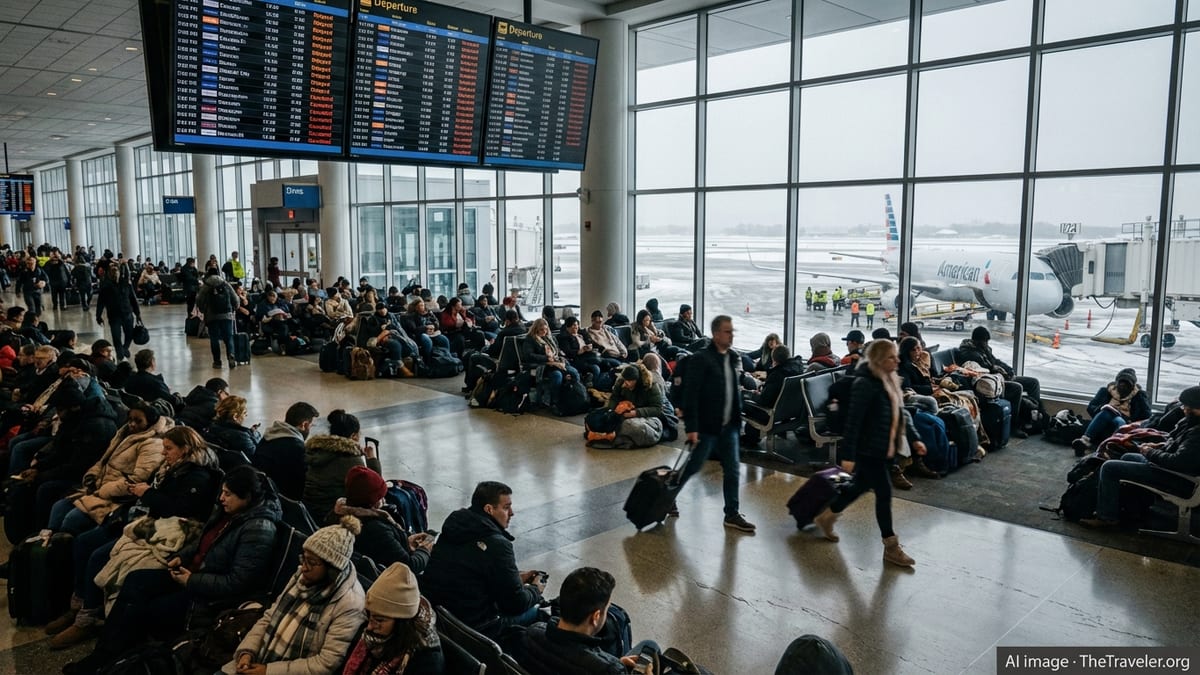
A System Outage Triggers a Chain Reaction in Miami
According to publicly available information from the Federal Aviation Administration and airline tracking data, American Airlines was hit by a systemwide information technology failure on July 28, forcing a temporary nationwide ground stop for flights that were not already airborne. Miami, one of American’s key hubs and its primary gateway to Latin America and the Caribbean, quickly became a focal point of disruption as departures stalled and arriving aircraft ran out of available gates.
Reports from passengers and operations logs indicate that the failure affected core tools used to check in travelers, assign seats, dispatch flights and manage aircraft and crew. Boarding processes were halted midstream, some passengers were ordered off planes that had already boarded, and crews timed out as they waited for systems to come back online. With schedules built around tight turnaround times, even a few hours of paralysis rippled through Miami’s evening and overnight operations.
American has said through public statements that the underlying technology issue was resolved the same day, and that key platforms were restored in stages. But Miami’s heavy bank of late-afternoon and evening departures, including long-haul flights to South America and Europe, faced knock-on effects as crews and aircraft fell badly out of position for the following morning’s departures.
Data from flight-tracking services on July 29 showed lingering cancellations and extended delays out of Miami, even after the immediate outage ended. Travelers reported spending the night in terminals or nearby hotels as they waited for rebooked flights, while others gave up on flying altogether and sought refunds or alternative carriers.
Why a Brief Failure Became a Major Operational Collapse
The scale of the disruption in Miami underscores how dependent large carriers have become on complex, tightly integrated digital systems. In recent years, other airlines have faced multiday breakdowns after technology failures, as seen when a global software update in 2024 triggered widespread flight cancellations across several carriers. Analysts reviewing this week’s events point to similar dynamics: once a critical system fails, the immediate loss of automation is only the beginning of the problem.
When American’s core systems went offline, routine tasks that are usually automated had to be performed manually or were paused entirely. That slowed everything from check-in to aircraft dispatch. As flights sat at gates or on taxiways waiting for clearance, crews approached federally mandated duty limits. Once pilots or flight attendants exceed those limits, they cannot operate until they have had sufficient rest, regardless of passenger demand.
Miami’s role as a connecting hub magnified the disruption. Many passengers passing through the airport are relying on tightly timed connections between domestic and international flights. When the first flights in a connection chain are delayed or canceled, downstream flights may depart with empty seats or leave without key crew members who were due to arrive on those earlier segments. By the time systems at American were reported to be stable, the airline still had to reposition aircraft and crew and rebuild its schedule almost flight by flight.
Industry observers also note that large carriers have spent years optimizing for efficiency, filling planes and tightening schedules to reduce idle aircraft and crew time. While that approach improves financial performance in normal conditions, it leaves limited slack in the system. In Miami this week, that lack of cushion meant there were few spare aircraft or reserve crews available to absorb the shock once the outage hit.
Passengers Face Cancellations, Confusion and Limited Options
For travelers in Miami, the outage translated into a confusing and often chaotic experience. Passengers described on social media being told repeatedly that flights were delayed, only to see them suddenly canceled hours later. Others reported that their itineraries were automatically rebooked into new flights departing many hours or even a full day later, often with overnight connections or lengthy layovers.
Publicly available information from American’s travel alerts page indicated that the airline activated a systemwide waiver, allowing affected passengers to rebook without change fees and, in some cases, to request refunds. However, high demand on alternative flights out of Miami meant that many travelers struggled to find workable options, particularly on popular routes to Caribbean islands, Central America and major South American capitals where seats are limited at the height of the summer travel season.
New U.S. Department of Transportation rules that took effect this year place additional obligations on airlines during controllable disruptions, including IT outages. Guidance materials summarizing those rules note that carriers are expected to provide refunds when they cancel a flight and the passenger chooses not to travel, and to offer assistance such as meal vouchers and hotel accommodations when delays extend overnight. How consistently those measures were applied in Miami in the chaotic hours after the outage is likely to be scrutinized in the days ahead.
Consumer advocates say the Miami incident highlights the gap between official policies and the on-the-ground experience. Passengers whose flights were canceled after midnight, for example, sometimes struggled to reach customer service agents or to obtain hotel rooms in a city already heavily booked for summer travel and events. Many turned to third-party travel insurance or credit card protections to cover unexpected expenses.
A Hub Under Pressure After a Year of Close Calls
The technology failure comes at a sensitive moment for American’s Miami operation. The airline is in the midst of what it has promoted in public statements as a record-breaking centennial summer, with nearly 7,000 flights scheduled on some peak days across its network and expanded international service from Miami to destinations such as Milan and key South American cities. That growth has pushed the hub’s infrastructure and staffing close to capacity even under normal conditions.
Miami has also drawn attention for safety-related incidents involving American flights. In late June, an American Airlines jet at Miami aborted its takeoff after the crew spotted a business aircraft entering the same runway. Investigations into that near-miss are ongoing, but the event has kept a spotlight on operations at the airport and on coordination between airlines, air traffic control and ground services.
The convergence of rapid growth, intense summer demand and high-profile disruptions has fueled questions about how resilient American’s Miami hub really is when something goes wrong. Operational data from past weather and technology events suggests that large hubs with dense schedules can take longer to recover because every delay has cascading effects on later flights. Miami’s role as a primary gateway for U.S.–Latin America traffic means localized problems can quickly spread across a broader region.
Local tourism and business groups are watching closely. Miami’s hotels, cruise lines and convention centers rely on a steady flow of air traffic, much of it carried by American. Extended disruptions risk missed cruise departures, delayed cargo shipments and reshuffled conference schedules, all of which carry costs that ripple beyond the airport itself.
What Comes Next for American and Its Customers
American has said through its public channels that systems are now stable and that it is working to normalize operations across its network. In practice, recovery from an outage of this scale is likely to stretch across several days, as the airline repositions aircraft and crews and clears backlogs of displaced passengers. Miami is expected to remain under pressure as American prioritizes restoring its long-haul and high-demand routes.
Analysts say the incident will intensify scrutiny of airline technology infrastructure and contingency planning. The Miami meltdown adds to a growing list of high-profile aviation disruptions in recent years linked to software bugs, third-party technology providers and aging legacy systems. Regulators and consumer advocates have already been pressing carriers to invest more heavily in redundancy and failover capabilities that can keep basic operations running even when one system fails.
For travelers, this week’s events are a reminder of how quickly a routine trip can unravel when a major carrier hits turbulence behind the scenes. Experts generally recommend booking earlier flights in the day, allowing extra time for connections through busy hubs like Miami and keeping a close eye on airline apps and travel alerts, especially during peak seasons.
In the aftermath of the outage, attention will focus on how American compensates affected passengers, what steps it takes to harden its systems against future failures and whether the lessons from Miami translate into tangible improvements before the next wave of peak travel hits.