


More news on this day
A United Airlines Boeing 737 flying from Santa Ana, California, to Newark, New Jersey, diverted to Cleveland Hopkins International Airport on July 28, after weather and traffic constraints in the Northeast disrupted arrivals into the New York area, according to publicly available flight and air-traffic data.
Get the latest news straight to your inbox!
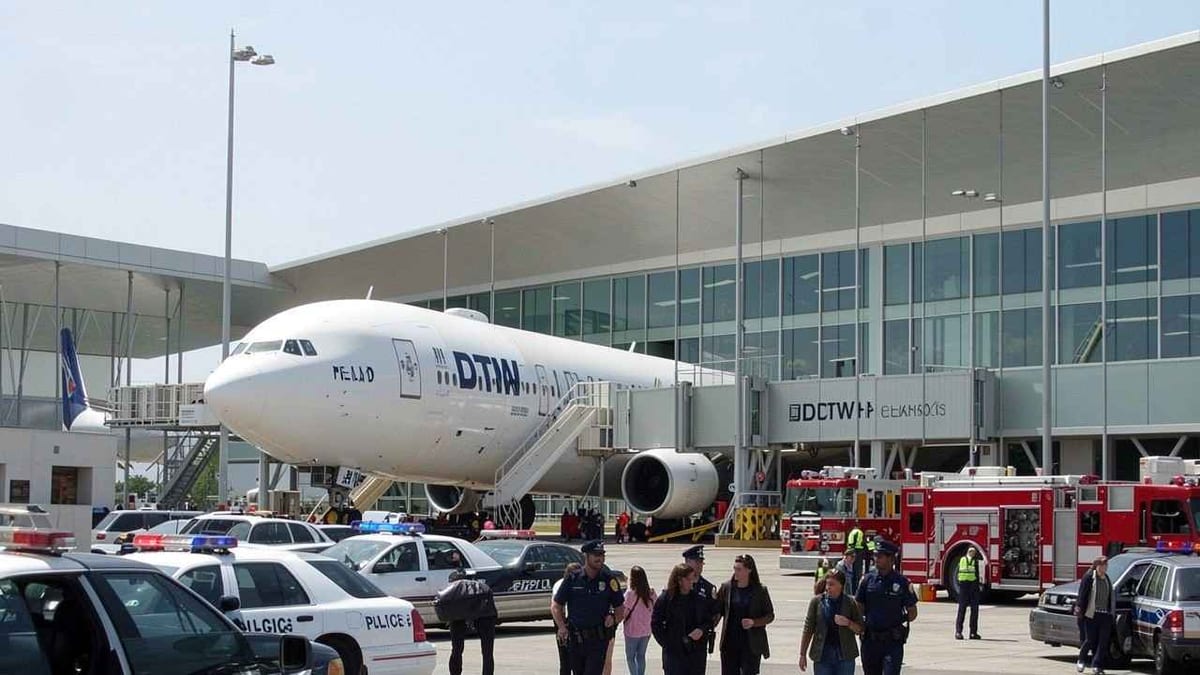
Transcontinental Flight Diverts Midway to Alternate Airport
Flight information platforms list United Airlines flight UA1559 as a regularly scheduled service on the Santa Ana to Newark route, operated with a Boeing 737 aircraft. On July 28, tracking data shows the aircraft departed as planned from John Wayne Airport in Orange County and initially followed a standard transcontinental routing toward the New York metropolitan area.
As the flight neared the Northeast corridor, data from air-traffic advisories and airport status boards indicate that arrival flows into Newark Liberty International Airport were constrained by thunderstorms and associated air-traffic management initiatives. Diversion forums and advisories from the Federal Aviation Administration on the same date describe a broader pattern of reroutes and holding affecting Newark-bound traffic, with multiple flights being sent to alternates while weather systems moved through the region.
In that context, UA1559 altered course and diverted to Cleveland Hopkins International Airport. Flight-tracking timelines show the aircraft descending toward northern Ohio and landing at Cleveland rather than continuing to Newark, aligning with a pattern seen in recent weeks in which some New York-bound flights have been routed to Cleveland during severe weather over northern New Jersey.
Publicly available postings from aviation watchers and travelers have previously highlighted Cleveland as a recurring diversion point for Newark services during convective weather episodes. Discussion threads describe aircraft holding near the New York area before being dispatched to Cleveland, where gate space and United’s operational footprint allow flights to wait out storms and refuel before continuing to their original destination.
Weather and Congestion Disrupt Newark Operations on July 28
Air-traffic coordination materials for July 28 reference significant thunderstorm activity across the Northeast, with New York area airports, including Newark, affected by convective weather cells and reduced arrival rates. These documents describe traffic management programs that limit inbound flows to maintain safety and spacing in constrained conditions, frequently resulting in extended holding, ground delays, or diversions.
Newark’s real-time airport status for the afternoon of July 28 shows periods of delays linked to weather and volume, with guidance for passengers to confirm the status of individual flights with their airlines. The same day, travel waiver information shared for United customers notes thunderstorms affecting the broader East Coast, including New York and Newark, and offers flexibility for passengers to adjust itineraries within a specified travel window.
While each diversion is influenced by the specific circumstances of an individual flight, the timing of UA1559’s decision to divert to Cleveland coincides with these broader constraints. The combination of thunderstorms, saturated arrival demand, and airspace flow programs would have reduced the capacity at Newark just as multiple transcontinental and international flights converged on the airport.
Recent weeks have seen several similar episodes affecting Newark-bound traffic. Posts from airline passengers and local observers describe aircraft from various origins rerouting to airports such as Boston and Cleveland when storms form over northern New Jersey, temporarily halting or sharply slowing arrivals into one of United’s largest hubs.
Cleveland’s Emerging Role as a Diversion Hub
Cleveland Hopkins International Airport has increasingly appeared in public reporting as an alternate field for flights originally bound for Newark. Aviation discussions point to a combination of available airfield capacity, established United operations, and relative proximity to the New York area as reasons flights may be directed there during weather disruptions in New Jersey and surrounding states.
Community commentary from early July noted clusters of Newark-destined flights diverting into Cleveland during a previous round of thunderstorms. Contributors cited severe weather over northern New Jersey and the practical availability of gates and ground handling at Cleveland as likely factors behind those decisions. The July 28 diversion of UA1559 fits a similar pattern, placing another transcontinental service at Cleveland while conditions at Newark remained unstable.
This emerging role does not change Cleveland’s formal status in the United network, but it illustrates how airlines and air-traffic managers use mid-continent airports to absorb irregular operations. By moving aircraft to a location with fewer immediate weather constraints, carriers can preserve fuel margins, manage crew duty times more predictably, and give passengers access to a terminal environment rather than extended airborne holding.
Data from flight-tracking services show that flights diverted to Cleveland sometimes later continue to Newark once arrival rates recover, while in other cases passengers are rebooked onto alternative routings. The specific onward arrangements for UA1559’s travelers on July 28 are not fully detailed in open sources, but the diversion itself underscores how Cleveland has become a practical relief valve for Newark during peak disruption periods.
Impact on Passengers and Network Operations
For travelers onboard UA1559, the diversion translated into an unplanned stop hundreds of miles from their intended arrival airport. Reports across social platforms and traveler forums covering diversions into Cleveland on other dates describe a mix of outcomes, including same-day continuations to Newark, overnight stays when crews reach legal duty limits, and rebookings onto other flights in the United network.
From an operational perspective, diversions of Santa Ana to Newark services ripple through the carrier’s schedule. A Boeing 737 that was planned to arrive in Newark and operate a subsequent leg instead spends additional time on the ground at an alternate field, potentially leading to downstream delays or aircraft substitutions. Publicly visible schedule data for July 28 show that multiple United flights in and out of Newark experienced delays or cancellations tied to the same weather pattern that affected UA1559.
Travelers affected by diversions during weather events typically fall under standard irregular-operations policies that distinguish between disruptions caused by airline-controlled factors and those driven by weather or air-traffic control initiatives. Commentary in online forums covering similar Newark diversions notes that hotel and meal accommodations may be limited when weather is the primary cause, although airlines frequently work to secure rebooking options and provide updates through mobile apps and airport displays.
The July 28 diversion of UA1559 adds to a series of recent operational challenges around Newark, where recurring summer thunderstorms and heavy hub traffic have combined to produce a run of delays, cancellations, and diversions. For passengers planning travel into the New York area during peak storm season, publicly available guidance from airlines and aviation agencies continues to emphasize checking flight status frequently and allowing extra flexibility in itineraries.
Newark’s Ongoing Weather Vulnerability in Peak Summer
Newark Liberty sits in a congested airspace environment that is particularly sensitive to convective weather systems common to the Mid-Atlantic and Northeast during July and August. Even relatively localized storm cells can prompt arrival and departure restrictions across the region, as controllers balance safety margins with demanding traffic volumes serving New York, Philadelphia, and surrounding airports.
Recent travel discussion threads and advisory documentation from July highlight how quickly conditions can deteriorate around Newark, with some flights completing only short holding patterns before being rerouted to alternates, and others diverting after extended time in airborne queues. The pattern seen on July 28, in which transcontinental flights such as UA1559 shifted to a mid-continent airport, reflects a conservative approach to fuel and safety under uncertain arrival timelines.
As the summer storm season continues, the experience of UA1559 illustrates the operational realities of flying into one of the nation’s busiest and most weather-sensitive hubs. While diversions remain relatively uncommon compared with the total number of daily flights, they form a visible reminder of how quickly a typical cross-country trip can be reshaped by conditions far from either departure or destination.