


More news on this day
Air travelers across Russia and neighboring hubs faced a fresh wave of disruption today as nearly 100 flight delays and several cancellations involving Aeroflot, Rossiya Airlines, Turkish Airlines and Belavia rippled through Moscow, St. Petersburg, Beijing, Belgrade and other key routes.
Get the latest news straight to your inbox!
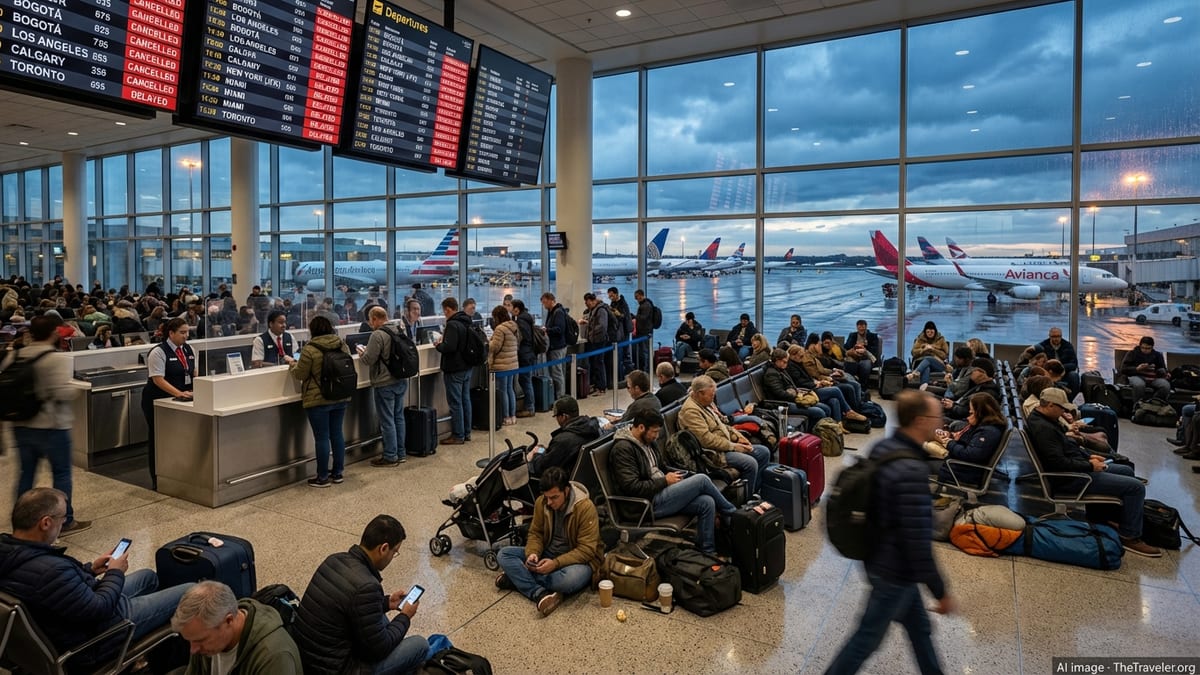
New Wave of Disruption Across Russian and Regional Hubs
Publicly available flight-tracking boards on May 23 indicate around 99 delayed services and at least seven cancellations linked to Aeroflot, Rossiya Airlines, Turkish Airlines and Belavia across major airports including Moscow’s Sheremetyevo, Domodedovo and Vnukovo, St. Petersburg’s Pulkovo, as well as international gateways such as Beijing and Belgrade. The figures fluctuate throughout the day as departure times are updated, but they underline a renewed bout of instability in a network that has already been under strain for several seasons.
Delays from Moscow and St. Petersburg involve a mix of domestic and international routes, with services to popular leisure destinations in Turkey and China particularly affected. Data from online schedules show late-running flights to Istanbul, Antalya, Dalaman, Beijing and other long-haul or high-demand destinations, compounding crowding at departure gates and prolonging turnaround times for aircraft and crews.
In Beijing and Belgrade, arrivals and departures involving Russian and regional carriers have also been hit by knock-on effects from the Russian side. Aircraft arriving late from Moscow or St. Petersburg are pushing back subsequent departures, producing rolling delays that are expected to last into the evening peak.
While the overall number of flights operating remains high, the concentration of delays among a handful of key carriers and hubs is creating visible congestion for travelers seeking to move between Russia, Turkey, China and the Balkans at the start of the busy summer season.
Aeroflot and Rossiya Under Pressure as Summer Schedules Ramp Up
Aeroflot and subsidiary Rossiya Airlines are at the center of the turbulence, as the group pushes an ambitious summer schedule spanning more than 300 routes from Moscow, St. Petersburg and regional bases. According to published timetables, Aeroflot alone is operating up to seven daily flights between Moscow and Istanbul alongside expanded services to Chinese cities including Beijing, Shanghai and Harbin, as well as leisure destinations across Southeast Asia and the Middle East.
That growth is colliding with a tight operating environment. The Russian market has been coping with sanctions-related constraints on aircraft parts and maintenance, regulatory scrutiny of aging fleets and recurring operational bottlenecks. Industry coverage has highlighted how carriers have extended the service life of existing aircraft, particularly domestically produced regional jets, to compensate for limited access to newer models. Any disruption, from weather to airspace restrictions or technical checks, can therefore cascade quickly across the network.
On May 23, departures boards at Sheremetyevo and Pulkovo showed clusters of late Aeroflot and Rossiya flights, with some domestic legs departing more than an hour behind schedule and selected international services also pushed back. Because Rossiya operates a significant share of Aeroflot-branded flights on domestic routes, delays on regional sectors are feeding back into the mainline schedule and complicating aircraft rotations.
The current pattern echoes previous episodes in which Aeroflot and its affiliates recorded waves of disruptions after technical incidents or system outages. Travel-industry observers note that, while the group has been steadily rebuilding its international network, the resilience of day-to-day operations remains a concern for passengers planning tight connections through Moscow and St. Petersburg.
Turkish Airlines and Belavia Cancellations Add to Passenger Uncertainty
Compounding the difficulties for Russian travelers, Turkish Airlines and Belarusian carrier Belavia are again adjusting their operations into and out of Russia. Recent Russian-language travel reports described long delays of up to 22 hours on some Turkish Airlines services from Moscow to resort destinations like Antalya and Dalaman, and tour operators have been forced to rebook customers or shift travel dates.
On May 23, schedule data and media coverage point to additional cancellations across the Turkish Airlines network serving Russian cities. While the affected flights represent a small fraction of the carrier’s overall Russia schedule, they are heavily concentrated on high-demand leisure and transfer routes that connect Russian travelers to Turkey, the Mediterranean and onward global destinations via Istanbul. Each cancelled or significantly delayed flight reduces already constrained options for passengers trying to exit or transit the region.
Belavia, which has been operating under tight international restrictions since 2021, is also reported to be modifying its timetable for technical and operational reasons. Discussion on aviation forums in recent days has focused on sudden changes in Belavia’s schedules, including flights linking Minsk with Russian and Balkan destinations such as Belgrade. Even limited cancellations or frequency cuts for Belavia can be highly disruptive, as many of its routes are thinly served and cater to travelers who have few alternative options.
The combination of curtailed Turkish Airlines capacity and a fragile Belavia schedule has effectively squeezed two key connective arteries for Russian and regional passengers, especially those relying on Istanbul and Minsk as transfer points to Europe, the Middle East and beyond.
Knock-On Effects in Beijing, Belgrade and Beyond
The operational turbulence in Russia is sending ripples across several international hubs. In Beijing, arrivals from Moscow and St. Petersburg have been running behind schedule, according to airport information screens and flight-tracking platforms. These delays are affecting connecting passengers who use Chinese carriers or Aeroflot codeshares to continue toward Southeast Asia or other parts of East Asia.
In Belgrade, where Turkish Airlines, Air Serbia and regional operators link the Serbian capital with Moscow, Istanbul and other cities, altered or delayed inbound flights from Russia are causing timing mismatches with outbound connections. Passengers on itineraries that combine Aeroflot or Rossiya with Turkish Airlines or Belavia services are particularly vulnerable, as missed connections can trigger lengthy rebookings or unexpected overnight stays.
Smaller airports and secondary cities are not immune. When aircraft and crew are delayed on high-profile trunk routes, regional flights are often rescheduled or swapped to cover peak demand, intensifying disruption in less visible parts of the network. Travelers connecting through St. Petersburg to reach destinations in the Russian Far East, the Caucasus or Central Asia may find their itineraries subject to last-minute changes as airlines triage limited resources.
These knock-on effects underline how tightly interwoven the air links are between Russia, Turkey, China and the Balkans. Even relatively modest schedule changes in one hub can quickly cascade into a wider pattern of delays and cancellations across several countries.
Travelers Face Difficult Choices as Disruptions Mount
For passengers caught in today’s disruption, options are constrained. With Russian carriers already operating at or near full capacity on popular summer routes, rebooking onto later Aeroflot or Rossiya flights can be difficult, particularly for departures to Turkey, China and resort destinations. Some travelers are turning to alternative routings through hubs such as Dubai, Abu Dhabi, Doha or Tbilisi when seats are available, but these itineraries can be longer and significantly more expensive.
Tour agencies specializing in Russia to Turkey and Russia to China travel are reported to be juggling schedule changes from multiple airlines at once, offering customers revised departure dates, alternative airports or, in some cases, refunds. The complexity of navigating sanctions, changing visa rules and the reduced presence of Western carriers in the Russian market is adding another layer of uncertainty for anyone planning cross-border trips in the coming weeks.
Industry analysts note that periodic travel chaos has become a recurring feature of the Russian aviation landscape since 2022, driven by a mix of geopolitical tension, airspace closures, technical constraints and high seasonal demand. While airlines have made efforts to rebuild networks and expand frequencies, today’s wave of 99 delays and seven cancellations highlights how vulnerable the system remains to relatively small shocks.
With the summer peak only beginning, travelers using Aeroflot, Rossiya, Turkish Airlines and Belavia on routes through Moscow, St. Petersburg, Beijing and Belgrade are likely to face an elevated risk of late departures, missed connections and schedule changes, even if most flights still operate. Careful monitoring of itineraries and readiness to adjust plans at short notice are becoming essential parts of flying to and from Russia in 2026.