


More news on this day
Hundreds of air travelers across the United States and beyond faced cascading disruption after a fresh wave of delays and cancellations at Hartsfield-Jackson Atlanta International Airport rippled through busy routes to Houston, Toronto, Cancun, Orlando and other destinations.
Get the latest news straight to your inbox!
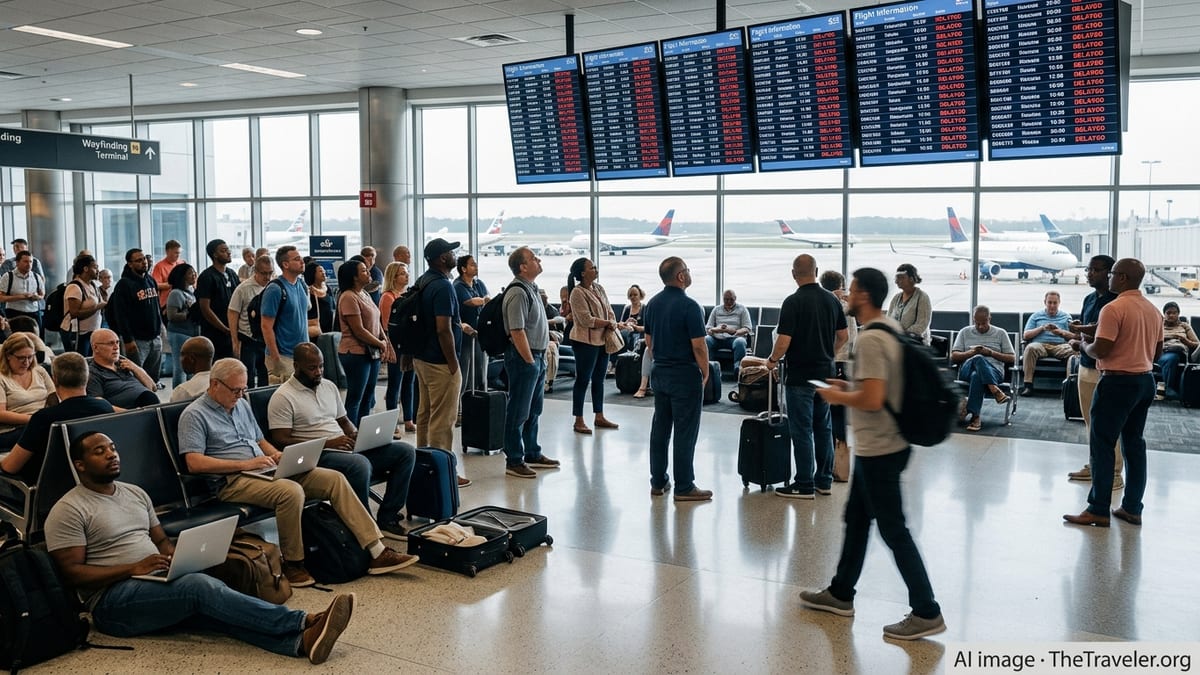
Thunderstorms and Congestion Snarl Operations at Atlanta Hub
Tracking data and operational notices show that Hartsfield-Jackson Atlanta International Airport experienced another bout of heavy disruption, with around 279 flights delayed and 21 cancelled in a single day. The interruption followed a period of unstable spring weather in the Southeast and ongoing congestion in the national airspace system, conditions that frequently put pressure on the country’s busiest passenger hub.
Publicly available information from federal aviation resources indicates that thunderstorms in and around the Atlanta area in recent days triggered a traffic management program for arrivals. Such measures typically reduce the number of flights allowed to land per hour, forcing airlines to stretch out their schedules, hold aircraft on the ground at departure airports and, in some cases, cancel services when the network can no longer absorb further delay.
Advisories from major carriers also flagged the potential for weather-related disruption on Atlanta routes, warning that storms and air traffic control constraints could affect flights over several days. When combined with already high passenger volumes going into a late-spring travel weekend, even a modest capacity reduction at Hartsfield-Jackson can quickly result in hundreds of late departures and missed connections.
Data from recent national disruption reports underlines how vulnerable Atlanta is to these kinds of knock-on effects. Analyses of U.S. flight performance over the past year show the airport handling more than 50 million departing passengers annually with roughly one-quarter of flights arriving or departing behind schedule, underscoring how small operational shocks can magnify into large-scale disruption for travelers.
Delta and Regional Partners Bear Brunt of the Gridlock
As the dominant carrier at Atlanta, Delta Air Lines and its regional affiliates were among the hardest hit by the latest wave of delays. Flight-tracking services showed a concentration of late departures and arrivals on Delta-operated services, including those flown by Endeavor Air and SkyWest under code-sharing arrangements.
These regional partners connect dozens of smaller U.S. cities into the Atlanta hub, meaning schedule changes at Hartsfield-Jackson quickly spill into communities far from Georgia. Reports from previous disruption days this year have highlighted how a backlog of delayed regional jets in Atlanta can leave travelers stranded as aircraft and crews are out of position for subsequent flights.
SkyWest and Endeavor aircraft also feed connecting traffic onto long-haul and popular leisure routes, amplifying the impact when disruptions occur. When inbound regional flights arrive late or miss their connection windows, passengers heading for destinations such as Cancun or Toronto can find their onward flights delayed while ground teams attempt to rebook or re-accommodate them.
Industry performance data published by the U.S. Department of Transportation illustrates how regional networks, while efficient in normal conditions, can be especially sensitive to weather and air traffic control constraints at hub airports. Air carrier, crew availability and national airspace delays collectively account for a sizable share of overall disruption for large U.S. airlines and their regional partners.
Frontier, Leisure Routes and International Links Also Affected
The disruption in Atlanta extended beyond Delta and its affiliates, affecting low-cost and leisure-focused carriers such as Frontier Airlines. Flight schedule databases show that Frontier operates non-stop services from Atlanta to major vacation destinations including Cancun, and delays at the hub can rapidly affect these tightly timed rotations.
Non-stop flights from Atlanta to Cancun, Houston, Orlando and Toronto form part of a high-demand leisure and short-haul international network catering to both U.S. and overseas travelers. When departure waves at Hartsfield-Jackson are staggered or trimmed due to storms and congestion, these routes are particularly vulnerable, as aircraft often make multiple turnarounds per day and have limited slack built into their timetables.
Travel disruption trackers published in recent months have repeatedly placed Atlanta among the U.S. airports experiencing the highest number of weather-related cancellations and delays during major storm systems. In earlier severe events this year, national airspace reports logged hundreds of cancellations and more than 700 delays in Atlanta over just a couple of days, reinforcing the city’s role as a critical chokepoint for domestic and international travel.
Passengers booked on cross-border services from Atlanta to Canadian and Mexican gateways face additional complications when irregular operations occur. Rebooking options can be more limited on international routes, particularly where only one or two carriers operate daily flights between city pairs, raising the likelihood of overnight stays and extended disruptions to travel plans.
Passengers Report Long Queues, Missed Connections and Overnight Stays
The operational data was mirrored on the ground by reports of long queues, missed connections and stranded travelers throughout the airport. Social media posts and online travel forums described passengers waiting through extended security and check-in lines, followed by rolling gate holds as ground stops and departure spacing programs took effect.
Previous disruption days at Atlanta this year saw security wait times spike well beyond the traditional two-hour guideline for domestic flights, and travelers’ recent accounts suggest similar pressure on terminal facilities when schedules unravel. For those facing tight connections, even relatively short flight delays were enough to strand them in Atlanta when onward services departed without them.
Some travel advisory reports published this spring warned that, during severe disruption at Hartsfield-Jackson, passengers could be left waiting hours or even days for an open seat on alternative flights. In those circumstances, hotel availability near the airport becomes a secondary challenge, as thousands of travelers compete for accommodation at short notice.
Consumer guidance distributed by advocacy groups and travel insurers in recent months emphasizes the importance of understanding airline policies around meal vouchers, hotel coverage and compensation in the event of delays or cancellations. While U.S. regulations do not mandate broad financial compensation for weather-related disruption, airlines may provide assistance in cases where delays are within their control, such as maintenance or crew-related issues.
What Travelers Can Do When Atlanta Disruptions Hit
Recent episodes at Atlanta, including the latest day marked by 279 delays and 21 cancellations, highlight how quickly conditions can deteriorate for travelers passing through large hubs. Travel experts and consumer agencies consistently advise monitoring flight status closely and building additional connection time into itineraries involving weather-prone airports.
Public information from federal aviation systems and airline advisory pages can help passengers gauge whether a traffic management program or severe weather alert is in place for Atlanta. When alerts are active, same-day travelers may be able to adjust plans by moving to earlier flights, changing routings away from the hub, or shifting nonessential trips to another date where fare rules allow.
In addition, disruption-tracking reports recommend that passengers keep essential items, medication and a change of clothing in carry-on bags in case checked luggage is delayed or becomes temporarily inaccessible during extended irregular operations. Access to airline mobile apps and proactive use of self-service tools can also improve the chances of securing a workable rebooking option before flights fill.
With forecasters indicating that convective weather and seasonal storms will remain a feature of the Southeast aviation landscape in the weeks ahead, observers expect Atlanta to remain a focal point for potential disruption. For passengers, the latest episode underscores the value of contingency planning whenever travel plans route through one of the world’s busiest and most weather-sensitive hubs.