


More news on this day
Hundreds of air travelers across Canada faced mounting disruption on May 23, as tracking data showed at least 143 flights delayed and 24 canceled nationwide, snarling operations at major hubs in Montreal and Toronto while also isolating passengers in regional centers such as Sept-Îles, Quebec City and Halifax.
Get the latest news straight to your inbox!
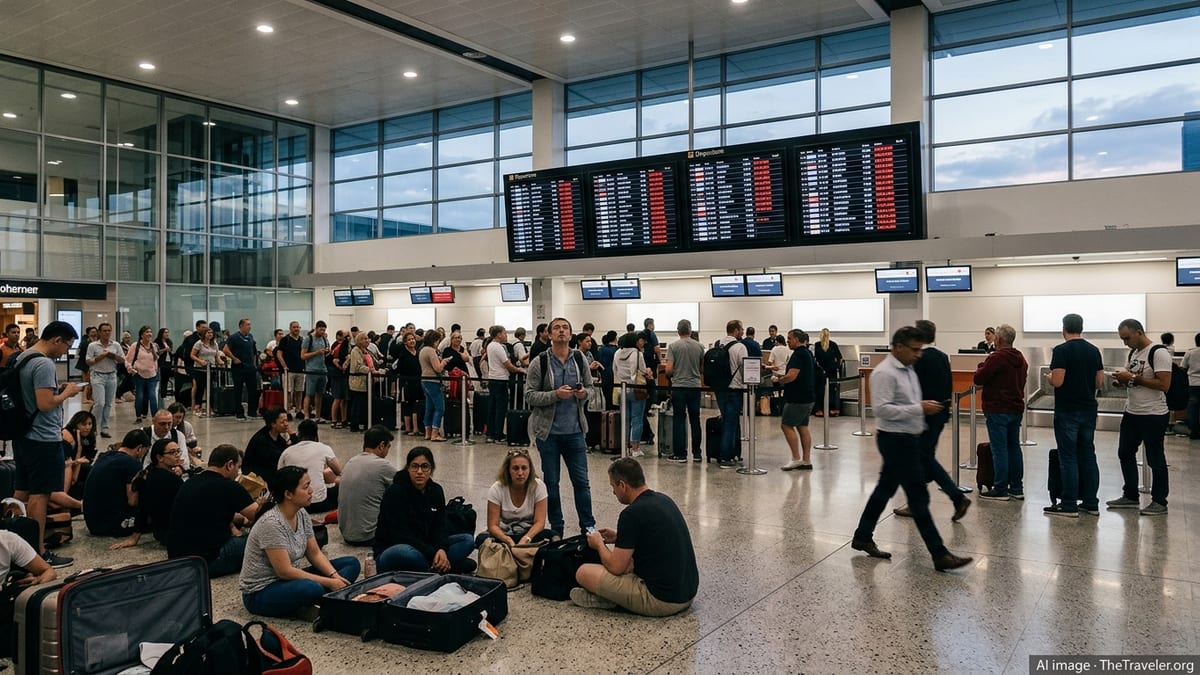
Major Hubs Struggle as Delays Ripple Outward
Publicly available flight-tracking boards for May 23 indicate a packed day of disruptions at large Canadian airports, with Montreal–Trudeau and Toronto Pearson showing some of the heaviest concentrations of late and canceled departures. The pattern mirrors several recent episodes in early 2026 in which high volumes, tight aircraft rotations and unsettled weather combined to push schedules off track across multiple carriers.
Reports compiled from tracking services and aviation industry coverage point to Air Canada and its regional affiliate Jazz Aviation among the most visibly affected operators, with additional knock-on delays touching PAL Airlines and Air Inuit on select regional sectors. While each incident has its own operational cause, analysts note that the country’s major hubs have little slack built into their systems, so a small number of early disruptions can quickly cascade into dozens of late flights by midafternoon.
Coverage from travel and aviation outlets in recent months has highlighted how even modest storms or air-traffic flow restrictions can lead to large numbers of delayed flights from Toronto, Montreal and other major nodes. The totals reported for May 23, while not record-setting, continue a broader 2026 pattern in which Canadian travelers have faced repeated days with triple-digit delays and dozens of cancellations.
Industry watchers also point to lingering capacity and staffing challenges within airline and airport operations. Although passenger volumes have largely recovered compared with previous years, regional and mainline carriers alike are still fine-tuning schedules, crew availability and maintenance windows, raising the likelihood that any unexpected disruption will ripple across multiple cities.
Regional Lifelines in Sept-Îles and Northern Quebec
Beyond major hubs, the latest wave of disruptions has been acutely felt in smaller centers such as Sept-Îles and communities in northern Quebec, where Jazz, Air Inuit and PAL Airlines provide vital links to larger cities and medical, educational and commercial services. Flight data for the week of May 20 shows these carriers cycling Dash 8 turboprops and other regional aircraft through Sept-Îles and coastal communities on tight turnarounds, leaving limited room to absorb delays.
According to published schedules and flight histories, Sept-Îles is served by a mix of mainline partner flights under the Air Canada Express banner and independent services operated by Air Inuit and PAL. When a Montreal or Quebec City departure runs significantly late, the arriving aircraft may miss its next scheduled rotation north, forcing last-minute schedule changes for remote passengers who often have no same-day alternatives.
Travel reporting this spring has underscored how such interruptions can effectively isolate entire communities for hours or even a full day. For travelers connecting from remote airstrips through Sept-Îles and onward to Montreal, a single delayed leg can mean missed medical appointments or lost connections to long-haul flights. In several documented cases this year, passengers have had to wait for repositioned aircraft or next-day services after weather or congestion at southern hubs disrupted regional fleets.
For regional airlines, maintaining reliability on these lifeline routes is an ongoing challenge as they juggle older aircraft, demanding operating environments and limited backup capacity. Any increase in systemwide delays at Montreal or Toronto tends to amplify those pressures and raise the risk that smaller communities bear a disproportionate share of the disruption.
Halifax and Atlantic Canada Face Knock-On Effects
Atlantic Canada has also felt the impact of the latest disruptions. Departure boards at Halifax Stanfield on May 23 list a dense mix of early-morning services operated by Air Canada, Porter and PAL, many of them linking to Montreal, Toronto and Ottawa or feeding onward connections to Western Canada and overseas. When delays emerge on those core east–west routes, rebooking options are limited, particularly for same-day travel beyond Atlantic Canada.
Recent aviation coverage has described Halifax as a growing connector for regional travel in the Maritimes, even as some legacy carriers have trimmed frequencies or rebalanced networks in response to pilot availability and fuel costs. With a handful of key daily departures channeling much of the region’s traffic to Montreal and Toronto, a delay or cancellation on a single flight can leave passengers waiting many hours for the next viable option.
Travelers transiting Halifax on May 23 reported via public social media posts and forums that some departures experienced rolling delay estimates rather than immediate cancellations, complicating efforts to arrange ground transport or accommodation. Similar patterns have been reported earlier this year in Atlantic Canada and at larger hubs, where airlines appear to prefer incremental schedule adjustments as they wait for aircraft or crews to become available.
For tourism operators and business travelers in the region, these irregular operations risk undermining confidence in already thin schedules, particularly on routes that operate only once or twice per day. Industry analysts suggest that the combination of reduced frequencies and growing demand through Halifax makes the network more sensitive to even modest operational hiccups elsewhere in the country.
Passengers Face Long Waits and Uncertain Compensation
Across Canada, the practical impact of 143 delayed and 24 canceled flights in a single day translates into long lines at customer-service counters, crowded gate areas and families forced to improvise overnight arrangements. Passenger-rights advocates note that many travelers continue to struggle with understanding when they may be entitled to assistance or compensation under the federal Air Passenger Protection Regulations.
Guidance from consumer organizations emphasizes the importance of distinguishing between events outside a carrier’s control, such as severe weather or air-traffic control restrictions, and disruptions deemed within airline control, including some crew and maintenance issues. Public information campaigns and past rulings from the Canadian Transportation Agency indicate that the classification of a delay can determine whether passengers receive food vouchers, hotel accommodation or monetary compensation.
Reports from previous nationwide disruption days in 2026 suggest that many passengers remain uncertain about how to document expenses or pursue claims, particularly when they are already dealing with missed connections and urgent rebooking. Advocacy groups typically encourage travelers to retain boarding passes, take screenshots of delay notices and save any receipts for accommodation and meals incurred during long waits.
Legal commentators observing the current wave of disruptions argue that recurring events of this scale could prompt renewed scrutiny of airline communications and the consistency of how delay causes are described. Some have suggested that clearer, standardized language on boarding passes and mobile notifications would help travelers quickly understand their rights during complex, multi-leg journeys.
Airlines Balance Recovery, Costs and Network Complexity
The latest cluster of disruptions affects carriers already navigating a challenging operating environment in 2026. Public reporting shows that Air Canada has recently suspended or trimmed selected domestic and transborder routes in response to sustained jet-fuel price pressures and evolving demand, while continuing to rely heavily on Jazz and PAL to feed traffic from regional markets into its mainline network.
At the same time, regional operators such as Air Inuit and PAL are working to maintain extensive coverage across sparsely populated areas of Quebec and Atlantic Canada, where load factors can be volatile and operating costs high. Industry analysts note that these carriers often walk a fine line between schedule resilience and commercial viability, particularly when aircraft and crews are committed to long, multi-stop rotations that leave little flexibility for disruptions.
Aviation experts contributing to recent industry analyses describe Canada’s air network as an interdependent system in which even a modest spike in delays or cancellations at a couple of major hubs can reverberate quickly through smaller communities. As the May 23 figures illustrate, more than a hundred delayed flights in a day need not coincide with a major storm or headline-grabbing incident; they can also stem from a combination of incremental issues that accumulate over time.
With the summer travel season approaching and passenger numbers rising, observers expect airlines and airports to face continued scrutiny over how they manage irregular operations, communicate with customers and prioritize limited resources. For travelers moving through Montreal, Toronto, Sept-Îles, Quebec City, Halifax and other affected airports, careful monitoring of flight status and flexibility in planning remain essential tools for navigating a system that continues to show signs of strain.