


More news on this day
Rail traffic in Ukraine’s Kyiv region was disrupted after a fresh Russian missile barrage damaged sections of track and nearby infrastructure, prompting urgent repairs that allowed most passenger services to resume by Monday morning.
Get the latest news straight to your inbox!
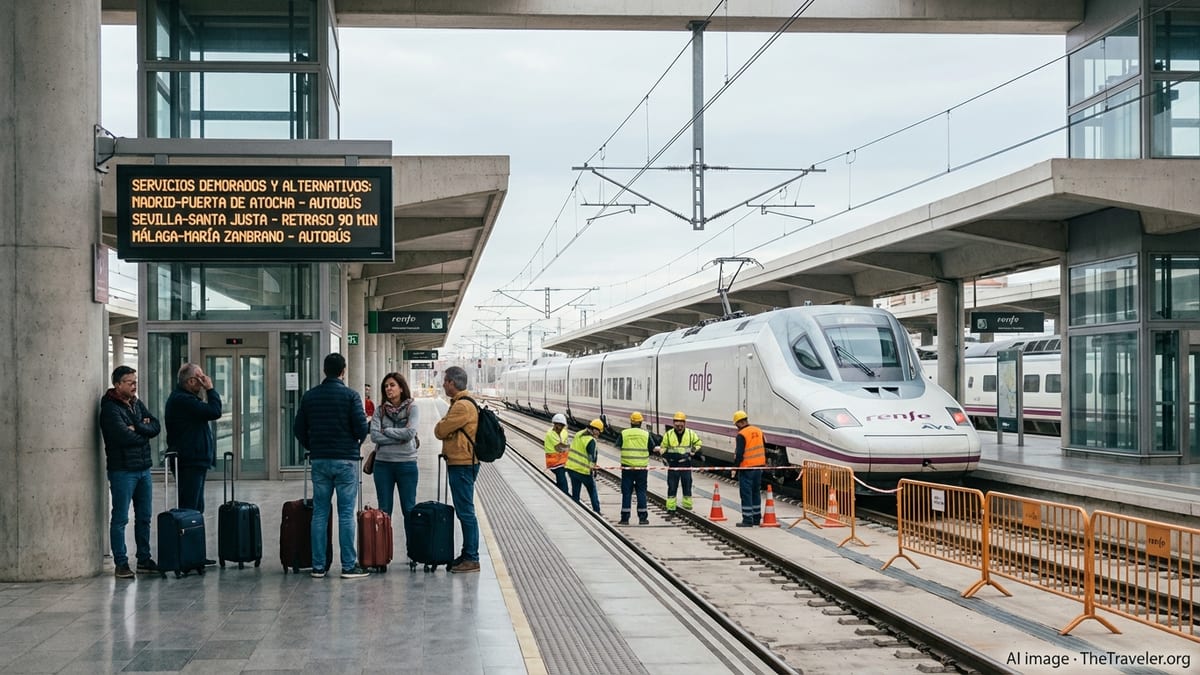
Missile Barrage Hits Transport Lifeline Around Kyiv
Recent reports indicate that Russia’s latest large-scale missile and drone attack on Kyiv and the surrounding region struck not only residential districts and energy facilities but also key transport links. Among the infrastructure affected were railway lines that form part of the critical commuter and long-distance network feeding into the capital.
According to publicly available information from Ukrainian outlets, explosions and debris near the tracks in several districts of Kyiv region led to immediate safety checks and technical inspections overnight. Railway managers introduced emergency limits on train movements where risks of further blasts, unexploded ordnance, or structural damage were suspected.
The strikes came amid a wider campaign against Ukraine’s capital region that caused fatalities and injuries in multiple neighborhoods. Coverage from international and Ukrainian media describes one of the heaviest attacks on Kyiv in recent months, with ballistic and cruise missiles, as well as attack drones, used against targets in and around the city.
Rail infrastructure has frequently been in the crosshairs throughout the full-scale invasion, but the latest attacks underlined again how quickly service can be knocked offline when strikes occur close to dense commuter corridors and main intercity routes.
Emergency Restrictions and Diversions Across Kyiv Region
As information from Ukrainian Railways and regional newsrooms shows, safety restrictions were introduced immediately on several sections of the Kyiv region network. In some corridors, train movements were halted entirely while inspection teams checked the track, power lines, signaling equipment, and nearby structures for blast damage.
To maintain connectivity, dispatchers launched diversion routes for certain long-distance services, routing trains around affected stretches of line. Published timetables showed that these diversions allowed key trains to keep operating, albeit with extended journey times and the possibility of missed intermediate stops.
Commuter rail traffic toward Fastiv and other satellite towns south and west of Kyiv experienced the most significant disruption. Trains were thinned out or rerouted where possible, and operators warned passengers of delays. Publicly available statements indicated that safety considerations took precedence over punctuality until engineers could confirm the full condition of all assets along the routes.
Reports from local media noted that bus connections and private vehicles carried some of the load where rail service was limited. However, rail remains the backbone of regional mobility around Kyiv, so even temporary restrictions left thousands of daily commuters facing longer and less predictable journeys.
Rapid Repairs Help Restore Passenger Services
Despite the scope of the overnight barrage, emergency rail repair crews moved in quickly once mine-clearance and emergency services had assessed the immediate danger. Ukrainian coverage highlights that specialists worked through the dark hours to replace damaged components, check overhead power lines, and restore signaling systems.
By early Monday, Ukrainian Railways indicated that passenger services on most routes in Kyiv region had been restored, though not yet to a fully normal schedule. Trains continued to run with localized speed restrictions where repair work remained in progress or where nearby damaged buildings posed residual risks.
The rail operator signaled that all key stops for long-distance services would remain in place, even on temporarily altered routes. Travelers were advised that delays were likely and that arrival and departure times could shift as dispatchers balanced safety margins with the need to move large numbers of people.
The speed and scale of the repairs fit a pattern seen throughout the conflict, as rail maintenance teams repeatedly rebuild damaged sections in compressed timeframes. Publicly available information on earlier strikes shows that Ukrainian crews have become adept at restoring basic functionality within hours, even after severe damage.
Strategic Importance of Kyiv’s Rail Network
The disruption to Kyiv region railways once again highlighted the strategic role of Ukraine’s rail system in both civilian life and national resilience. Before Russia’s full-scale invasion, the network already ranked among Europe’s busiest, carrying millions of passengers and vast quantities of freight each year.
Since 2022, rail lines radiating from Kyiv have taken on additional importance for evacuations, humanitarian deliveries, and military logistics. According to background material on Ukraine’s rail sector, the broad-gauge network connects the capital with western border hubs where passengers and cargo can transfer toward Poland, Slovakia, Hungary, and Romania.
Because of this central role, strikes that threaten the safe operation of trains near Kyiv reverberate well beyond the metropolitan area. Temporary restrictions can complicate the flow of goods to other regions, slow humanitarian shipments, and make it more difficult for displaced residents to move between cities.
For everyday travelers, the attacks mean a familiar cycle of sudden cancellations, crowded platforms, and uncertainty about when regular service will return. At the same time, the quick reopening of lines after the latest barrage signals how determined rail operators remain to keep Kyiv connected despite the risks.
Continuing Risks for Travelers and Infrastructure
While emergency repairs have restored most train movements in the Kyiv region, rail users still face an environment shaped by recurring air-raid alarms and the possibility of further strikes. Publicly available guidance urges passengers to monitor official timetables and alerts closely, as schedules may change at short notice in response to new security restrictions.
Railway managers routinely coordinate with emergency and civil protection services to decide when trains can safely enter sections of track that might be exposed to falling debris or unexploded munitions. Even when visible damage has been repaired, follow-up inspections and engineering checks are needed to ensure that bridges, embankments, and power systems have not suffered hidden structural harm.
For the wider travel sector, the events around Kyiv underscore the enduring fragility of transport infrastructure in areas subject to frequent air attacks. Airlines, coach operators, and tour companies that include Kyiv in their plans must build in additional buffers and contingency options when moving people in and out of the capital by rail.
Despite these challenges, the restoration of services after the latest strike shows that Ukraine’s rail workers remain capable of bringing key lines back online rapidly. For travelers already in the country or planning future journeys to Kyiv, the network is still functioning, albeit with the constant caveat that conditions can change overnight when new attacks occur.