


My first time connecting through Doha’s Hamad International Airport was a blur of polished marble, sleepy 3 a.m. announcements and a frantic sprint between concourses I could have easily avoided. Since that night I have routed through Doha many times, and the airport has grown into one of the world’s most impressive hubs. It is also a place where a little knowledge goes a long way. Here is what I wish I had known before my first flight through Hamad International Airport, updated to reflect how the airport works today.
Get the latest updates straight to your inbox!
Understanding the Layout Before You Land
The thing that surprised me most on my first transit through Hamad International Airport was how disoriented I felt despite it being a single terminal. Doha does not have Terminal 1, Terminal 2 and so on. Instead you arrive into one large connected building divided into concourses that radiate off a central hall. That central space is hard to miss because it is home to the giant yellow Lamp Bear sculpture, still the airport’s most famous meeting point and a reliable landmark if you get turned around.
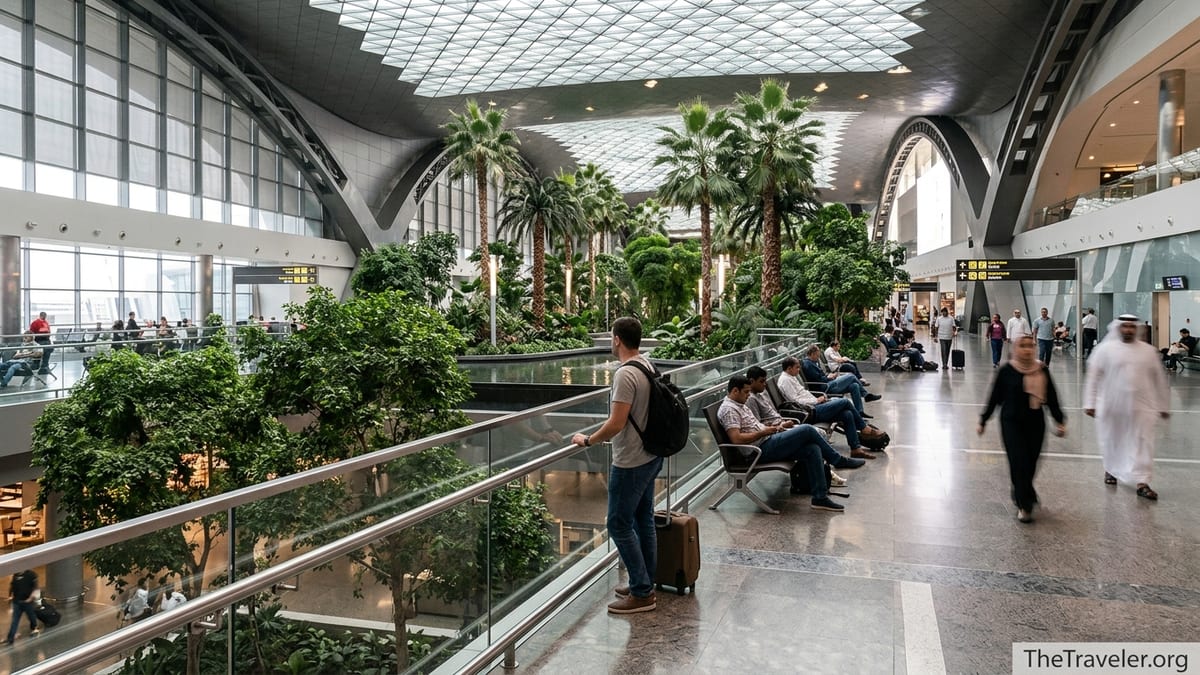
Today the heart of the airport stretches from the original concourses to the newer expansion known as The Orchard, a glass-roofed tropical garden with trees, plants and water features in the central area of the terminal. What matters for you as a first timer is that your next gate could be a short walk off the main hall or a 15 to 20 minute walk if it is at the far end of the extended concourse network. On my first connection I saw “Gate C” and assumed it would be close. It was not. Build that possible walking time into how you plan meals, lounge visits and bathroom stops.
If you arrive on a Qatar Airways long haul flight, there is a good chance you will park at a contact gate and walk straight into the terminal. But some regional flights still use remote stands, in which case a bus will drop you at the terminal entrance. From there you simply follow the purple “Transfers” signs. You do not go through immigration unless you are intentionally entering Qatar. That one fork in the path is the key difference between a smooth transit and accidentally queuing with people headed to baggage claim.
Another detail I wish I had known is that Hamad International is bright, cool and very air conditioned, even at night. If you have a long layover, having a light layer in your carry on makes the difference between comfortably exploring The Orchard and huddling under a flimsy airline blanket near your gate.
How Transfers and Security Really Work
Many first time passengers worry they will need to collect their checked bag and clear immigration for a connection in Doha. In most cases that is not necessary. If all your flights are on one ticket and your bags are checked through to your final destination, your luggage is transferred automatically. After you step off the plane, you follow “Transfers” signs, join the transit security line and emerge airside again without seeing passport control at all.
Transit security at Hamad International is usually focused on cabin baggage only. You pass your backpack and small suitcase through a scanner, walk through a detector and you are done. It is often faster than the initial security check at your departure airport, although late-night waves of flights from Europe and Asia can create short queues. On one recent trip arriving from Paris around midnight, I cleared transit security in under 10 minutes and was walking toward The Orchard while passengers who needed immigration were still in a long, snaking line.
There are exceptions. If you arrive on one airline and depart on another on separate tickets, especially with low-cost or regional carriers, you may need to collect your bags and recheck in. That means leaving the transit area, clearing immigration, checking in again landside and then passing through normal departure security. It can easily take an hour or more. This is why I now avoid tight self-made connections in Doha and try to keep all segments on Qatar Airways or its oneworld partners when possible.
One practical tip: look at your next boarding pass as soon as you land. If there is no gate number yet, monitors around the transfer security exit and the big screens near Lamp Bear will show it once assigned. Hamad International often finalises gates within 90 minutes of departure. On my first trip I camped at the first free seat I saw and then discovered my next flight left from the opposite side of the airport. Now I wait to see which concourse my gate will use and then base myself nearby, especially on short layovers.
Making the Most of a Short or Long Layover
Your experience in Doha changes dramatically depending on whether your layover is two hours, six hours or overnight. On a tight connection of under two hours, I treat Hamad International like any large hub. I move directly to my next concourse, note the walking time, and then grab a quick coffee or water near the gate. It helps that Qatar Airways often begins boarding wide body flights early, sometimes 45 minutes or more before departure, so being nearby avoids a last minute dash.
Once your layover stretches beyond four or five hours, you have options. The most basic one is simply to explore the terminal itself. The Orchard has become the unofficial living room of the airport, with trees, retail stores and seating clusters where travelers nap, chat or scroll through their phones. I have spent a full daylight layover just wandering from The Orchard down to the older concourses, people watching near the Lamp Bear, and sampling a shawarma at one of the food courts. Prices here are airport typical: expect to pay roughly the equivalent of 12 to 18 US dollars for a sit-down meal and 4 to 6 dollars for a coffee at an international chain.
If you are connecting on Qatar Airways and have a layover of at least six hours, it can be worth checking whether you qualify for a Doha stopover program or a guided city tour. Some passengers on certain fare types can access discounted or even complimentary hotel stays in the city plus the necessary visa to leave the airport. Others can book a half day transit tour that picks you up inside the terminal, processes your visa, drives you around landmarks like the Corniche and Souq Waqif, and returns you to the airport a couple of hours before your onward flight. The main lesson from frequent flyers is to book these in advance when possible and never choose a departure tour time too close to your next flight.
For long overnight layovers, decide early if you want to leave the airport at all. With 10 or 12 hours between flights you could reasonably enter Qatar, sleep in a hotel room in central Doha for a few hours, and return refreshed. A mid range hotel near a metro station might cost between 80 and 150 US dollars per night depending on the season and events in the city. The alternative is to stay airside and pay for a sleep pod, transit hotel room or lounge access. On one winter trip I had a nine hour overnight connection and tried both approaches on different journeys. I woke up far more rested after a proper bed in the city, but staying airside was more convenient when my onward flight left before dawn.
Sleeping, Quiet Spaces and Transit Hotels
If you have never tried to sleep in an airport before, Doha is one of the better places to attempt it, but only if you know your options. On my first transit I walked laps between gates before eventually curling up on a hard bench under bright lights. Only later did I learn about the quiet rooms. These are designated spaces in several parts of the terminal with reclined chairs, softer lighting and a generally calmer atmosphere. They are free to use and tend to fill up during the night wave of flights from Asia and Europe, so it pays to seek them out early if you have an overnight layover.
For something more private, Hamad International has a mix of paid sleep pod lounges and a terminal hotel located airside. The sleep pod facilities offer individual or shared pods that can be booked in blocks of a few hours. Recent reports from travelers suggest base prices around the equivalent of 70 to 80 US dollars for a four hour stay in a single pod, with additional hours priced on top. The pods come with a flat sleeping surface, power outlets and storage, often with basic amenities. They are not quite a hotel room, but if you just need darkness and a horizontal surface for a few hours they beat trying to sleep upright in a chair.
The airside transit hotel, currently branded as the Oryx Airport Hotel, offers proper rooms with beds and en suite bathrooms right inside the terminal. You can usually book stays in blocks such as 6, 12 or 24 hours. Prices fluctuate, but it is common to see starting rates around 150 to 200 US dollars for a short daytime block, rising for longer or peak periods. On one seven hour layover between Sydney and London I chose a six hour block here. The room itself was simple for the price, but having a hot shower, a real bed and no need to clear immigration or recheck in was worth the premium.
It is also worth investigating whether you qualify for complimentary transit accommodation through Qatar Airways when your layover falls within certain windows and booking classes. Some itineraries with long connections in Doha allow eligible passengers to stay in a partner hotel in the city free or at a heavily discounted rate, including visa arrangements. The conditions are detailed and can change, so I now check the airline’s transit accommodation page while planning any itinerary that includes a layover of eight hours or more.
Food, Shopping and Lounges You Actually Want to Use
Hamad International’s reputation as a shopping and dining hub is largely deserved, but as a tired transit passenger your priorities may be more modest than browsing luxury boutiques. The main duty free areas around the central hall and The Orchard focus on perfumes, electronics, watches and premium brands. Prices on big name electronics are not dramatically lower than in major city stores, but you may find occasional promotions, especially on headphones and travel gadgets.
For everyday food there is a mix of global fast food brands and sit down restaurants scattered through the concourses. On a recent daytime layover I paid the equivalent of about 10 US dollars for a simple sandwich and drink at a cafe near the C gates, while a hot meal with table service in the Orchard area ran closer to 20 to 25 dollars. If you are trying to keep costs down, look around before settling on the first option you see near your gate. Prices can vary, and some smaller outlets tucked down side corridors serve more generous portions for less money.
If you fly business class or hold oneworld Sapphire or Emerald status, your Doha transit experience can revolve around the big Qatar Airways lounges. The Al Mourjan Business Lounge, in particular, functions almost like its own mini terminal, with buffet dining, quiet zones, showers and sleeping chairs. It can be a haven on long overnight layovers. Even in economy, though, you can buy access to independent lounges for a flat fee, often between 60 and 80 US dollars for several hours, which includes buffet food, soft drinks, showers and sometimes basic nap areas. I tend to compare that price with what I would otherwise spend on separate meals, drinks and a shower in the public areas. On connections longer than six hours, lounge access often comes out as better value.
One thing I wish I had known earlier is that free drinking water fountains are not always obvious in the most crowded areas. Airport security in Doha allows you to bring an empty bottle through, then refill it inside the terminal. On my first trip I kept buying bottled water at convenience stores until another traveler pointed me toward a fountain hidden near the bathrooms. Now I always keep a collapsible bottle in my bag and fill it before heading to a quieter gate.
Visas, Leaving the Airport and Seeing Doha
The biggest mental hurdle for many first time passengers is whether they are allowed to leave the airport during a layover. In transit, you do not need a visa just to remain airside and catch your next flight. To step into the city, though, you either need to be from a nationality that receives visa free entry or visa on arrival, or you need a specific transit or stopover visa linked to your flight or tour booking.
Qatar currently allows many nationalities, including citizens of the United States, much of Europe and several other regions, to enter visa free for short stays. Others can obtain a visa on arrival or apply in advance. For passengers flying on Qatar Airways with layovers of around six hours or more, there is often the option of a dedicated transit visa or stopover program that lets you stay in the country for up to four days. Some city tours arranged through the airline’s Discover Qatar arm include the visa cost in the tour price or allow you to purchase a short term transit visa at a dedicated desk inside the airport.
In practice this means that if you have, for example, a 10 hour daytime layover and meet the entry requirements, you can clear immigration, take a taxi or metro into the city, walk the Corniche, explore Souq Waqif, have a meal, and return to the airport with time to spare. A taxi into central Doha generally costs a modest amount by international standards, while the metro from the airport station is even cheaper if you are comfortable using public transit. On a recent connection I paid the equivalent of about 7 US dollars for a metered taxi ride to a hotel near the Msheireb downtown area, and took the metro back for a fraction of that price.
The crucial point is to confirm your visa situation before you fly, not at 3 a.m. when you are tired and tempted by the idea of fresh air. Visa policies can change and conditions for transit visas, tour-linked permits and hotel stopover packages are updated from time to time. I now treat the ability to leave the airport as a bonus rather than something I assume. If you know you absolutely want to explore Doha, plan your flights, stopover booking and visa eligibility together rather than leaving it to chance at the transit desk.
Practical Tips I Wish Someone Had Told Me
There are a few small details about Hamad International that would have saved me stress on my first trip. The first is how early some long haul flights begin boarding. For major routes to Europe, North America and Asia, boarding can start 45 to 50 minutes before departure, and final calls come earlier than at some other hubs. On that first connection I assumed I could turn up 20 minutes before departure and found a long line already at the gate. Now I aim to be physically near my gate at least an hour ahead, especially if the flight uses a bus gate where boarding takes extra time.
Another detail is the role of prayer rooms and family areas. Throughout the terminal, you will find clearly signposted prayer rooms and family zones with play equipment. During peak times these can be calmer spaces to sit with children than the main concourse seating. On one evening layover with a jet lagged toddler, slipping into a family room near the B gates for an hour made our connection much more manageable. Knowing these spaces exist helps you avoid feeling trapped in the busiest sections of the terminal.
Connectivity is generally good, with free airport Wi Fi available throughout the building. During major travel periods the network can slow down, especially around the central waiting areas, but I have found it stable enough to make calls, stream light video and work from my laptop. There are also plenty of charging points, though not always exactly where you want to sit. I now travel with a small multi socket adapter and a longer cable so I am not stuck crouching next to a pillar to charge my phone.
Finally, Hamad International is a 24 hour airport but individual outlets have their own opening hours. In the early hours of the morning I have seen some cafes and shops closed or running on reduced service, while others remain open. If you land late at night and see somewhere selling food you want, it can be wise to buy it then rather than assume an identical option will be open at 4 a.m. near your gate.
The Takeaway
Looking back at my first bleary eyed walk through Hamad International Airport, I realise how much more relaxing that connection could have been with a bit of planning. Today the airport is even larger and more polished, but the core lessons remain the same. Understand the basic layout before you land so you are not surprised by a long walk to a distant gate. Know that standard transfers stay airside and usually involve only a simple security check, with immigration reserved for those who choose to enter Qatar.
Decide in advance how you want to spend a long layover, whether that means sleeping in a quiet room, booking a sleep pod or transit hotel, investing in lounge access, or arranging a stopover in the city. Check your eligibility to leave the airport ahead of time and treat the chance to see Doha as a welcome extra rather than a guaranteed right. Above all, build in small buffers of time at each stage. Hamad International rewards the unhurried traveler. With these expectations set, your first flight through Doha is more likely to be a calm introduction to one of the world’s major aviation hubs instead of a rushed learning curve.
FAQ
Q1. Do I have to go through immigration for a connecting flight in Doha?
In most cases no. If your bags are checked through and you are on a single ticket, you simply follow the transfer signs, clear transit security for your hand luggage and remain airside without passing immigration.
Q2. How much time do I need to connect at Hamad International Airport?
Qatar Airways sells connections as short as 45 minutes, but for a first time transit it is more comfortable to have at least 90 minutes, especially if you are arriving on a long haul flight or need time to navigate between distant concourses.
Q3. Can I leave the airport during a layover in Doha?
Yes, provided you meet Qatar’s entry requirements. Many nationalities receive visa free entry or visa on arrival, while others may use a transit or stopover visa linked to a Qatar Airways booking or a Discover Qatar city tour.
Q4. Are there free places to sleep inside Hamad International Airport?
Yes. The airport has free quiet rooms with reclining chairs and dimmed lighting in several concourses. These are first come, first served and are most popular overnight, so arrive early if you want a spot.
Q5. How much do sleep pods or the transit hotel cost in Doha airport?
Prices vary by season and pod or room type, but expect a single sleep pod to start around 70 to 80 US dollars for a four hour block and the airside transit hotel to start roughly around 150 to 200 US dollars for a short stay.
Q6. Is it worth booking a lounge during a long layover?
For layovers of six hours or more, paying for lounge access can be good value compared with buying separate meals, drinks and a shower in the public areas, especially if you plan to rest, work or freshen up between flights.
Q7. How early does boarding start for Qatar Airways flights in Doha?
Boarding for major long haul flights often starts 45 to 50 minutes before departure, and gates can close earlier than some travelers expect, so aim to be near your gate at least an hour before your scheduled departure time.
Q8. Is the Wi Fi at Hamad International Airport reliable?
The airport offers free Wi Fi throughout the terminal. Speeds can slow at peak times around busy central areas, but it is usually good enough for browsing, messaging and light streaming.
Q9. What are typical food prices inside the airport?
Expect to pay airport level prices: around 10 to 15 US dollars for a simple meal at a fast food outlet or cafe, and 20 to 25 dollars or more for a sit down restaurant in the central or Orchard areas.
Q10. How can I find my gate quickly when I land in Doha?
Check the monitors immediately after transit security and note the concourse letter as well as the gate number. Use the Lamp Bear sculpture and The Orchard as central landmarks, then follow overhead signs toward your concourse, allowing extra walking time if your gate is at the far end.