


More news on this day
Volcanic ash from Indonesia’s Anak Krakatau eruption has forced widespread disruption at Jakarta’s Soekarno-Hatta International Airport, with Emirates cancelling at least one Jakarta flight and Etihad Airways warning of significant delays and schedule changes.
Get the latest news straight to your inbox!
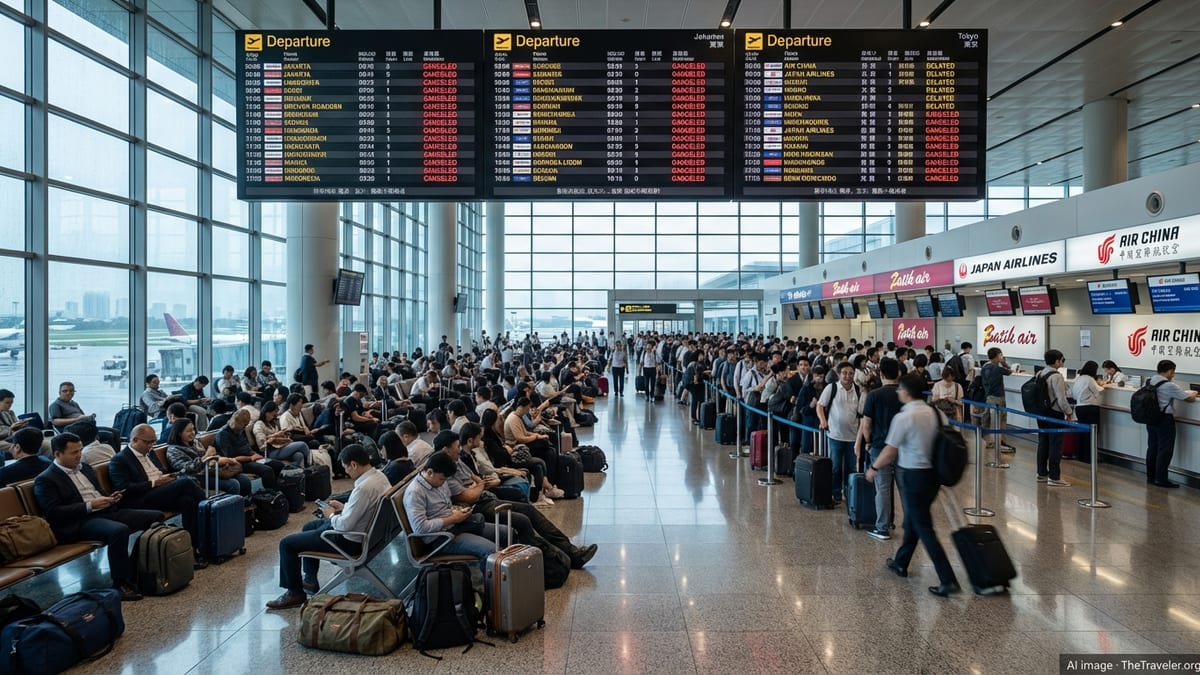
Volcanic ash triggers rolling closures at Jakarta hub
Jakarta’s Soekarno-Hatta International Airport, one of Southeast Asia’s busiest aviation hubs, has faced repeated temporary closures on September 6, 2026 after ash from Anak Krakatau drifted across key flight paths. Notices to airmen indicate that the airport initially suspended operations from around 1:30 a.m. local time following positive “paper test” results that detected volcanic ash particles in the airfield environment. Subsequent tests led to extensions of the shutdown window through the morning and into the afternoon as ash concentrations remained above safe thresholds for jet engines.
According to publicly available data from Indonesia’s transport ministry and airport operator InJourney Airports, more than 200 scheduled movements at Soekarno-Hatta were cancelled during the early morning period alone, with disruption later widening to hundreds more flights as the closure window was lengthened. International and domestic routes were both affected, including links to Kuala Lumpur, Singapore, Hong Kong, Sydney, Seoul, Doha and Amsterdam, alongside a range of Indonesian destinations.
Reports from regional and international media indicate that at various points in the day, authorities extended the closure through at least 5:30 p.m. local time as monitoring stations continued to detect ash in the vicinity of the airport. Passenger numbers impacted are estimated in the tens of thousands, with some coverage citing figures approaching or exceeding 20,000 travelers caught up in the shutdown at Soekarno-Hatta alone.
The disruption comes as Anak Krakatau, located in the Sunda Strait between Java and Sumatra, has entered a more active phase, ejecting ash clouds that have drifted toward the Jakarta area. While the volcano lies over 150 kilometers from the capital, prevailing winds and atmospheric conditions have carried ash to altitudes and corridors intersecting key air routes serving the city.
Emirates cancels Jakarta service as disruption widens
Emirates, which operates multiple daily services between Dubai and Jakarta, has cancelled at least one Jakarta-bound flight as a direct result of the volcanic ash shutdown. Updates shared via airline communication channels and passenger reports suggest that an overnight departure from Jakarta to Dubai scheduled around shortly after midnight local time did not operate after the airport ordered a halt to outbound movements.
Passengers booked on affected Emirates services have been advised through standard disruption channels, including email and app notifications, to check the latest status of their flights before travelling to the airport. The carrier is offering rebooking on the next available services once operations resume, subject to seat availability, in line with its general policy for weather and airspace-related disruptions.
Publicly available flight monitoring data on Sunday showed irregularities in Emirates’ usual Jakarta pattern, including cancellations and extended ground times for aircraft planned to operate into or out of Soekarno-Hatta during the ash-affected period. While some services have been tentatively retimed to operate later in the day, their exact departure and arrival times remain dependent on how quickly conditions improve in the Jakarta flight information region.
Emirates has not issued a separate dedicated travel waiver specific to the Anak Krakatau events at the time of writing, but carriers commonly align their handling with broader regional disruption policies, prioritising safety and regulatory compliance when volcanic ash is present along their routes.
Etihad delays and operational impacts from Abu Dhabi
Etihad Airways, which connects Abu Dhabi and Jakarta with a regular daily service, is also experiencing knock-on effects from the volcanic ash closure. Airline information and third-party tracking services indicate that flights scheduled to arrive in Jakarta on Sunday have been subject to substantial delays, holding, or potential diversions while Soekarno-Hatta’s operational status remains restricted.
With the airport closed for significant portions of the day, Etihad’s inbound flight from Abu Dhabi has had limited options to land within its originally planned arrival window. The airline has therefore warned customers of extended delays and possible schedule changes, advising them to monitor flight status tools and contact customer service if their travel is time-sensitive or involves onward connections.
The disruption also affects aircraft rotations in Abu Dhabi, with delayed or cancelled Jakarta sectors likely to cascade into timetable changes on subsequent flights using the same aircraft and crew. As with Emirates, Etihad’s priority is to avoid operating into areas contaminated by volcanic ash, which can cause serious engine damage and compromise aircraft safety if ingested at cruising or approach altitudes.
Publicly available information on Sunday afternoon showed long on-ground times and altered schedules for several carriers serving Jakarta from the Gulf, underlining the broader impact of the Anak Krakatau eruption on traffic between Southeast Asia and the Middle East.
Regional airlines adjust schedules and offer waivers
The impact of Anak Krakatau’s ash plume has not been limited to Gulf carriers. Malaysia’s national news agency and other regional outlets report that Malaysia Airlines and Batik Air have cancelled at least 20 flights on Malaysia Jakarta routes, reflecting the combination of airspace constraints and the temporary closure of Soekarno-Hatta’s runways. A number of Singapore, Hong Kong and Australia linked flights have also been suspended, delayed or re-timed as airport slots are reshuffled.
In response to the evolving situation, some airlines have introduced special ticketing arrangements. Published guidance from Cathay Pacific, for instance, outlines flexible rebooking and refund options for customers booked to or from Jakarta over the affected period, allowing itinerary changes without standard penalties for travel disrupted by the volcanic activity.
Airport authorities report that both domestic and international terminals are crowded as passengers wait for updated departure times, rebooking assistance and accommodation support where required. Ground handling teams have set up additional information counters and coordination posts to manage queues, reroute baggage and assist travelers whose plans have been thrown into disarray by the sudden closure.
Unlike disruptions caused by local weather phenomena such as thunderstorms, volcanic ash events can have a wider geographic footprint and longer recovery timelines, since aircraft and ground equipment may require additional inspections before returning to service. This often leads to a slower ramp-up of operations even after an airport formally reopens.
Safety protocols guide response as monitoring continues
Indonesia’s transport authorities emphasize in their publicly released statements that flight safety takes precedence over schedule integrity when volcanic ash is present near major airports. Volcanic particles can abrade cockpit windows, contaminate cabin air systems and, most critically, melt and re-solidify inside jet engines, potentially leading to loss of thrust. As a result, international aviation standards call for strict avoidance of ash clouds, even at relatively low concentrations.
Technical guidance from global aviation bodies indicates that ash encounters have historically caused multiple in-flight engine shutdown events worldwide, prompting the development of detailed contingency procedures, including rerouting, temporary airspace closures and the establishment of ash advisory centers. Soekarno-Hatta’s rolling closure and the grounding of large numbers of flights reflect the application of these protocols to the Anak Krakatau eruption.
Meteorological and volcanology agencies across the region continue to track plume height, direction and density using satellite imagery, radar and ground observations. Their assessments feed into air navigation advisories that airlines such as Emirates, Etihad and their regional counterparts use when deciding whether to operate, divert or cancel flights into Jakarta.
Travelers with upcoming itineraries to or through Jakarta in the coming days are being urged in airline notices and media reports to check their flight status frequently, allow extra time for rebooking, and consider flexible travel plans in case ash conditions persist or recur as Anak Krakatau’s activity evolves.
Antara: Hundreds of flights disrupted at Soekarno-Hatta after Anak Krakatau eruption
Bernama: Anak Krakatau eruption temporarily closes Soekarno-Hatta International Airport
Cathay Pacific: Special ticketing guidelines for Jakarta flights amid volcanic activity