


More news on this day
San Francisco International Airport recorded a fresh wave of travel disruption with seven flight cancellations and 138 delays, affecting services operated by American Airlines, Alaska Airlines, KLM, All Nippon Airways, United Airlines and their partners and sending schedule ripples to cities including Seattle, London, Amsterdam and Brisbane.
Get the latest news straight to your inbox!
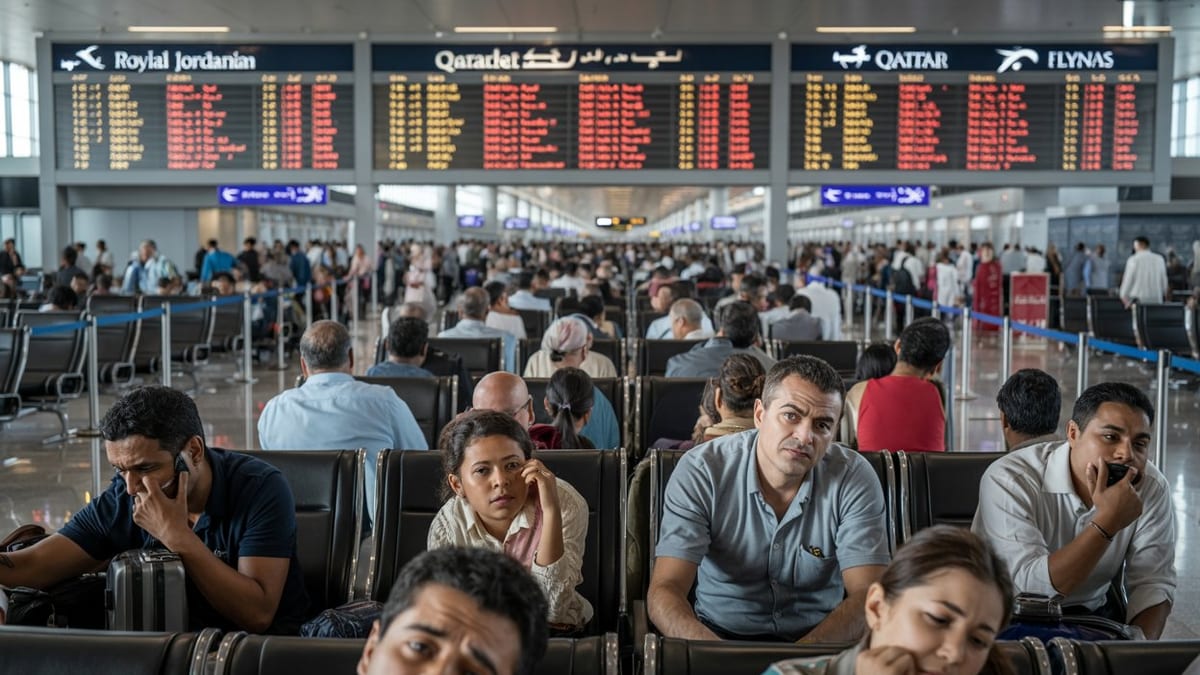
Operational Strains Converge at a Key West Coast Hub
Publicly available flight-tracking and airport status boards for San Francisco International on Monday show a concentrated cluster of delays across domestic and international departures, alongside a smaller set of outright cancellations. The pattern highlights how even a modest number of scrubbed flights can compound congestion when combined with rolling delays across a busy operating day.
San Francisco functions as a central West Coast gateway for major U.S. and foreign airlines, which means schedule disturbances tend to magnify quickly. Delayed pushbacks in San Francisco translate into late arrivals at onward hubs, compressing ground times and narrowing the margin for on-time departures in subsequent rotations.
Available data indicates that the bulk of affected flights fall into the “late” or “very late” category rather than being canceled outright. While cancellations remain a headline measure of disruption, clustered delays can be equally challenging for travelers, especially when they generate missed connections and last-minute rebookings across multiple carriers in shared alliance networks.
The current disruption at San Francisco also follows a spring period marked by intermittent low ceilings and congestion programs at several U.S. hubs, conditions that can periodically slow arrival and departure rates and add pressure to airline schedules already running near capacity.
American, Alaska, United and Partners Shoulder Domestic Impact
Domestic operations at San Francisco appear to be bearing much of the immediate strain, with American Airlines, Alaska Airlines and United Airlines featuring prominently among delayed services. These carriers collectively operate a dense schedule of short and medium-haul flights that turn aircraft multiple times per day, making them particularly sensitive to even small timing shifts.
Real-time tracking information for Alaska flights into and out of San Francisco, for example, shows padding around departure and arrival banks that can shrink quickly when earlier segments depart late or encounter airborne holding. When such banks compress, a gate previously scheduled for a 40-minute turn may effectively shrink to 20 minutes, heightening the risk of further delay.
United’s operations, anchored by its hub at San Francisco, are also exposed to the knock-on effects of disruption. High-frequency routes to cities such as Denver, Chicago and Los Angeles depend on tight connections and shared aircraft, so delays on one leg can propagate rapidly across the system. American, while not hubbing at San Francisco, connects the airport into its broader network through key U.S. gateways where late arrivals can interfere with onward departures.
For travelers on these domestic routes, the practical impact often comes in the form of rolling schedule changes. Departure times that initially slip by 20 or 30 minutes can, over the course of an afternoon, extend into longer waits as carriers juggle aircraft and crew assignments to keep as much of the program operating as possible.
International Routes to London, Amsterdam and Asia Feel the Shockwaves
The disruption at San Francisco is also visible on international sectors, particularly long-haul services that link the Bay Area to Europe and Asia. United’s nonstop to London Heathrow, KLM’s services to Amsterdam and All Nippon Airways’ flights to Tokyo are among the operations that can be affected when departure banks from San Francisco slip out of sync with transoceanic slot times.
Publicly available flight-status information for San Francisco to London on Monday reflects how even a single delayed widebody departure can exert outsized influence, tying up gates built for prolonged international handling and compressing turnaround windows for incoming flights. Delays on transatlantic services also tend to spill over into overnight operations in Europe, where aircraft are scheduled to return to the air with relatively short ground times.
Amsterdam, another major European hub, can experience similar knock-on pressure. When an outbound San Francisco flight departs late, the arrival into Amsterdam may collide with peak morning traffic, increasing the likelihood of holding patterns, slower taxi times and gate changes. That, in turn, can complicate onward connections on intra-European legs that feed secondary cities across the continent.
In Asia, carriers like All Nippon Airways rely on precisely timed arrivals into Tokyo to maintain coordinated banks of departures across Japan and the broader region. A late arrival from San Francisco can break those carefully constructed patterns, forcing rebookings onto later flights and occasionally stranding passengers overnight when the final departure of the day has already closed.
Secondary Hubs and Long-Haul Links to Seattle and Brisbane
The current pattern of disruption is not limited to marquee transatlantic and transpacific routes. Regional and secondary hubs such as Seattle are also affected as aircraft rotate through San Francisco before continuing north. Delays into Seattle can create a cascade of late departures on shorter segments that serve smaller communities throughout the Pacific Northwest and Alaska.
Because many flights between San Francisco and Seattle operate on narrowbody aircraft that complete several legs per day, a delay on an early segment can echo across the schedule well into the evening. This dynamic can be particularly challenging for travelers on the final flights of the day, when alternative same-day options may be limited.
Long-haul services to destinations such as Brisbane can feel the effects as well, even when the immediate cause of disruption lies thousands of kilometers away. When aircraft slated for South Pacific rotations arrive late into San Francisco from earlier legs, airlines must decide whether to accelerate turnarounds, delay departure or, in rare cases, swap aircraft and crews. Each of these choices carries operational trade-offs and potential customer impacts.
For travelers headed to or from secondary hubs and long-haul points, monitoring the status of inbound aircraft has become an increasingly important part of trip planning. Publicly accessible flight-tracking platforms now allow passengers to see whether the aircraft operating their flight is itself arriving late, providing an early signal that schedules may shift.
Passenger Options and Planning Amid Ongoing Volatility
The latest disruptions at San Francisco underscore the continued volatility of global air travel, even in the absence of headline-grabbing events. With multiple large carriers sharing the airport as a key node in their networks, travelers can face a patchwork of carrier policies and rebooking options when schedules go awry.
Consumer information from airlines, third-party trackers and airport dashboards consistently points to several practical steps for navigating days with elevated delays and cancellations. These include favoring earlier departures, allowing longer connection times and remaining flexible about routing options, particularly when transiting complex hubs like San Francisco.
Travel-management companies and corporate travel departments are also adapting by building more buffer time into itineraries and encouraging the use of mobile alerts. When disruptions like those seen at San Francisco propagate across networks to cities such as Seattle, London, Amsterdam and Brisbane, rapid awareness of schedule changes can help travelers secure scarce seats on alternative flights.
As airlines refine operational plans and adjust schedules, San Francisco is likely to remain a bellwether for broader system stress. The combination of seven cancellations, more than a hundred delays and a dense web of domestic and international connections illustrates how interconnected modern air travel has become, and how quickly local disruptions can evolve into global challenges for passengers and airlines alike.