

Saudi Arabia is transforming fast, welcoming leisure travelers alongside pilgrims and business visitors. For first-time visitors, the mix of deep tradition and rapid modernization can feel both exciting and unfamiliar. Understanding the country’s rules, social norms, and practical logistics before you arrive will help you travel with confidence and respect, and make the most of your time in the Kingdom.
Visas, Entry Rules and When to Visit
Saudi Arabia has progressively expanded its tourist visa program in recent years, but requirements still vary based on your nationality, residency, and purpose of travel. Many travelers are eligible for an electronic tourist visa, applied for online in advance, which generally allows multiple entries and short stays spread over a year. Citizens and residents of Gulf Cooperation Council countries benefit from particularly streamlined procedures, and some foreign residents in the Gulf can also apply for Saudi e-visas tied to their residence permits, provided their documents retain several months of validity.
In addition to tourist visas, pilgrims traveling for Umrah or Hajj must follow separate procedures. Tourist visas usually permit Umrah outside of the core Hajj season, but they do not automatically grant Hajj access, which is tightly regulated via a quota and licensing system. Travelers who are neither Muslims nor pilgrims should be aware that access to the holy cities of Mecca and the central areas of Medina remains restricted; road signs clearly indicate where non-Muslims must turn away.
Entry rules currently do not include broad Covid-specific testing or quarantine requirements for most travelers, although health checks and digital health apps may still be referenced in some official guidance. Passport validity is critical: six months of validity beyond your planned departure is a common minimum, and some residency-based visas require proof that your residence card is valid for at least three months. Airlines often check this before boarding, and travelers who arrive without the proper visa will almost always be refused entry and returned on the next flight at their own expense.
Saudi Arabia is a large country with distinct climate zones, but most visitors find the cooler months from roughly November to March the most comfortable. Summer temperatures in Riyadh and the interior can climb above 45 degrees Celsius, making midday sightseeing difficult. Coastal cities such as Jeddah and Dammam are humid in summer, while highland destinations like Taif and Abha stay comparatively cooler. If your trip coincides with Ramadan or Hajj, expect different opening hours, heavier demand on transport, and stricter controls around key religious sites.
Culture, Religion and Local Etiquette
Saudi Arabia is shaped by Islam in ways that touch almost every aspect of daily life. Five times a day, the call to prayer echoes across cities and towns; practicing Muslims will pause for worship, and some smaller businesses may close briefly. Large supermarkets, malls, and many restaurants now tend to stay open, but it is courteous to avoid loud behavior near mosques and to be patient if service slows around prayer times. Friday is the main weekly holy day, with many government offices and smaller businesses closed.
Respect for religion and the royal family is taken seriously, and criticism of religious figures, religious practices, or the state can have legal consequences. Online posts, social media comments, and even old messages may be scrutinized if you face an investigation. Travelers should avoid discussing sensitive political topics in public and should never photograph sensitive facilities such as military bases, government complexes, or security checkpoints.
Gender interaction and personal space are guided by conservative social norms, although there has been visible relaxation in recent years. Public displays of affection are generally frowned upon and can attract unwanted attention or, in more formal settings, official warnings. Mixed-gender groups of friends are increasingly common in major cities, especially at entertainment venues, but behavior that might pass unnoticed elsewhere can be interpreted as inappropriate in Saudi Arabia. When in doubt, err on the side of formality and reserve.
Hospitality is a cornerstone of Saudi culture, and visitors are often struck by how quickly locals extend invitations for coffee or a meal. If invited into a home or a more traditional setting, accept refreshments graciously, remove your shoes when others do, and be prepared for generous servings. It is polite to accept at least a small taste of what is offered and to compliment the host. When greeting people, use the right hand, and wait to see whether a member of the opposite sex extends a hand before offering yours; if not, a verbal greeting and a slight nod are appropriate.
Dress Code and Public Decency Rules
Saudi Arabia’s dress expectations have become more flexible, particularly in larger cities and tourist areas, but they remain modest by global standards and are backed by public decency regulations. Women visitors are no longer required by law to wear a black abaya or cover their hair, yet clothing should be loose enough to avoid clinging to the body and should cover shoulders, cleavage, and knees as a minimum. Maxi dresses with sleeves, long skirts, loose trousers, and tunic-style tops are all common and practical choices that align with local expectations.
Men should also dress modestly. Shorts above the knee, sleeveless shirts, and clothing with provocative images or language can be viewed as disrespectful, especially in conservative neighborhoods or smaller towns. In shopping malls and public promenades, security staff or police may ask visitors to adjust clothing if it is deemed immodest. Swimwear should be limited to hotel pools or designated beach resorts; away from such spaces, both men and women should cover up.
Saudi public decency rules cover behavior as well as clothing. They typically prohibit public drunkenness, overtly affectionate behavior in public, playing music very loudly in residential areas, and photographing people without consent. Taking pictures of families, women who are strangers, or children is especially sensitive, even in tourist sites. When in doubt, ask politely before raising your camera or phone, and be prepared to accept a refusal without argument.
These rules are enforced by regular police rather than the once-dominant religious police, whose powers have been sharply curtailed. Enforcement can vary between cities and neighborhoods, but tourists should assume that violations can lead to on-the-spot fines. Adopting a modest, low-key style of dress and behavior is both a sign of respect and the simplest way to avoid problems.
Safety, Laws and Social Sensitivities
Saudi Arabia is generally safe for visitors, with relatively low rates of street crime compared with many major global destinations. Petty theft does occur, especially in crowded areas and during large gatherings, but most travelers report feeling secure walking in busy districts after dark. Standard precautions remain important: keep valuables discreet, use hotel safes where available, and be cautious about sharing your itinerary or personal details with strangers.
Local laws, however, can be significantly stricter than many travelers are used to, and penalties for violations can be severe. Drugs are strictly illegal, and possession of even small amounts of narcotics can lead to long prison sentences. Electronic cigarettes and vaping products may be restricted or confiscated, and you should not attempt to bring in substances that could be interpreted as recreational drugs or cannabis derivatives, even if they are legal at home.
Alcohol remains tightly controlled and officially prohibited for the vast majority of residents and visitors, including tourists. Reports have highlighted the existence of a tightly regulated store in Riyadh serving certain non-Muslim foreign residents who meet stringent criteria, but these rules do not extend to ordinary travelers. You should not attempt to bring alcohol into the country, buy it on the black market, or drink in public. Doing so can result in arrest, fines, and deportation, and claiming ignorance of the law offers little protection.
Saudi law criminalizes same-sex sexual activity and does not recognize same-sex relationships or gender expression that diverges from traditional norms. Public promotion of LGBTQ identities, symbols, or events can also attract official scrutiny. LGBTQ travelers do visit the country, but they typically maintain a low profile, avoid public discussion of their identity, and travel with an awareness of the legal risks. If you fall into any category that could be considered vulnerable under local law, a conservative approach to behavior and online activity is essential.
Women Travelers and Solo Exploration
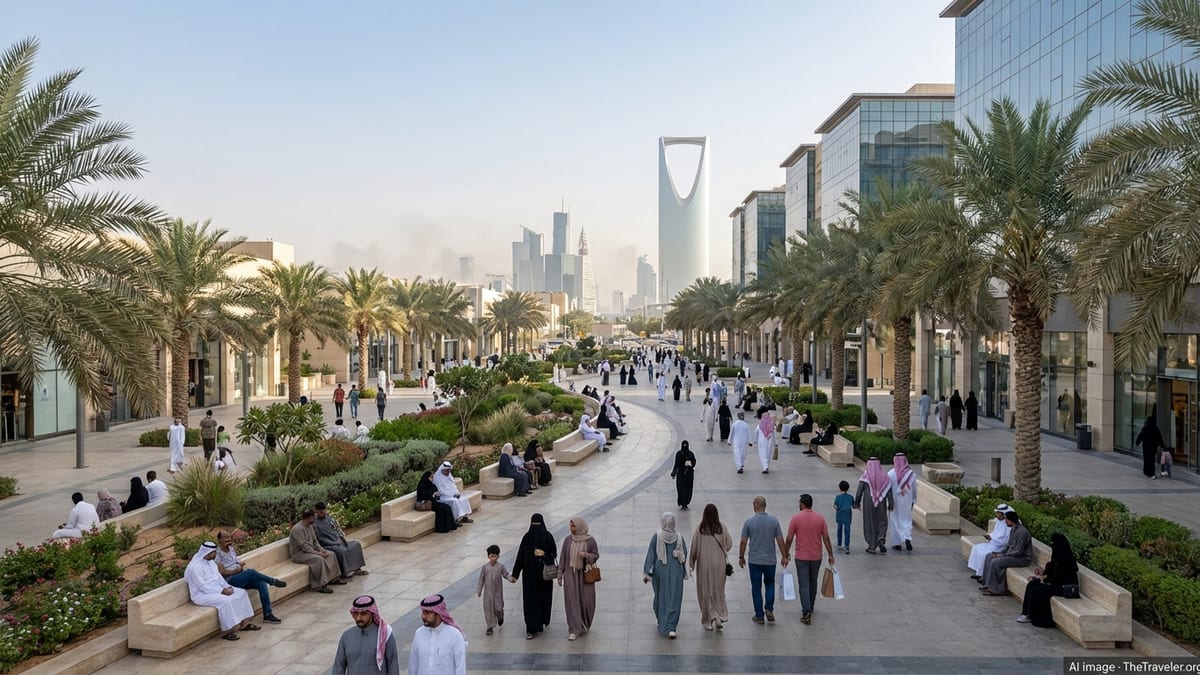
The status and mobility of women in Saudi Arabia have changed significantly over the past decade, and women visitors now enjoy far more freedom of movement and access to services than before. Women can drive, obtain hotel rooms in their own name, and move around major cities without a male guardian, and mixed-gender spaces such as cafes, cinemas, and entertainment districts are increasingly common. For many visitors, the sight of families and groups of friends relaxing together in public venues can feel surprisingly modern compared with previous perceptions of the Kingdom.
Solo women travelers generally report feeling physically safe, especially in urban centers like Riyadh, Jeddah, and the resorts of the Red Sea coast. Harassment in public does occur, as in any country, but it is not typically tolerated and can draw attention from security guards or police if reported. Modest clothing, confident body language, and staying in reputable accommodations can all help reduce unwanted interactions. Using ride-hailing apps rather than informal taxis can also add a layer of comfort and traceability.
Despite reforms, some guardianship-related practices persist, particularly for Saudi women or dual nationals. In rare cases, women married to Saudis or holding Saudi documents have reported difficulties leaving the country without the approval of a male guardian or resolving family disputes. Foreign women visiting purely as tourists typically encounter fewer such barriers, but if you have ties to Saudi family members or dual citizenship, it is wise to research your legal position in advance and consult your embassy if unsure.
As a woman traveler, you may find separate or family-only sections in more traditional restaurants and cafes, although many newer venues are fully mixed. Deciding which spaces to use is usually a matter of personal comfort rather than strict enforcement. If you ever feel uncomfortable with attention in a public place, moving closer to families, well-lit areas, or staffed venues is a sensible precaution.
Money, Transport and Everyday Logistics
Saudi Arabia’s currency is the Saudi riyal, and cash remains useful, especially in smaller shops, markets, and rural areas. However, electronic payments are widespread, and many urban businesses accept major credit and debit cards and contactless payment apps. ATMs are common in cities, though less so in remote regions, so withdrawing extra cash before heading out of town is wise. Tipping is appreciated but not obligatory; in restaurants, rounding up the bill or adding about ten percent is common practice when service is good.
Getting around major cities is usually easiest via ride-hailing apps or taxis, as public transport networks, while expanding, still do not cover all neighborhoods. Riyadh and other cities have invested in metro and bus systems, but routes, schedules, and station coverage may not yet match those of older global capitals. Domestic air travel is efficient and often affordable, linking Riyadh, Jeddah, Dammam, and smaller regional airports. If you plan to drive, you will find modern highways connecting major cities, but long distances, high speeds, and occasional aggressive driving styles require full attention.
Car rental is possible for visitors with recognized driving licenses, and many agencies accept both international driving permits and some national licenses. Strict traffic laws, including penalties for speeding and mobile phone use while driving, are enforced with cameras and on-the-spot fines. Seat belts are mandatory, and child seats are required for young passengers. Gasoline is relatively cheap compared with many parts of the world, but distances can be vast, so planning fuel stops is important, particularly when heading into desert or mountain areas.
Everyday communication is rarely a problem in larger cities, where English is widely spoken in hotels, airports, and many restaurants. In smaller towns, having a few basic Arabic phrases and translation apps to hand will make interactions smoother. Mobile coverage is generally strong on main roads and in populated areas, and short-term visitor SIM cards or eSIMs are easy to obtain at airports and major malls with your passport. Power outlets commonly use the same three-pin plug as the United Kingdom, and voltage is similar to much of Europe, although a compact universal adapter is still a sensible item to pack.
Health, Climate and Responsible Travel
The most significant environmental challenge for most visitors to Saudi Arabia is heat. In summer, temperatures can soar, and even in milder months the midday sun can be intense. Travelers should plan outdoor activities for early morning or late afternoon, stay hydrated with bottled or filtered water, and use high-factor sunscreen. Light, breathable fabrics and wide-brimmed hats or scarves help reduce sun exposure, and sunglasses are essential in desert and coastal regions alike.
Saudi Arabia’s health-care facilities in major cities are generally modern and well equipped, but treatment in private hospitals can be expensive without travel insurance. Comprehensive travel insurance that covers medical emergencies, evacuation, and trip disruption is highly advisable; in some visa categories, basic health coverage is included in the visa fee, but you should confirm what is and is not covered. Prescription medications should be carried in their original packaging with a copy of the prescription, as some substances considered routine elsewhere may be controlled or restricted locally.
Desert excursions, hiking in the highlands, or snorkeling along the Red Sea coast are highlights for many visitors, but they come with safety considerations. Always travel with reputable operators, check that vehicles and equipment are in good condition, and avoid off-road driving or remote hikes without local guidance. Sandstorms can affect visibility and air quality, while flash floods occasionally impact wadis and low-lying areas after rare heavy rains. Local authorities usually provide warnings through media and digital channels, and heeding these is essential.
Responsible travel in Saudi Arabia also includes a respect for fragile desert and marine ecosystems. Littering is prohibited and can incur fines, and taking natural souvenirs such as coral or fossils from protected areas is discouraged or illegal. Choose tour operators who emphasize environmental stewardship, avoid disturbing wildlife, and be particularly cautious around coral reefs, which are easily damaged by careless fin kicks or touching. By following local guidance and minimizing your impact, you help preserve landscapes that are only now opening widely to international tourism.
The Takeaway
Saudi Arabia today is a country in motion, balancing rapid social and economic reform with strong religious and cultural traditions. For travelers who prepare in advance, respect local norms, and stay flexible, the Kingdom offers a rich blend of heritage sites, stark desert landscapes, cosmopolitan cityscapes, and emerging coastal resorts. The keys to a rewarding visit remain straightforward: understand the visa category you are using, pack with modesty and climate in mind, and adopt a thoughtful, observant attitude toward local customs.
As the country continues to refine its tourism policies, practical details may shift, from visa eligibility lists and public transport options to rules around entertainment and public behavior. Checking current guidance from official channels close to your departure will ensure that the information you rely on reflects the latest changes. With that preparation, you can focus on what matters most: meaningful encounters, new landscapes, and a deeper understanding of a society that few leisure travelers previously had the chance to explore.
FAQ
Q1. Do I need a visa to visit Saudi Arabia as a tourist?
Most travelers need a visa to enter Saudi Arabia, and many are eligible for an electronic tourist visa that can be obtained online before travel. Exact rules depend on your nationality and residence status, so you should always check the latest official requirements before booking flights.
Q2. Can tourists visit Mecca and Medina?
Only Muslims are allowed to enter Mecca and the central holy areas of Medina, and access during Hajj is particularly controlled. Non-Muslim visitors can explore many other historic and cultural sites in the country, but must obey signs indicating restricted zones near these holy cities.
Q3. Do women have to wear an abaya or cover their hair?
Foreign women visitors are no longer legally required to wear an abaya or cover their hair, but modest dress is still expected. Clothing should cover shoulders and knees at a minimum and avoid tight or transparent fabrics; many women choose loose dresses, trousers, and long tops to blend in comfortably.
Q4. Is Saudi Arabia safe for solo female travelers?
Major cities in Saudi Arabia are generally considered safe, and many solo female travelers report positive experiences. As everywhere, it is wise to use reputable transport, stay in well-reviewed accommodation, dress modestly, and avoid isolated areas at night, especially if you are unfamiliar with the neighborhood.
Q5. Can I drink alcohol in Saudi Arabia?
Alcohol is strictly controlled and effectively off limits to ordinary visitors, and you should not attempt to bring it into the country or obtain it illegally. Drinking in public or possessing alcohol can lead to serious legal consequences, including fines, detention, and deportation.
Q6. What should I wear at the beach or hotel pool?
At hotel pools and certain private beach resorts, swimwear norms are more relaxed and resemble those in many other countries. Outside such controlled environments, both men and women should cover their shoulders and knees, and wearing revealing swimwear in public coastal areas is likely to be considered inappropriate.
Q7. Is it acceptable to take photos of people in public?
You should not photograph people, especially women and children, without clear permission, as this is considered intrusive and may breach public decency rules. When in doubt, ask first, and avoid using cameras near government buildings, security installations, or religious sites where photography may be restricted.
Q8. Are there any topics I should avoid discussing?
It is prudent to avoid criticizing religion, the royal family, or domestic politics, whether in person or on social media while you are in the country. Conversations about regional conflicts, social reforms, and rights issues can be sensitive, so approach such topics with care and only if your local counterparts choose to raise them.
Q9. What is the best time of year to visit Saudi Arabia?
The cooler months from roughly November to March are generally the most comfortable, especially for outdoor activities and desert excursions. Summer can be extremely hot, so if you travel then, plan indoor sightseeing for midday and schedule outdoor activities for early mornings or evenings.
Q10. Do I need travel insurance for Saudi Arabia?
Comprehensive travel insurance is strongly recommended, as private medical care and emergency services can be costly without coverage. Some visa categories include limited health insurance, but you should review the details carefully and consider additional protection for medical emergencies, evacuation, and trip disruptions.