


More news on this day
A little-known seasonal motorail between Villach in southern Austria and the Turkish border city of Edirne is drawing attention from rail enthusiasts and slow-travel fans looking for one of Europe’s longest and most unusual train journeys.
Get the latest news straight to your inbox!
A Seasonal Corridor From the Alps to Thrace
The Villach to Edirne service, marketed as the Optima Express, operates as a privately run motorail that carries both passengers and their vehicles across six countries between late spring and late autumn. Publicly available timetables for recent seasons indicate that departures typically run from around May to November, creating a relatively short window for travelers who want to ride the full route in one go.
Departing from Villach, a key junction in Austria’s Carinthia region, the train heads south and east via Slovenia, Croatia, Serbia and Bulgaria before arriving in the plains of Thrace on Turkey’s European flank. The point-to-point nature of the service sets it apart from regular international trains, functioning more as a long-distance holiday shuttle than a conventional stopping service.
Journey times published by the operator and specialist rail sites generally range between roughly 32 and 37 hours, depending on direction and operating conditions. That places the Villach to Edirne route among the longest continuous passenger rail services currently available in Europe, at a time when many classic cross-border night trains in the Balkans have been cut back or withdrawn.
The service emerged in the late 1980s as a niche alternative for travelers heading between central Europe and Turkey, and has since evolved into a rare surviving long-haul corridor through a region where international rail links have become fragmented. Recent coverage in rail travel communities highlights how the Optima Express now fills a gap left by withdrawn services between major Balkan capitals.
Onboard Experience, Classes and Comfort
The Optima Express is configured as a combined passenger and car-carrying train, and that dual role shapes the onboard experience. Seating is limited compared with a standard long-distance service, with capacity shared between vehicle wagons and passenger coaches that typically offer a mix of reclining seats, couchette compartments and sleeper-style options.
Travel reports indicate that most passengers book couchettes, which are arranged in shared compartments and converted between daytime seating and night-time bunks. A smaller number of more private spaces may be available, but exact configurations vary by season as rolling stock is adjusted. Travelers generally describe the comfort level as closer to classic Eastern European night trains than to the premium hotel-style sleepers now appearing on some western routes.
Basic onboard catering is usually offered, although passengers accustomed to full restaurant cars on flagship night trains may find the offer more limited. Many seasoned riders recommend bringing snacks and water, particularly for families or those with dietary restrictions, as long stretches of the journey pass through sparsely served sections of line with few opportunities to stock up.
Because the train covers multiple national rail networks and border crossings, delays and extended stops are relatively common. Publicly available accounts suggest that these are typically factored into the schedule, but travelers are advised to view the experience as a slow, scenic transit across the Balkans rather than a precision-timed connection.
Scenery and Route Highlights Along the Balkans
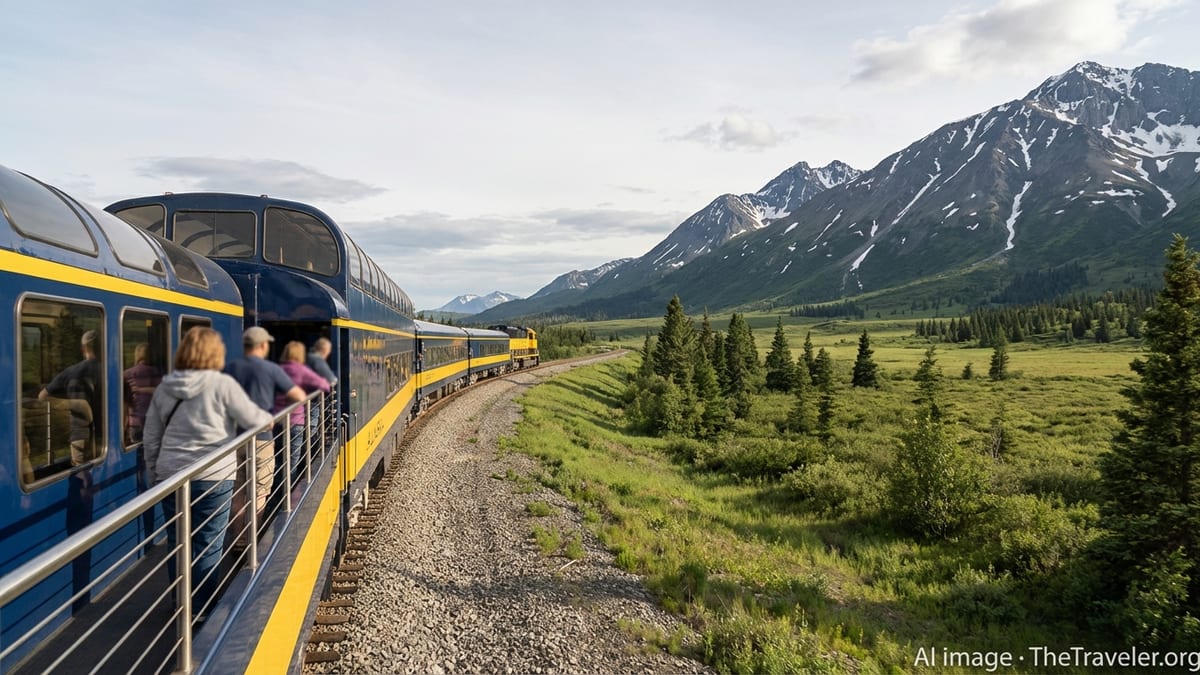
The appeal of the Villach to Edirne journey lies as much in the changing landscapes outside the window as in its logistical convenience. Out of Villach, the line threads through Alpine foothills and river valleys that showcase southern Austria’s mountain scenery before the train descends toward the gentler contours of Slovenia and northern Croatia.
Further east, the route enters a patchwork of rural plains, river crossings and low hills in Serbia and Bulgaria. These sections are among the least traveled by regular international services in modern Europe, and rail commentators often describe them as a glimpse of an earlier era of travel, with single-track lines, modest station buildings and infrequent passing trains.
Crossing into Turkey near Edirne, the train emerges onto the plains of Thrace, where long, straight sections of track give wide-open views of farmland and distant villages. The final approach into the Edirne area offers a sense of arrival at the gateway to Istanbul and Anatolia, even though the Optima Express itself terminates short of Turkey’s largest city.
The route’s character is very different from high-speed corridors in western Europe. There are no tilting trains, very limited onboard entertainment and a timetable that prioritizes reliable overnight progress over headline-grabbing speed. For many riders, that unhurried pace, combined with the ability to watch the geography of the continent slowly change, is precisely the attraction.
Tickets, Booking Windows and Who Can Ride
The Optima Express is a privately operated service, and publicly available booking information shows that it uses its own reservation channels rather than standard national rail ticketing systems. International rail passes such as Interrail and Eurail are not valid on the Villach to Edirne train, and passengers typically need a separate point-to-point booking.
The service is marketed primarily as a motorail for travelers bringing their own cars, with prices structured by vehicle type and passenger accommodation. However, reports from rail travelers confirm that it is also possible to book as a foot passenger, subject to space and the operator’s conditions for each season.
Because the train runs only seasonally, departures are relatively infrequent. Published schedules for recent years show weekly or limited-season patterns rather than daily departures, and seats can sell out quickly on peak summer dates. Specialist rail outlets recommend booking well in advance once the operator releases its annual timetable and fare information.
Travelers must also ensure they meet the visa and entry requirements for each country the train traverses. While border formalities are handled en route, passengers are responsible for carrying valid passports and any necessary visas, particularly for the Turkish border segment at the eastern end of the line.
Practical Tips and How It Compares With Other Night Trains
Compared with more widely known overnight trains in Europe, such as services operated by national railways in Austria or central Europe, the Villach to Edirne route occupies a niche position. It offers a rare continuous ride across multiple Balkan states at a time when many regular international trains in the region have been thinned out, but its limited season, small capacity and car-focused model make it less of a general transport option and more of a specialist journey.
Travelers who prioritize speed often choose a combination of daytime high-speed trains and flights between central Europe and Turkey. Those who prefer a more conventional night train experience may look at alternative services linking Istanbul with Sofia or Bucharest and then connect onward. The Optima Express appeals most to passengers who value continuity, the ability to bring a vehicle, and the experience of crossing a large swathe of the continent in a single ride.
Practical advice compiled from recent travel reports includes packing light but with layers for changing temperatures, bringing cash in euros for incidental purchases, and allowing buffer time at both ends of the trip in case of delays. Because intermediate stops are limited, travelers are also encouraged to carry any medication and essentials in hand luggage rather than leaving them in vehicles loaded onto the car wagons.
Interest in the Villach to Edirne train has increased alongside a broader revival of overnight rail in Europe, but the Balkan context remains distinctive. With sparse alternative services and long distances between major hubs, the Optima Express continues to offer a rare, scenic and logistically straightforward way to traverse a part of Europe that many travelers still find difficult to cross by train.