


More news on this day
Holland America Line’s midsize cruise ship Zaandam is seeing a second consecutive Alaska sailing disrupted after a propulsion issue forced the vessel to reduce speed and undergo repairs in Vancouver, prompting revised itineraries and compensation offers for affected guests.
Get the latest news straight to your inbox!
Propulsion Problem Cuts Short One Cruise and Delays the Next
Publicly available information shows that Zaandam developed a technical problem with its propulsion system during an early June Alaska voyage, limiting the ship’s speed and forcing the cancellation of several planned port calls. Travel trade coverage indicates that the ship returned to Vancouver earlier than scheduled so that repair work could begin, effectively cutting short the original itinerary.
Reports from recent passengers describe an itinerary that visited Juneau but skipped subsequent stops, with the ship sailing at reduced speed back toward Vancouver for inspection and repairs. Commenters on cruise forums have characterized the voyage as “heavily impacted,” noting that scenic cruising and multiple Alaska ports were removed once the propulsion problem became clear.
The follow-up sailing, scheduled to depart Vancouver on June 10, was then adjusted as Zaandam remained in port longer than planned for corrective work. Cruise industry sites note that the ship’s departure was pushed back by roughly a day, requiring changes to the original sequence of Alaska ports as the vessel balanced a later start with the need to maintain safe operating speeds on a still-limited propulsion setup.
As a result, the June 10 departure became the second consecutive cruise affected by the same underlying issue, moving the disruption from an isolated technical incident to a broader operational challenge on one of Holland America’s key Alaska ships at the height of the summer season.
Revised Alaska Itineraries and Port Changes
Because of the slower sailing speeds and delay leaving Vancouver, Zaandam’s June 10 Inside Passage itinerary required reshuffling. According to published cruise-coverage summaries, at least one port call was dropped and others were rescheduled or shortened so the ship could still complete the roundtrip and return on time for its next voyage.
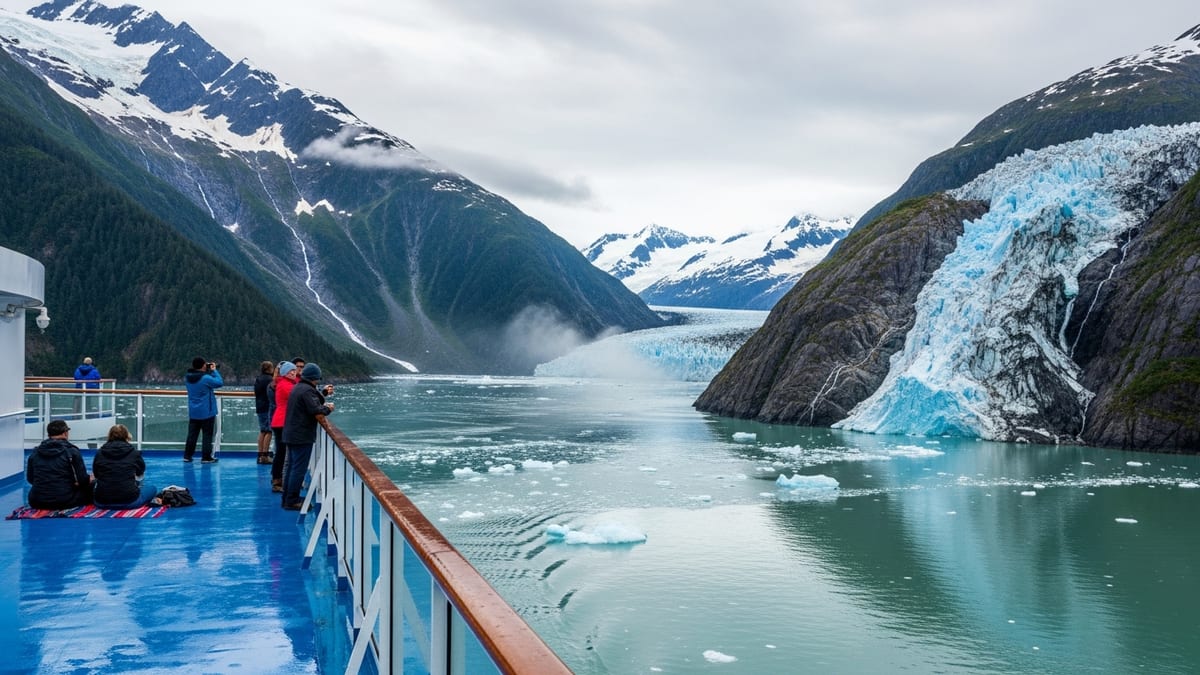
Forum posts and cruise-tracking data suggest that earlier in the month, an attempt to call at Tracy Arm Fjord was canceled, with travelers instead spending additional time at sea as the crew monitored the propulsion system. Later, after the ship turned back toward Vancouver, guests reported extended transit at reduced speed, underscoring the constraints created by the technical fault.
For the June 10 sailing, reports indicate a similar focus on simplifying logistics and limiting long high-speed runs, which are more demanding on propulsion equipment. That meant trading some variety of ports for a schedule that could be executed reliably while repairs were finalized. In a region where port berths are tightly scheduled and daily caps exist in destinations such as Glacier Bay, even a delay of several hours can ripple through the entire itinerary.
As of mid-June, schedule information on multiple booking platforms still shows Zaandam operating a full slate of seven-night Alaska Inside Passage cruises from Vancouver later in the month, signaling that the line expects repairs to stabilize the ship’s operations for upcoming departures.
Compensation, Credits and Guest Reactions
The propulsion issues have triggered a range of compensation measures for guests on the affected voyages. Based on passenger accounts shared on cruise community platforms, travelers on the early June sailing that lost several ports were informed of partial refunds to their original form of payment along with future cruise credits that can be applied to another Holland America voyage.
Some guests describe receiving refunds of around half of the cruise fare, paired with additional onboard credit or future cruise offers, though the precise amounts appear to vary by booking and sailing. Travel blogs following the incident report that Holland America has emphasized the need to balance safety and reliability with the desire to deliver the promised Alaska experience.
Reactions among travelers have been mixed. Many acknowledge that mechanical problems can emerge on complex ships and express appreciation for efforts to keep the vessel operating safely while still offering at least part of the planned itinerary. Others, particularly those on once-in-a-lifetime trips or who flew long distances to reach Vancouver, voice frustration at learning of major changes only after boarding or once the cruise was underway.
Insurance has also become part of the conversation, with some would-be passengers now reviewing policies more closely for coverage of missed or canceled ports and for trip interruption benefits in the event a sailing is significantly altered by technical issues.
Zaandam’s Role in Holland America’s Alaska Program
Zaandam is a 61,000-gross-ton, Rotterdam-registered ship that has long served in Holland America’s traditional Alaska program, focusing on scenic Inside Passage itineraries and extended time in port. The vessel is among the line’s smaller, more classic ships, which many repeat guests favor for their walkable layout and full wraparound promenade deck.
Holland America positions Alaska as one of its signature destinations, pairing cruises with land-based “cruisetour” options into the Yukon and Denali regions. Ships like Zaandam are central to that strategy, especially during peak summer weeks when demand for glacier viewing and wildlife encounters is high.
The current propulsion incident comes as the wider cruise industry is investing heavily in fleet upgrades and maintenance. Other lines have recently adjusted schedules or sent vessels to dry dock to address mechanical issues, and industry observers note that aging mid-size ships can require more frequent, targeted repairs to keep pace with modern performance and environmental expectations.
For Holland America, keeping Zaandam on its Alaska routes is particularly important given the ship’s size, atmosphere, and popularity with guests seeking a quieter, more traditional cruise experience compared with larger resort-style vessels that also operate in the region.
What Future Passengers Should Expect
Prospective Zaandam passengers booked on later June and July sailings are watching developments closely. Booking engines and cruise-agency listings currently continue to show the ship operating its scheduled Vancouver roundtrips, suggesting that the line anticipates completing or stabilizing the propulsion repairs without extended cancellation of future voyages.
Travel advisors and online commentators generally recommend that upcoming guests monitor their booking portals and email for any itinerary updates, while also budgeting extra flexibility around flight times on embarkation and disembarkation days in case of schedule adjustments. Some also suggest considering comprehensive travel insurance that includes coverage for missed ports or significant itinerary changes tied to mechanical issues.
For now, Zaandam’s propulsion problem highlights how a single technical fault can affect multiple sailings, particularly when it occurs during a tightly packed high-season deployment. As the ship completes repairs and returns to its regular pace along the Inside Passage, attention will likely shift from the disruption itself to how effectively the line communicates with guests and restores confidence in one of its most Alaska-focused vessels.