


More news on this day
Royal Caribbean’s Harmony of the Seas has diverted toward Bermuda during a transatlantic sailing after an onboard medical situation triggered an “Alpha Alpha” emergency code, prompting a mid-ocean course change to reach shoreside care faster.
Get the latest news straight to your inbox!
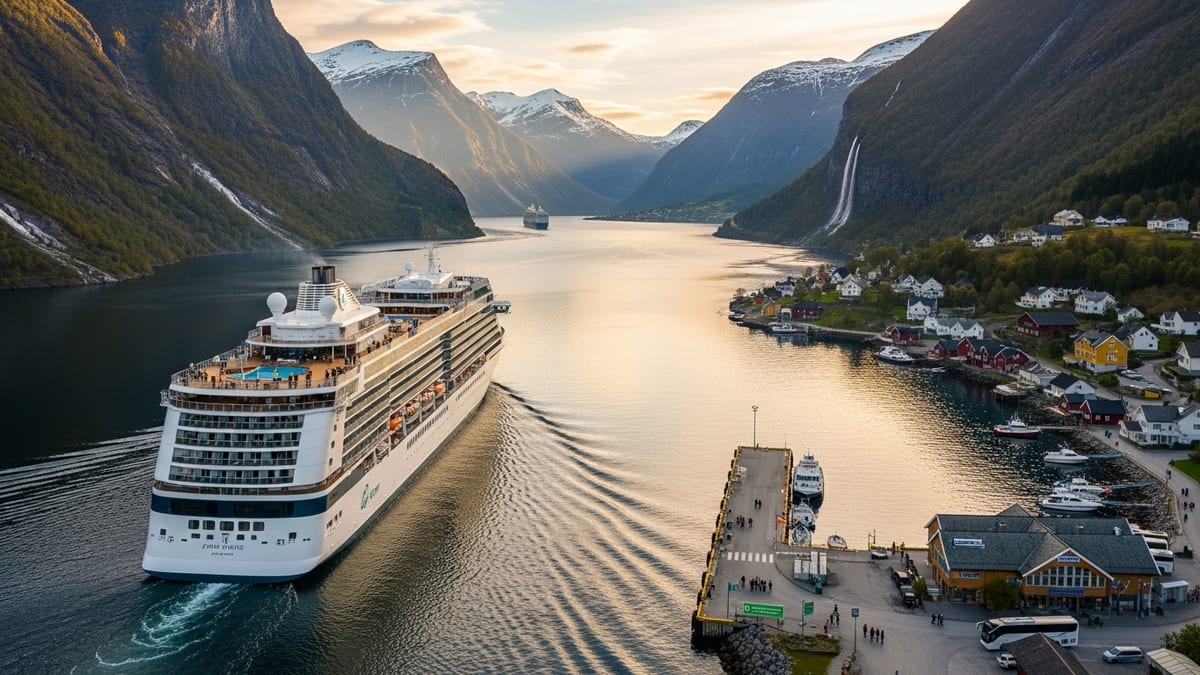
Medical Code Triggers Mid-Atlantic Course Change
Reports from passengers on the current 13 night transatlantic voyage from Barcelona to Port Canaveral indicate that the medical alert was issued earlier in the sailing, with the “Alpha Alpha Alpha” code broadcast over the ship’s public address system. The code is widely recognized among cruise travelers as an internal term used to signal a serious medical emergency requiring an immediate response from the onboard team.
Following the initial call, the ship’s track, as viewed on cabin televisions and consumer ship-tracking services, showed Harmony of the Seas gradually altering course away from its direct Atlantic crossing route. Observers noted a clear turn toward Bermuda, a well-established evacuation point for vessels transiting between Europe and the United States.
Passengers posting about the incident describe the deviation as a controlled, planned maneuver rather than an abrupt change in operations. Publicly available information as of August 6, 2026, suggests that the situation involves a single guest requiring more advanced care than can typically be provided in a shipboard medical center far from land.
Evacuation Via Bermuda Without Major Schedule Impact
According to accounts shared by travelers currently on board, the ship’s bridge team advised guests that Harmony of the Seas would approach Bermuda to transfer the patient ashore for treatment. Passengers report being told that the vessel was not expected to dock fully at a cruise pier, but would instead conduct an offshore transfer, a procedure cruise lines sometimes use when a short, focused stop is sufficient for medical or operational reasons.
Those same accounts indicate the detour is not anticipated to significantly delay the ship’s scheduled arrival into Port Canaveral at the end of the crossing. Modern large cruise ships are capable of temporarily increasing speed to recover time lost to route deviations, especially when weather and sea conditions remain favorable. Discussions among cruise enthusiasts following this incident have emphasized how often cruise lines are able to complete medical diversions while still keeping itineraries largely intact.
Transatlantic sailings inherently place ships several days from the nearest port, which can complicate urgent medical logistics. In similar past cases across various cruise brands, vessels have diverted to locations such as Puerto Rico, the Azores, or Canadian ports to disembark patients, and then increased speed in an effort to maintain their planned schedules.
Understanding the “Alpha Alpha” Code and Shipboard Response
The “Alpha Alpha” phrase heard by guests on Harmony of the Seas reflects cruise-industry practice of using standardized internal codes to quickly convey the nature of an incident to crew members without alarming passengers. While exact terminology can vary by company, publicly shared experiences from multiple sailings indicate that “Alpha Alpha” is commonly associated with a serious medical emergency in a specific area of the ship.
Large ships such as Harmony of the Seas carry dedicated medical staff and facilities capable of handling a wide range of urgent situations, from injuries to cardiac events. However, when extended hospitalization, advanced imaging, or intensive care is required, medical teams typically coordinate with shoreside operations to determine the safest and quickest disembarkation point for the patient.
In maritime safety documentation and company planning materials, cruise operators describe broad frameworks for emergency medical evacuation, which can include helicopter winch operations, small-boat transfers, or rerouting to the nearest suitable port. Helicopter evacuations are often constrained by range, weather, and night operations, so altering course toward land, as in the Harmony of the Seas case, can be a preferred option when the ship is far offshore.
Why Bermuda Is a Key Diversion Point for Atlantic Crossings
Bermuda occupies a strategic position in the western North Atlantic, roughly along the routes traveled by ships repositioning between Europe and East Coast homeports. Industry observers note that the island frequently serves as a waypoint for diversions when cruise or cargo vessels need to transfer passengers or crew in medical or operational emergencies while crossing the ocean.
Passenger accounts from previous sailings on other cruise ships describe similar scenarios in which vessels slowed or paused several miles off Bermuda, using tenders or pilot boats to move a patient and any accompanying family members ashore. These maneuvers allow ships to avoid full port calls that could add more time, while still enabling access to land-based medical facilities.
The decision to divert is typically influenced by factors such as the patient’s stability, distance to alternative ports, and forecasted weather along the revised route. Bermuda’s infrastructure, location, and experience with maritime traffic make it a logical choice for ships like Harmony of the Seas when urgent medical treatment is needed mid-crossing.
Traveler Reactions Highlight Support for Safety-First Decisions
Online discussion surrounding the Harmony of the Seas diversion has largely reflected understanding and support from current and future guests. Many commenters point out that, with several thousand passengers and crew on board, occasional serious medical events are statistically likely, particularly on longer voyages.
Travelers also frequently reference previous instances in which cruises were extended, shortened, or rerouted for similar reasons, emphasizing that most guests view itinerary changes as a necessary trade-off for prioritizing human life. Some experienced cruisers use events like the Harmony diversion to underline the importance of comprehensive travel insurance that can help cover associated medical and repatriation costs for the affected individual and their companions.
For those booked on upcoming Harmony of the Seas sailings, publicly available information at this stage suggests only limited downstream impact, if any, on future itineraries. As with prior diversions in the industry, the operational focus remains on stabilizing the guest involved, completing the transfer safely near Bermuda, and then returning the ship to its planned schedule across the Atlantic.