


More news on this day
Thousands of air travelers across the United States faced cascading disruption as 376 flights were grounded and at least 826 more delayed in a fresh wave of flight problems affecting major carriers and airports from North Carolina to California.
Get the latest news straight to your inbox!
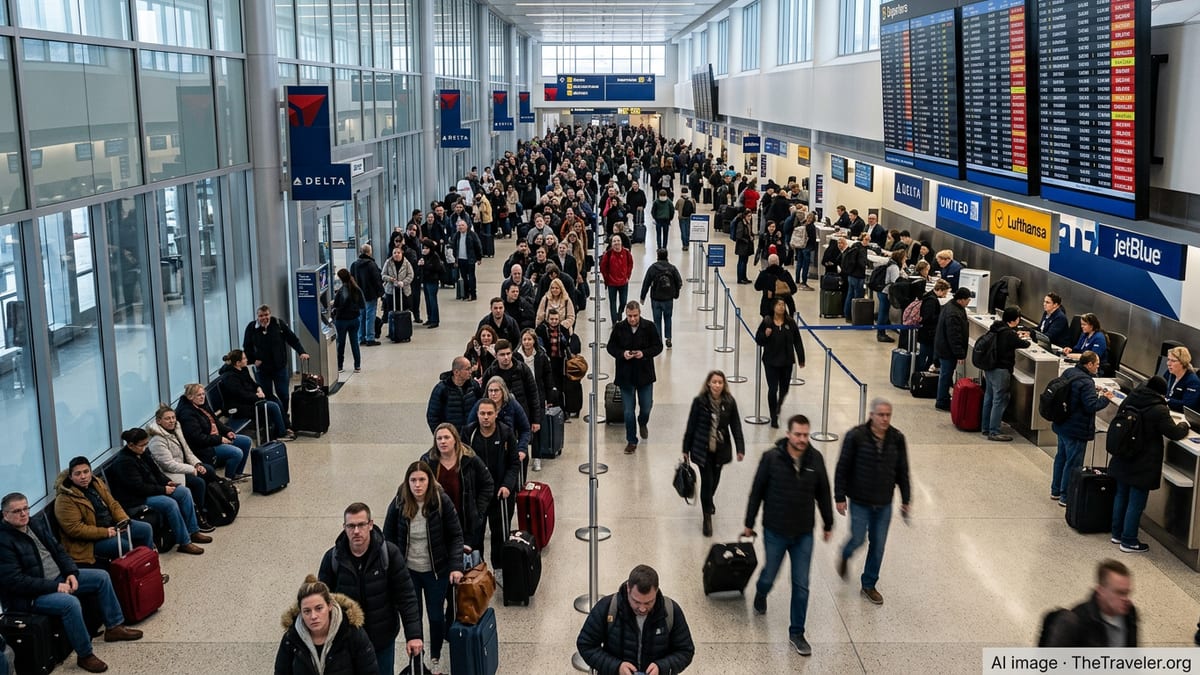
Major US Hubs See Another Day of Heavy Disruption
Publicly available tracking data showed widespread disruption centered on some of the country’s busiest aviation markets, with North Carolina, Georgia, Texas, Massachusetts, Florida, New York and California all reporting elevated levels of cancellations and delays. The figures pointed to 376 flights grounded nationwide, alongside 826 services delayed, affecting both domestic and international routes.
The impact was most visible at large hub airports that serve as critical connective points in the national network. Disruptions at these hubs tend to ripple quickly, transforming what begins as a localized operational issue into a multi-state problem as crews and aircraft fall out of position. As a result, passengers arriving at regional airports often encountered cancellations that traced back to issues hundreds or thousands of miles away.
While the raw totals were below the most severe disruption days recorded during major winter storms earlier in the year, the pattern followed a familiar trajectory: delays clustering around early bank departures, followed by mounting cancellations later in the day as airlines consolidated schedules and attempted to reset their operations.
The situation underscored how tightly coupled US air travel has become. A single pressure point at a key hub can quickly translate into missed connections, extended tarmac times and crews timing out under federal duty rules, even in states where weather or local conditions appear calm.
American, Delta, JetBlue and Southwest Among Hardest Hit
Operational data indicated that large network carriers and major low-cost operators were again at the center of the disruption. American Airlines and Delta Air Lines, which maintain significant hub operations in several of the affected states, recorded notable clusters of cancellations and rolling delays as the day progressed.
JetBlue, with a strong focus on the Northeast and Florida, reported elevated disruption at key bases serving New York, Boston and Orlando. Southwest Airlines, heavily exposed to high-frequency domestic routes and point-to-point itineraries, also experienced a spike in off-schedule operations, particularly where aircraft rotations intersected with weather or air-traffic constraints.
Industry analysts noted that such events add renewed scrutiny to airline reliability metrics, including on-time performance, cancellation rates and recovery times after large-scale disruptions. The pattern follows a series of high-profile meltdowns in recent years, in which individual carriers have struggled to restore normal operations for days after an initial shock.
Publicly available reporting has also highlighted regulatory interest in how carriers communicate with passengers, rebook disrupted itineraries and handle hotel, meal and ground transportation support when major schedule breakdowns occur. The latest wave of disruption is likely to feed into ongoing debates about passenger protections and compensation standards.
Weather, Congestion and System Strain Contribute
Early assessments linked the latest operational turmoil to a familiar mix of factors, including adverse or rapidly changing weather in portions of the Southeast and East Coast, periods of congestion in already saturated airspace, and knock-on effects from earlier days of irregular operations. When thunderstorms, low visibility or strong winds reduce runway capacity, air-traffic managers often slow or temporarily stop departures bound for affected airports to maintain safety margins.
Such measures, known in the industry as ground stops and flow-control programs, can trigger a chain of scheduling challenges. Flights that are held at origin sometimes miss crucial connection windows, and aircraft scheduled for later legs are no longer in the right place at the right time. As delays extend, cockpit and cabin crews can reach their legally mandated duty limits, forcing airlines to cancel additional flights even after weather conditions improve.
In states like Texas, Florida and Georgia, where large hub airports sit in the path of frequent convective storms, even a relatively brief weather system can ripple across the national network. Services into and out of New York and Boston are similarly vulnerable to both local weather and congestion in some of the world’s busiest air corridors, creating systemic stress that is difficult to absorb when schedules are already tight.
Aviation specialists also point to the cumulative impact of seasonal travel peaks, constrained staffing in some operational roles and aging technology systems. These factors can limit the speed at which airlines and airports can reoptimize schedules and reassign resources when conditions change quickly.
Travelers Face Long Lines, Missed Events and Scramble for Alternatives
For passengers caught in the disruption, the numbers translated into long security and rebooking lines, missed family events and disrupted business trips. Social media feeds filled with images of crowded terminals and departure boards showing columns of delayed or canceled flights as travelers sought updates from airline apps and airport information screens.
Many travelers reported having to accept significant rerouting, including overnight connections, long layovers or itineraries involving multiple carriers in order to reach their destinations. In popular leisure markets such as Florida and California, the combination of strong seasonal demand and reduced seat availability after cancellations meant that some passengers could not be rebooked until one or more days later.
Consumer advocates note that US regulations currently leave airlines significant discretion over what forms of assistance are offered during disruption events, especially when carriers attribute problems to factors outside their direct control. Passengers are often encouraged to familiarize themselves with individual airline policies on meal vouchers, hotel accommodations and rebookings, and to act quickly when disruption spreads across multiple carriers.
The latest wave of delays and cancellations is expected to add pressure on carriers to demonstrate that they can maintain reliable schedules while also improving customer support during irregular operations. With the busy summer and holiday travel periods on the horizon, travelers and industry observers alike will be watching closely to see whether these recurring patterns of disruption persist or begin to ease.
Questions Over Resilience as Peak Travel Season Looms
The scope of the latest disruptions, spanning seven large and economically significant states, has renewed questions about the resilience of the US air transport system. Aviation experts point out that while weather and air-traffic constraints are unavoidable, the scale of resulting disruption often reflects underlying decisions about scheduling intensity, staffing levels and technology investment.
As airlines plan for peak travel periods, including summer vacation and end-of-year holidays, they face the challenge of balancing aggressive capacity growth with sufficient buffers to absorb shocks. Tight turn times, high aircraft utilization and lean crew rosters can improve efficiency during normal operations but leave networks more vulnerable when conditions deteriorate.
Publicly available coverage shows that regulators and policymakers have increasingly focused on these systemic issues, examining how airlines schedule flights, manage crew resources and communicate with passengers when things go wrong. The latest episode of disruption across North Carolina, Georgia, Texas, Massachusetts, Florida, New York and California will likely feature in those discussions as another case study of the stresses facing modern air travel.
For now, passengers are being advised to monitor their flight status frequently, allow extra time at the airport and consider flexible booking options where possible. With disruption again making headlines, the gap between published schedules and actual performance remains a central concern for the millions of travelers who rely on US airlines each day.