


More news on this day
Operations at Cleveland Hopkins International Airport briefly halted on the morning of August 28, 2026, after a security lapse involving an escorted worker in a restricted airfield area triggered a full shutdown of the airfield.
Get the latest news straight to your inbox!
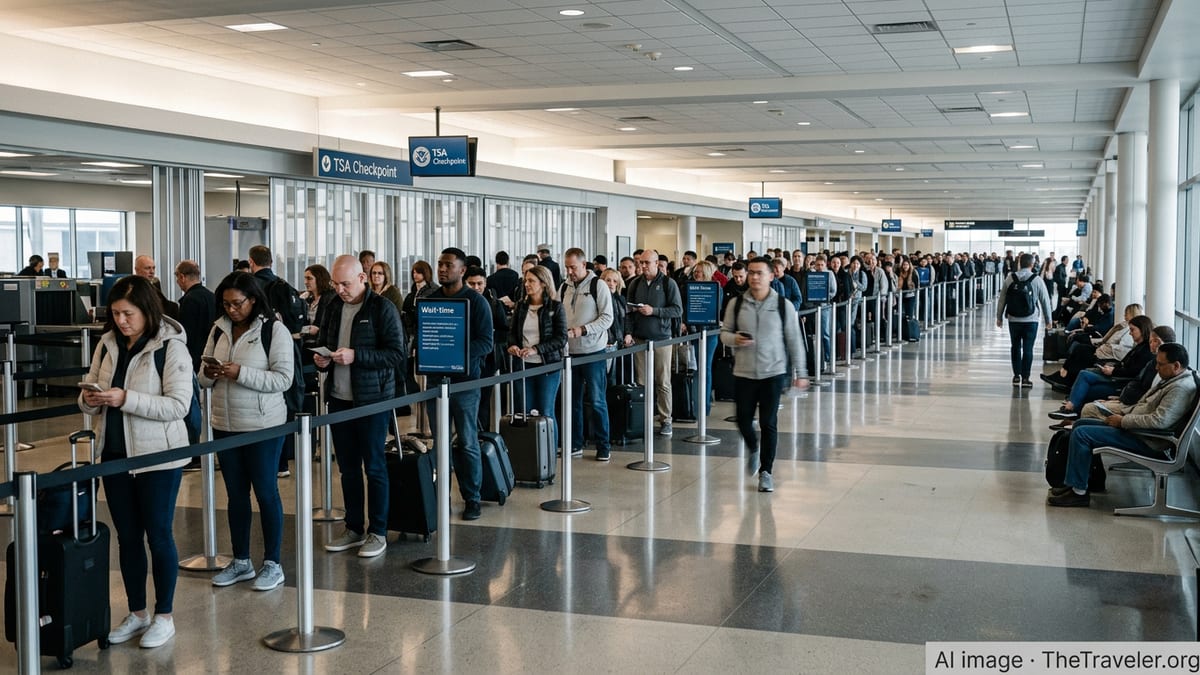
How a Routine Escort Turned Into a Security Breach
Publicly available reporting indicates the incident began when an airline contractor lost sight of a person being escorted through a secured, nonpublic part of the airfield. Escort rules in restricted zones require constant visual control of anyone without full security clearance. When that link is broken, aviation security protocols treat it as a potential breach until the person is located and accounted for.
Coverage focusing on the closure describes the situation as a "security matter" that forced Cleveland Hopkins International Airport to pause airfield operations while airport safety teams and law enforcement partners carried out a sweep of sensitive areas. Notices from federal aviation systems listed the airfield as closed, reflecting the elevated security posture even though no specific threat to passengers or aircraft was publicly identified at the time.
Specialist travel reporting later connected the closure to the lost escorted individual, framing the lapse as a violation of federal requirements that govern access to secure airfield zones. Those rules are designed so even an apparently minor procedural failure, such as an escort losing track of a worker, automatically triggers an aggressive response that can include ground stops, runway closures and broad security checks.
Timeline of the Shutdown and Reopening
Federal aviation status logs and local news coverage show that Cleveland Hopkins was listed as closed beginning at approximately 5:51 a.m. on Friday, August 28. During the shutdown, departing flights were held at gates, and several inbound aircraft diverted to other airports while the security sweep was underway. Passengers posting on social platforms from both inside the terminal and on aircraft described sitting through extended gate holds and deplaning as crews awaited clearance to depart.
The Federal Aviation Administration initially published a closure window through 10 a.m., but flight-tracking and local media reports indicate the airfield reopened significantly earlier. The formal closure notice disappeared from federal systems shortly before 7 a.m., and regional outlets later reported that operations were fully resumed by about 7:15 a.m., although residual delays continued through the morning as airlines worked through backlogs of departures and arrivals.
Airport communications channels urged travelers to check directly with their airlines for delay and diversion information rather than relying solely on general airport status boards. Tracking services showed a cluster of delayed departures around the shutdown period, consistent with a brief but complete pause in movements on the airfield before normal patterns slowly reasserted themselves.
Inside the Security Protocols That Trigger Closures
The reaction at Cleveland Hopkins closely follows the layered security model that has evolved at United States airports since stricter access-control standards were introduced in the early 2000s. Under those rules, any individual without the proper badge or clearance must remain under continuous escort when moving through secure, nonpublic parts of the airfield, including ramp areas, maintenance zones and equipment yards.
When an escort loses contact with such an individual in a restricted zone, security programs treat the situation as if an unknown person may be loose within a secure perimeter. That uncertainty is enough to justify halting aircraft movements, freezing vehicle traffic on the airfield and deploying law enforcement to search until the person is located and their movements are verified. The aim is to prevent potential access to aircraft, baggage systems or other critical infrastructure until the risk is clearly resolved.
Reports on the August 28 incident describe exactly this kind of scenario. The missing worker was eventually found after a coordinated search, and subsequent coverage has not indicated any additional criminal or malicious element. Even so, under federal security rules, the lapse itself is typically subject to review by regulators, and contractors involved can face scrutiny of training, oversight and escort procedures.
Traveler Impact at a Busy Regional Hub
The pause came during the early-morning departure bank at Cleveland Hopkins, a period when many business and connecting flights are scheduled to take advantage of downline connections across the country. Travelers reported missed connections and unplanned layovers as aircraft that had already pushed back were held on taxiways and some inbound flights diverted to alternate airports, including hubs in the Midwest.
Local broadcast coverage and social posts from passengers captured scenes of crowded gate areas as boarding was halted and then restarted once the airfield reopened. In several cases, crews began deplaning passengers due to the expected length of the closure, only to resume boarding shortly afterward once updated information came through that the shutdown would be shorter than the original federal notice suggested.
By late morning, federal real-time status pages were no longer flagging major ground delays at Cleveland Hopkins, though flight-tracking data still showed scattered knock-on disruptions as aircraft and crews returned to normal rotations. Airport guidance continued to emphasize early arrival and close monitoring of airline alerts, reflecting how even a brief shutdown can ripple through schedules for hours.
What Comes Next for Cleveland Hopkins Security
Travel-industry analysis of the August 28 incident notes that a closure triggered by an escort lapse is likely to draw sustained attention from federal transportation security regulators. Standard practice after such an event includes a detailed reconstruction of movements on the airfield, a review of badge and access records and an examination of the contractor’s training and internal compliance programs related to escort duties.
Publicly available information so far points to the episode as a procedural failure rather than a targeted attempt to breach security. Even so, the shutdown underscores how dependent airport operations are on thousands of routine tasks carried out by contractors and employees behind the scenes, especially in restricted areas that most passengers never see.
For travelers, the incident serves as a reminder that sudden ground stops or diversions can stem from security rules working as intended. When a gap in control is detected inside a secure zone, the system is built to prioritize containment and verification over schedule reliability, even at the cost of significant short term disruption for passengers and airlines.
AOL / Fox 8 coverage of Cleveland Hopkins closure
News 5 Cleveland report on security-related incident