


More news on this day
Regional Rail riders across the Philadelphia area faced significant disruption on Wednesday morning after a SEPTA train derailed at a key junction in North Philadelphia, triggering widespread delays, cancellations and crowding during the height of the weekday commute.
Get the latest news straight to your inbox!
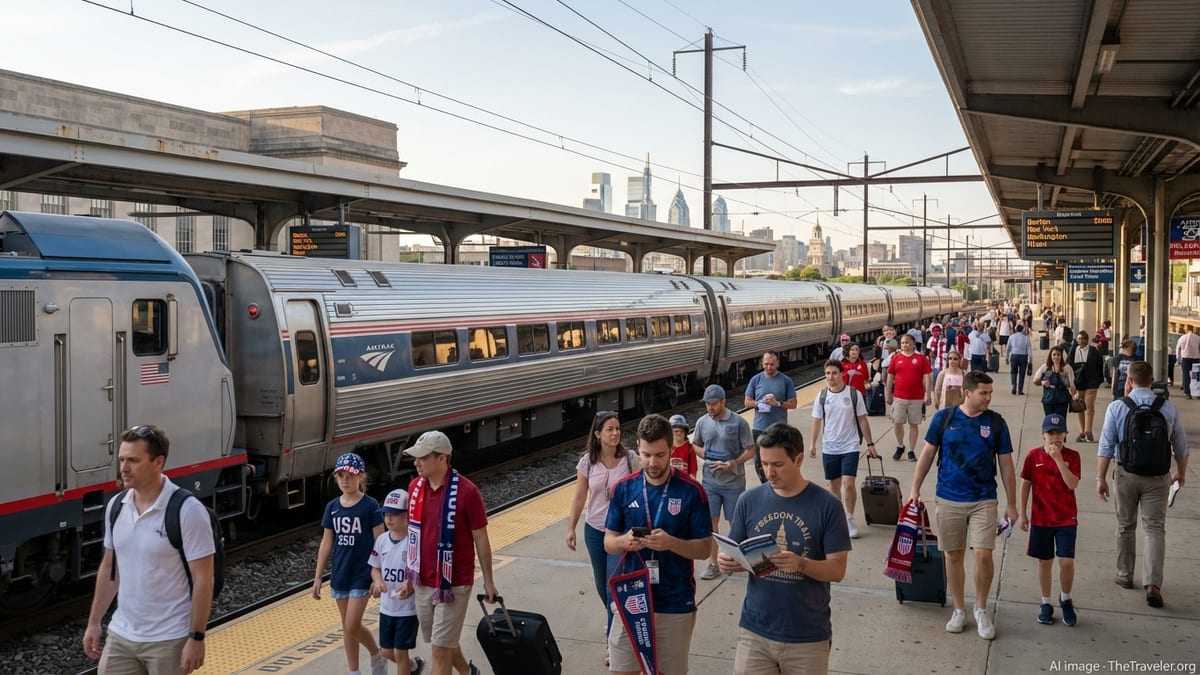
Derailment at North Philadelphia chokepoint disrupts multiple lines
Published coverage indicates the derailment occurred at a complex junction near the North Philadelphia station, an area where several SEPTA Regional Rail routes converge on tracks shared with Amtrak along the Northeast Corridor. The incident effectively removed a critical segment of the network from normal use at one of the busiest times of day.
According to reports from local media and rider alerts, the affected train left the rails on Wednesday, July 1, without any immediate indication of a collision with another train. Initial information points to the derailment involving a set of passenger cars on an inbound service, though the specific consist and operating line were not immediately clarified in early summaries.
Rail-savvy passengers following the situation described the location as a bottleneck for Regional Rail traffic heading into and out of Center City. With limited alternative tracks and already constrained capacity, any obstruction at this junction has an outsized impact, quickly cascading into delays across several suburban branches.
Early reports did not indicate serious injuries among passengers or crew, but the disruption to travel was extensive. Emergency responders and railroad crews were deployed to secure the site, assess damage and begin the process of re-railing affected cars and inspecting the track infrastructure.
Major delays, cancellations and diversions across the Regional Rail system
Publicly available alert summaries showed service suspended or heavily disrupted on multiple Regional Rail lines feeding into the affected corridor. Trains that normally pass through North Philadelphia toward Center City were held, turned back short of their usual destinations or combined with other services to conserve train sets and reduce congestion.
Throughout the morning, riders reported trains operating well off schedule, with some departures canceled outright and others boarding beyond capacity as stranded passengers attempted to board any available service. Crowding was particularly acute at major transfer hubs including Temple University and 30th Street Station, where passengers from disrupted lines converged in search of alternate trains.
On social platforms and transit-tracking forums, commuters shared screenshots of departure boards dominated by delay notices. Some riders described travel times that more than doubled compared with normal conditions, while others indicated they had abandoned rail entirely to seek out ride-hailing, carpooling or telework options.
The derailment added strain to a Regional Rail system that has already been operating with reduced flexibility due to ongoing fleet inspections and rolling stock shortages in recent months. Even before the incident, timetable adjustments and shortened trains had limited the network’s ability to absorb sudden disruptions.
Travel impacts for visitors and airport-bound passengers
The disruption posed particular challenges for visitors and air travelers relying on Regional Rail to reach central Philadelphia or Philadelphia International Airport. The Airport Line is closely integrated with the core Regional Rail trunk through Center City, and any constraint on capacity in the North Philadelphia area can ripple through schedules on routes that interline with airport services.
With many travelers in town for early July events and large summer gatherings, the derailment complicated onward journeys from hotels and suburban accommodations into the city’s cultural districts. Hospitality staff and local tourism advisers urged guests to allow additional time and to verify service status before committing to rail trips.
Some airport-bound passengers reported shifting to taxis, app-based rides and shared shuttles when it became clear that Regional Rail would not offer predictable travel times. Others opted to connect to the airport via the city’s subway and bus network, which remained unaffected by the rail disruption but experienced localized crowding as riders sought alternatives.
The timing of the incident, just days before heavily promoted Independence Day festivities and international sporting events, raised concern among travel planners that any prolonged outage could undermine efforts to encourage car-free travel into the city during peak tourism periods.
SEPTA response and ongoing investigation into the cause
SEPTA’s public alerts emphasized that safety inspections and rail operations around the derailment site would take precedence over restoring normal service speeds. Trains that continued to operate near North Philadelphia were subject to slow orders and modified routing while crews evaluated track conditions and overhead infrastructure.
According to published coverage, investigators are examining the condition of the rails, track geometry and train equipment at the time of the incident, as well as signal system data and onboard event recordings. The review is expected to look closely at whether recent heat-related speed restrictions, ongoing maintenance work or equipment issues played any role.
In recent months, SEPTA has highlighted investments in positive train control, railcar overhauls and right-of-way maintenance as part of a broader effort to improve reliability and safety across Regional Rail. The North Philadelphia derailment is likely to intensify scrutiny of how those programs are being prioritized on high-traffic sections of the network.
Transportation analysts note that incidents of this kind can lead to temporary capacity constraints even after tracks are cleared, as inspections, speed restrictions and phased restorations of service keep the system from returning immediately to normal operating patterns.
What riders can expect in the coming days
Transit alerts and rider commentaries on Wednesday morning suggested that Regional Rail customers should anticipate residual delays and altered schedules through at least the near term, even once the derailed train is removed and the track formally reopens. Timetables may be adjusted to reflect longer running times through the affected area or to account for train sets that remain out of position.
Travelers planning trips into or through Philadelphia in the next several days are being encouraged, through publicly available guidance, to monitor SEPTA’s trip-planning tools and live-status feeds before heading to stations. Observers also recommend that riders consider backup options, such as the Market Frankford and Broad Street subway lines, trolley routes and bus corridors that parallel some Regional Rail segments.
For commuters whose workplaces allow flexible hours or remote work, staggering trips outside the busiest peaks may help reduce crowding while the system recovers. Visitors on tight schedules, especially those catching flights or long-distance trains, are advised to build in additional buffer time when traveling across the region.
The derailment underscores the vulnerability of key chokepoints in legacy rail networks and serves as a reminder that disruptions in a single location can quickly affect riders across a wide geography. As investigations continue and repairs progress, the focus for many travelers will remain on finding reliable ways to navigate greater Philadelphia while Regional Rail service gradually stabilizes.